Author: mmarkmiller

  • Happy Birthday Yellowstone Park

    President Ulysses S. Grant signed the bill that created Yellowstone National Park on March 1, 1872. The act put the federal government in the business of managing public land for recreation and marked the culmination of the national park idea that had been percolating for some time.

    As can be seen from the documents below, there were several rationales for setting aside the area surrounding the headwaters of the Yellowstone and Missouri Rivers “for the benefit and instruction of the people.”
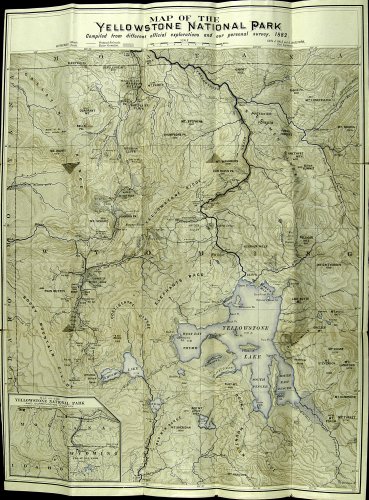
    1872 YNP Map Hayden
    1882 Map of Yellowstone Park by F.V. Hayden.

    First was the determination that the area wasn’t good for anything else. The U.S. Geological Survey lead by Ferdinand V. Hayden in the summer of 1871 had determined that the area was not fit for agriculture and it was not likely that there were any mineral deposits worth mining there. Setting the area aside, proponents of the bill said, “would take nothing from the value of the public domain.”

    Second, it was feared that the beautiful and delicate formations created by hot springs across thousands of years would be destroyed unless they were protected. The reports of the Hayden Expedition of 1871 and the Washburn Expedition of 1870 had thrust wonders of the remote and inaccessible region onto the public consciousness. The bills supporters said collectors had already begun gathering specimens for sale and plans were under way to lay claim to key sights and charge fees for visiting them. Indeed, entrepreneurs had already made homestead claim to key sights near Mammoth Hot Springs.

    Finally, proponents said that, if preserved, the area would become “a resort for all classes of people from all portions of the world. They said establishing Yellowstone National Park would be “regarded by the entire civilized world as a step of progress and an honor to the Congress …. ”  Indeed, that prediction has proved to be true.

    ∞§∞

    On the 18th of December, 1871, a bill was introduced into the Senate of the United States by Hon. S. C. Pomeroy, to set apart a certain tract of land lying near the head-waters of the Yellowstone River as a public park. About the same time a similar bill was offered in the House of Representatives by Hon. William H. Claggett, Delegate from Montana. After due consideration in the Committees on Public Lands in both Houses, the bill was reported favorably. In the Senate it was ably advocated by Messrs. Pomeroy, Edmunds, Trumbull, Anthony, and others. In the House the remarks of Hon. H. L. Dawes were so clear and forcible that the bill passed at once without opposition.

    I have thus presented a brief history of the passage of this bill because I believe it will mark an era in the popular advancement of scientific thought, not only in this country, but throughout the civilized world.

    That our legislators, at a time when public opinion is so strong against appropriating the public domain for any purpose however laudable, should reserve, for the benefit and instruction of the people, a tract of 3,578 square miles, is an act that should cause universal joy throughout the land. This noble deed may be regarded as a tribute from our legislators to science, and the gratitude of the nation and of men of science in all parts of the world is due them for this munificent donation.

    Mr. Dunnell, from the Committee on the Public Lands, made the following report:

    The Committee on the Public Lands, having had under consideration bill H. R. 764, would report as follows:

    The bill now before Congress has for its object the withdrawal from settlement, occupancy, or sale, under the laws of the United States, a tract of land fifty-five by sixty-five miles, about the sources of the Yellowstone and Missouri Rivers, and dedicates and sets it apart as a great national park or pleasure-ground for the benefit and enjoyment of the people. The entire area comprised within the limits of the reservation contemplated in this bill is not susceptible of cultivation with any degree of certainty, and the winters would be too severe for stock-raising.

    Whenever the altitude of the mountain districts exceeds 6,000 feet above tide-water, their settlement becomes problematical unless there are valuable mines to attract people. The entire area within the limits of the proposed reservation is over 6,000 feet in altitude, and the Yellowstone Lake, which occupies an area fifteen by twenty-two miles, or three hundred and thirty square miles, is 7,427 feet. The ranges of mountains that hem the valleys in on every side rise to the height of 10,000 and 12,000 feet, and are covered with snow all the year. These mountains are all of volcanic origin, and it is not probable that any mines or minerals of value will ever be found there. During the months of June, July, and August the climate is pure and most invigorating, with scarcely any rain or storms of any kind, but the thermometer frequently sinks as low as 26°. There is frost every mouth of the year.

    This whole region was, in comparatively modern geological times, the scene of the most wonderful volcanic activity of any portion of our country. The hot springs and the geysers represent the last stages— the vents or escape-pipes—of these remarkable volcanic manifestations of the internal forces. All these springs are adorned with decorations more beautiful than human art ever conceived, and which have required thousands of years for the cunning hand of nature to form.

    Persons are now waiting for the spring to open to enter in and take possession of these remarkable curiosities, to make merchandise of these beantiful specimens, to fence in these rare wonders, so as to charge visitors a fee, as is now done at Niagara Falls, for the sight of that which ought to be as free as the air or water.

    In a few years this region will be a place of resort for all classes of people from all portions of the world. The geysers of Iceland, which have been objects of interest for the scientific men and travelers of the entire world, sink into insignificance in comparison with the hot springs of the Yellowstone and Fire-Hole Basins. As a place of resort for invalids, it will not be excelled by any portion of the world. If this bill fails to become a law this session, the vandals who are now waiting to enter into this wonder-land will, in a single season, despoil, beyond recovery, these remarkable curiosities, which have required all the cunning skill of nature thousands of years to prepare.

    We have already shown that no portion of this tract can ever be made available for agricultural or mining purposes. Even if the altitude and the climate would permit the country to be made available, not over fifty square miles of the entire area could ever be settled. The valleys are all narrow, hemmed in by high volcanic mountains like gigantic walls.

    The withdrawal of this tract, therefore, from sale or settlement takes nothing from the value of the public domain, and is no pecuniary loss to the Government, but will be regarded by the entire civilized world as a step of progress and an honor to Congress and the nation.

    Department Of The Interior,

    Washington, D. C, January 29, 1872.


    Sir: I have the honor to acknowledge the receipt of your communication of the 27th instant, relative to the bill now pending in the House of Representatives dedicating that tract of country known as the Yellowstone Valley as a national park.

    I hand you herewith the report of Dr. F. V. Hayden, United States geologist, relative to said proposed reservation, and have only to add that I fully concur in his recommendations, and trust that the bill referred to may speedily become a law.

    Very respectfully, your obedient servant,

    1. DELANO,

    Secretary. Hon. M. H. Dunnell,

    House of Representatives.

    The committee, therefore, recommend the passage of the bill without amendment.

    [general Nature—No. 16.]

    AN ACT to set apart a certain tract of land lying near the head-waters of the Yellowstone River as a public park.

    Be it enacted by the Senate and House of Representatives of the United States of America in Congress assembled, That the tract of land in the Territories of Montana and Wyoming, lying near the head-waters of the Yellowstone River, and described as follows, to wit, commencing at the junction of Gardiner’s River with the Yellowstone River, and running east to the meridian passing ten miles to the eastward of the most eastern point of Yellowstone Lake; thence south along said meridian to the parallel of latitude passing ten miles south of the most southern point of Yellowstone Lake; thence west along said parallel to the meridian passing fifteen miles west of the most western point of Madison Lake; thence north along said meridian to the latitude of the junction of the Yellowstone and Gardiner’s Rivers; thence east to the place of beginning, is hereby reserved and withdrawn from settlement, occupancy, or sale under the laws of the United States, and dedicated and set apart as a public park or pleasuring-ground for the benefit and enjoyment of the people; and all persons who shall locate or settle upon or occupy the same, or any part thereof, except as hereinafter provided, shall be considered trespassers and removed therefrom.

    Sec. 2. That said public park shall be under the exclusive control of the Secretary of the Interior, whose duty it shall be, as soon as practicable, to make and publish such rules and regulations as he may deem necessary or proper for the care and management of the same. Such regulations shall provide for the preservation, from injury or spoliation, of all timber, mineral deposits, natural curiosities, or wonders within said park, and their retention in their natural condition. The Secretary may, in his discretion, grant leases for building purposes for terms not exceeding ten years, of small parcels of ground, at such places in said park as shall require the erection of buildings for the accommodation of visitors; all of the proceeds of said leases, and all other revenues that may be derived from any source connected with said park, to be expended under his direction in the management of the same, and the construction of roads and bridle-paths therein. He shall provide against the wanton destruction of the fish and game found within said park, and against their capture or destruction for the purposes of merchandise or profit. He shall also cause all persons trespassing upon the same after the passage of this act to be removed therefrom, and generally shall be authorized to take all such measures as shall be necessary or proper to fully carry out the objects and purposes of this act.

    Approved March 1, 1872.

    ∞§∞

    Excerpt from F. V. Hayden, Annual Report:Geological and Geographical Survey of the Territories (U.S.). Washington: Government Printing Office, 1972[pages 162-165]


  • Almost to Geyserland — W. F. Raynolds, 1860

    ynp-relief-map YDSF

    As the above image shows, rugged mountains surround the wonders of Yellowstone National Park. As Captain William F. Raynolds discovered, that fact made it extremely difficult to visit the area.

    WilliamFRaynolds NP
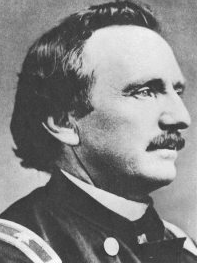
    Captain W. F. Raynolds

    In 1859 the army ordered Raynolds to explore areas of Montana and Wyoming along the headwaters of the Yellowstone and Missouri Rivers. He was also to look for a route over the Absaroka Mountains via the Wind River. The hope was to find a convenient crossing from the Yellowstone drainage to the headwaters of the Missouri.

    In May of 1860, Raynolds went up Wind River, but couldn’t find a pass. He admitted later that his guide, the famous mountain man Jim Bridger, had told him that the effort was futile. After Raynolds decided to turn back, Bridger said, “I told you you could not go through. A bird could not fly over that without taking a supply of grub.”

    Raynolds then headed south and made his way over the mountains via Union Pass and struggled through drifted snow to the Gros Ventre River.  He again tried to get to the Missouri drainage by traveling up the Gros Ventre, but deep snow forced him to turn back. 

    Raynolds then went over the Teton Pass and up the Henrys Fork of the Snake River to the low pass that bears his name. On the way two of his men headed east to explore the Targee pass and found the summit just five miles away. From there they could have descended to the Madison River and easily made their way to the grand geysers. But Raynolds was under strict orders to make a rendezvous at the Three Forks by May 30 so he rushed down the Madison.

    Although Raynolds failed to enter the area that became Yellowstone Park, in his official reports he described the wonders there based on conversations with Bridger. Unfortunately, because of the Civil War the report wasn’t published until 1868. 

    Here’s what Raynolds said about Bridger’s descriptions of Yellowstone’s wonders..

    ∞§∞

    We were compelled to content ourselves with listening to marvellous tales of burning plains, immense lakes, and boiling springs, without being able to verify these wonders.

    I know of but two white men who claim to have ever visited this part of the Yellowstone valley—James Bridger and Robert Meldrum. The narratives of both these men are very remarkable, and Bridger, in one of his recitals, described an immense boiling spring that is a perfect counterpart of the Geysers of Iceland.

    As he is uneducated, and had probably never heard of the existence of such natural marvels elsewhere, I have little doubt that he spoke of that which he had actually seen. The burning plains described by these men may be volcanic, or more probably burning beds of lignite, similar to those on Powder river, which are known to be in a state of ignition.

    Bridger also insisted that immediately west of the point at which we made our final effort to penetrate this singular valley, there is a stream of considerable size, which divides and flows down either side of the water-shed, thus discharging its waters into both the Atlantic and Pacific oceans. Having seen this phenomenon on a small scale in the highlands of Maine, where a rivulet discharges a portion of its waters into the Atlantic and the remainder into the St. Lawrence, I am prepared to concede that Bridger’s” Two Ocean river” may be a verity.

    Had our attempt to enter this district been made a month later in the season, the snow would have mainly disappeared, and there would have been no insurmountable obstacles to overcome. I cannot doubt, therefore, that at no very distant day the mysteries of this region will be fully revealed, and though small in extent, I regard the valley of the upper Yellowstone as the most interesting unexplored district in our widely expanded country.

    ∞§∞

    • Report of Brevet Colonel W.F. Raynolds, U.S.A., Corps of Engineers, “On the Explorastons of the Yellowstone and Missouri Rivers in 1859-’60.” U.S. Government Printing Office, 1868.
    • Relief map from the Yellowstone Digital Slide File.
    • Raynold’s portrait is a National Park Service Photo.

    You might also enjoy:

    ∞§∞

  • Sales of All My Books Break the Top Three Percent on Amazon

    cropped-new-banner-2I admit it. I routinely check the Amazon sales ranking on all three of my books. I know it doesn’t mean much, but it does provide a feel for how things are going.

    When I checked this afternoon all three of my books were hovering around the one hundred thousand mark. That doesn’t sound great so I prefer to convert it to a percentage. Amazon lists about 33 million titles, so I figure all of my books are in the top 3 percent. That sounds a lot better.

    As near as I can tell, the hundred thousand mark means that a book is selling one or two copies a week, so I’m not making enough to buy the cool Tesla Model S I’ve be coveting. Still I’m glad to know that things could be worse.

    If you’re considering a trip to Yellowstone, or if you know someone who is, or you just want to read some great stories about travel there, I hope you’ll consider buying my books:

    • Adventures in Yellowstone: A dozen classic tales about people and events you’ll hear about when you visit the Park.
    • The Stories of YellowstoneSeventy-two brief stories you can read around the evening camp fire, or while you’re traveling between sights.
    • Macon’s Perfect ShotA realistic novel about a boy’s trip to Yellowstone Park in the 1870s. Written for middle grades, but an enjoyable story for anyone.

    I’ll be glad if you buy them. And I think you’ll be glad too.

    ∞§∞

  • An Event — Getting Ready for Early Travel to Yellowstone Class

    My course on “Early Travel to Yellowstone Park” begins in just a week, and I’ve been working hard to get ready. It’s a reprise of one I taught in 2013 for Montana State University’s Wonderlust Series, so preparation is mostly revising notes and slides from my files. Those are in good shape, but I’m glad for the opportunity to revise and refine them — and make the class even better.

    Car at Old Faithful YDSF16350We’ll will meet for six consecutive Saturdays (Feb. 7 through March 14) from 9:30 to 11 a.m. In the Community Room of the Gallatin County Courthouse at 311 West Main, Bozeman. Admission is free for members of the Gallatin Historical Society and $5 at the door for non-members. The fee will include admission to the Gallatin History Museum at 317 West Main.   Interested persons can purchase memberships at the door.

    The course will cover the history of the area that is now Yellowstone Park from its discovery by Euro-Americans in the early 1800s through the Model-T Era. Park history will come alive through stories in the words of the people who lived the adventure of visiting the world’s first national park when it was new and be illustrated with historic photographs.

    There will be a reception with cookies and coffee following each meeting at the Gallatin History Museum, which is next door to the Courthouse.

    Each class session is self-contained, so you can choose whichever ones appeal to you. Of course, I hope you’ll attend them all. That way you’ll get a complete picture of the World’s First National Park from the time of its discovery by Euro-Americans through the Model-T Era.

    Course Calendar

    February 7: Mountain Men — The Mountain Man Era of Yellowstone Park began in 1807 when John Colter became the first white man to see the wonders of the area. Beginning about 1820, after trappers and traders had harvested most of the beaver in lower elevations, mountain men penetrated the Yellowstone Plateau.  Brigades of men led by entrepreneurs like Jim Bridger probably found most of the wonders of the upper Yellowstone. Although trappers left few written records of what they saw, dramatic stories remain telling about encounters with Indians (some hostile, some friendly), seeing fountains that hurl boiling water hundreds of feet into the air, and telling all tales.

    February 14: Explorers — By the mid 1860s, reports of mountain men and prospectors made it apparent that the wonders near the headwaters of the Yellowstone were dramatic enough to win glory for whoever was first to document them. Several attempts were made to organize expeditions to explore the upper Yellowstone, but they fell through because of threats of Indian troubles. Finally, in 1869, three men decided a small group could get by the Indians without being noticed. This was the Folsom, Cook, Peterson expedition. The Washburn Expedition of 1870 and the Hayden Expedition of 1871 convinced everyone that the stories of Yellowstone’s wonders were true and helped persuade to the federal government to establish the park in 1872.

    February 21: First Tourists — When the Washburn Expedition returned to civilization late in the summer of 1870, the news that the rumors of wonders on the upper Yellowstone were true, the new spread like wildfire. It was too late in the season for another expedition to a land that could be snowbound by September, but soon plans were made to travel to the newly discovered wonderland. The first tourist were of three types: small groups of men from Montana Territory who travelled light and planned to live off the land, dignitaries who had the time and money to cross the country on the new transcontinental railroad and then take the stage to Yellowstone and mixed groups of men and women.

    February 28: Early Women — Doubtless, the first women in what is now Yellowstone Park were Indians who had lived there for centuries before Euro-Americans explored it. White women began visiting the park while the ink was still drying on President Grant’s signature on the bill that created it. Most women traveled only to the ends of the roads at Mammoth Hot Springs or the Lower Geyser. But a few braved the roadless wilderness on sidesaddle and returned to tell their stories of boat rides on Lake Yellowstone, frying doughnuts in bear grease and being caught in October Blizzards.

    March 7: Nez Perce Encounters — In the summer of 1877 five bands of Nez Perce Indians decided to abandon their homeland at the intersection of the Idaho, Washington and Oregon borders and make a new life in the buffalo country of Montana. After the army attacked their sleeping camp on the banks of the Big Hole River, the Indians fled on a route that took them through Yellowstone Park. While the chiefs tried to avoid conflict, groups of enraged young men waged gun battles with tourists and took two women captive.

    March 14: The Grand Tour — In 1883, the Northern Pacific completed its transcontinental railroad and immediately began building a spur from Livingston, Montana, to the northern border of the park. Gone were the days when the only Yellowstone visitors were residents of the nearby territories and well heeled dignitaries who had the time and money for elaborate trips. The railroad opened the floodgate to middle-class tourists from across America and around the world. This led to the development of touring companies that provided transportation, food, and lodging for visitors. The most expensive tours were provided by subsidiaries of the railroads that build luxury hotels at key locations and provided transportation between them. Moderately priced tours were offered by permanent camps. Of course, many tourists continued to tour the park with their own wagons, teams of horses, and camping gear. A few mobile camp companies moved their tents regularly between sights.

    ∞§∞

    Photo, Yellowstone Digital Slide File.

  • Season’s Greetings

    Winter in Hayden Valley Mark Marschal YDSF10248
    “Winter in Hayden Valley” by Mark Marschal (NPS Photo)
  • “Treed by a Lion” by Truman Everts, 1870

    Reprise from 07/22/2010

    Probably the best known story of early travel to Yellowstone Park is Truman Everts’ account of being lost and alone there for 37 days. During the famous Washburn Expedition of 1870, Everts became separated from his companions as they made their way through heavy timber east of Lake Yellowstone. Everts was extremely nearsighted so he got off his horse to look for tracks. While he was scrutinizing a path, the horse ran away leaving him with little but the clothing on his back.

    Everts was a clever and tenacious man. He built a nest between two hot springs to survive a snow storm, made fire with the lens from an opera glass, and lived mostly on a diet of thistle roots.

    He told about his adventures in a magazine article that helped win support for creation of Yellowstone Park. Here’s one of them.

    ∞§∞

    I stretched myself under a tree, and fell asleep. How long I slept I know not but suddenly I was roused by a loud, shrill scream, like that of a human being in distress. There was no mistaking that fearful voice. It was the screech of a mountain lion, so alarmingly near as to cause every nerve to thrill with terror.

    The work of the moment was to yell in return—seize with convulsive grasp the limbs of the friendly tree—and swing myself into it. Scrambling hurriedly from limb to limb, I was soon as near the top as safety would permit.

    The savage beast was snuffing and growling below—on the very spot I had just abandoned. I answered every growl with a responsive scream. Terrified at the delay and pawing of the beast, I increased my voice to its utmost volume. I then broke branches from the limbs and madly hurled them at the spot from whence the howlings preceded.

    I failed to alarm the animal that now began to make the circuit of the tree—as if to select a spot for springing into it. With my strength increased by terror, I shook the slender trunk until every limb rustled. All in vain. The terrible creature pursued his walk around the tree—lashing the ground with his tail, and prolonging his howling almost to a roar.

    It was too dark to see, but the movements of the lion kept me apprised of its position. Whenever I heard it on one side of the tree, I speedily changed to the opposite—an exercise that I could only have performed under the impulse of terror. I would alternately sweat and thrill with horror at the thought of being torn to pieces—and devoured by this formidable monster. All my attempts to frighten it seemed unavailing.

    Disheartened at its persistency, and expecting at every moment that it would take the deadly leap. I tried to collect my thoughts, and prepare for the fatal encounter. Just at this moment it occurred to me that I would try silence.  Clasping the trunk of the tree with both arms, I sat perfectly still.

    The lion ranged around, occasionally snuffing and pausing—all the while filling the forest with the echo of his howling. Suddenly it imitated my example and fell silent. This was more terrible than the clatter and crash of his movements through the brushwood. Now I did not know from what direction to expect this attack. Moments passed with me like hours. After a lapse of time, which I cannot estimate, the beast gave a spring into the thicket and ran screaming into the forest. My deliverance was effected.

    Had strength permitted, I should have retained my perch till daylight. But with the consciousness of escape from the jaws of the ferocious brute came a sense of overpowering weakness. That made my descent from the tree both difficult and dangerous. Incredible as it may seem, I lay down in my old bed, and was soon lost in a slumber so profound that I did not awake until after daylight.

    ∞§∞

    • Excerpt and illustration from Truman Everts’ “Thirty-Seven Days of Peril,”  Scribner’s Monthly, 3(1):1-17  (November 1871).
    • For more stories about the Washburn Expedition, click on “Washburn” under the “Categories” button to the left.
    • This tale is available in my anthology, The Stories of Yellowstone, along with 71 other exciting and humorous stories.
    • You can read a compete version Evert’s story in my book, Adventures in Yellowstone.
  • “Shooting Jake Smith’s Hat” by N.P. Langford, 1877

    Reprise from 07/28/2010

    books
    N.P. Langford

    One of the members of the famous Washburn Expedition that explored  the uppper Yellowstone in 1870, a jocular man named Jake Smith, was always ready to gamble. Unfortunately, he lost all his money in a card game the night before the trip started. But Jake came up with a way to replenish his stake. N.P. Langford tells the story.

    ∞§∞

    Jake Smith

    Descending the range to the east, we reached Trail creek, a tributary of the Yellowstone about 3 o’clock in the afternoon, where we are now camped for the night. We are now fairly launched upon our expedition without the possibility of obtaining outside assistance in case we need it. Our safety will depend upon our vigilance. We are all well armed with long range repeating rifles and needle guns, though there are but few of our party who are experts at off-hand shooting with a revolver.

    In the course of our discussion Jake Smith expressed his doubt whether any member of our party is sufficiently skilled in the use of the revolver to hit an Indian at even a close range. He offered to put the matter to a test by setting up his hat at a distance of twenty yards for the boys to shoot at with their revolvers, without a rest, at twenty-five cents a shot.

    Several members of our party blazed away with indifferent success—with the result that Jake was adding to his exchequer without damage to his hat. I could not resist the inclination to quietly drop out of sight behind a clump of bushes. From my place of concealment I sent from my breech-loading Ballard repeating rifle four bullets in rapid succession, through the hat—badly riddling it.

    Jake inquired, “Whose revolver is it that makes that loud report?” He did not discover the true state of the case, but removed the target with the ready acknowledgment that there were members of our party whose aim with a revolver was more accurate than he had thought.

    ∞§∞

    • Excerpt from N.P. Langford, Diary of the Washburn Expedition to the Yellowstone and Firehole Rivers in the Year 1879. You can read a condensed version in my book, Adventures in Yellowstone.
    • N.P. Langford Photo from the book.  Jake Smith Photo,Yellowstone Digital Slide File.
    • You can read a condensed version of Langford’s The Discovery of Yellowstone Park in my book, Adventures in Yellowstone.
    • To see more stories by this author, click on “Langford” under the “Categories” button to the left.
    • For more stories about the Washburn Expedition, click on “Washburn” under the “Categories” button to the left.
  • Happy Thanksgiving, Everybody

    Thanksgiving Joe Rossiter Raymond

    ∞§∞

    Frontispiece from Camp and Cabin by Rossiter Worthington Raymond, Fords, Howard & Hulbert (New York) 1880.

  • An Event: Getting Ready to Lauch THE STORIES OF YELLOWSTONE

    I’ll be launching my latest anthology, The Stories of Yellowstone, at reading and signing at 2 p.m. Sunday afternoon at the Country Bookshelf on Main Street in Bozeman. I’ll also be reading (and signing) my new middle-grades book, Macon’s Perfect Shot, and my old standby, Adventures in YellowstoneI hope to see you there. stories front coverAlso I’d appreciate it if you’d let other folks who might be interested know about the event.

    The Stories of Yellowstone covers more than a hundred years and contains 72 stories chosen to represent all kinds of Yellowstone experiences. That makes it hard to choose just two or three stories that represent the whole. Perhaps readers of this blog would be willing to help. I’ll list some candidates in categories below and you can tell me which one in each category grabs your interest the most. Just let me know in t in the comment line. You can click on the link to see the story as it was posted on this blog. These were re-edited for the book and may be a little different there.


    I’d like to read one story that highlights grand adventure. Here are three candidates:


    And a story that is laugh-out-loud funny:


    And maybe a story about a Yellowstone experience you can’t have anymore.

    I wish I could read them all on Sunday, but I’ll have to be satisfied with just two or three. You can read them all on this blog, but wouldn’t really rather have a signed book.

    I hope to see you at County Bookshelf on Sunday.

    ∞§∞


  • An Event: Ready to Talk About Women Suffrage at Senior Center

    I’ve finished preparing my remarks for a talk celebrating “Montana Day” at Bozeman Senior Center at noon this Friday. I’ve titled my talk “Women Suffrage in Gallatin County.” That’s a timely topic because November 3 was the hundredth anniversary of the vote for woman suffrage in Montana.

    Jeannette Rankin loc detail
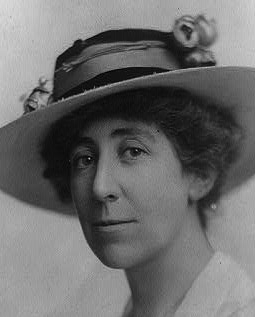
    Jeannette Rankin

    I’ll begin my talk by noting that women had limited voting rights in Montana Territory. They could vote for school trustees; if they were property owners, they could vote on financial matters like bond issues. In fact, it was common for women to be elected county superintendents of schools in territorial Montana.

    I’ll tell the story of how Adda Hamilton defeated the incumbent Gallatin County School Superintendent in 1884. Miss Hamilton’s opponent was none other than William Wallace Wylie, prominent citizen who had been recruited to run Bozeman schools in 1878.

    According to General George W. Wingate, who wrote about the incident in 1885, Wylie forgot himself in a campaign speech “so much as to sneer at Miss Hamilton as ‘a school marm who came to the territory a few years ago without a dollar in her pocket.”

    As Wylie went on in this manner, Wingate said, “An Irishman in the audience stood up and interrupted him with a stentorian shout—’Boys, lets give three cheers for Miss Hamilton.’ Whereupon every man in the place stood up in in place, waved his hat and cheered for Miss Hamilton at the top of his lungs.”

    On election day, Miss Hamilton, who ran as an independent, beat her nearest opponent soundly in a three-way race. She got 1,485 votes; Wallace, 1,051, and the Democrat, 487.

    After some description of efforts to win voting rights for women in the Montana territorial era, I’ll tell the story of Clara McAdow who some say almost succeeded in making Montana the first state to grant woman suffrage. Mrs. McAdow, the story goes, stood outside the courthouse where the first state constitutional convention was held in 1889 and buttonholed delegates as they came and went. To avoid making suffrage a partisan issue, Mrs. McAdow alternated her efforts between Democrats and Republicans.

    The 1889 Constitutional Convention devoted a whole day to debating women suffrage and took three votes on the topic. On the first vote, they rejected suffrage 26 to 32. Then by a tie vote, they rejected a provision to grant suffrage without a constitutional amendment. Finally, they rejected a proposal to submit the question to the voters.

    I’ll end my talk with a description of stump speeches in Bozeman by supporters and opponents of suffrage and a description of the election results. In April, Miss Minnie Bronson of the National Association Opposed to Women’s Suffrage, spoke to a large crowd in Bozeman. She said opposition was growing rapidly and denied that her group was funded by the liquor lobby.

    Montana temperance and suffrage leader Maggie Smith Hathaway told a group of Bozeman women in October that both men and women are necessary for the smooth operation of government. Financial and commercial positions were more suited to men, Hathaway said, but women are better at “health, sanitary and moral issues.”

    Montana’s most prominent suffragist, Jeannette Rankin, spoke in Bozeman in May and stressed the need for continued organization in Gallatin County. After helping to win voting rights for women, Rankin went on to become the first women elected to the U.S. Congress.

    The election was close and early returns were in doubt. In fact, some newspapers announced that suffrage had lost in Montana. But when officials completed their final tally, the measure passed with 52 percent supporting it and 48 against.

    In Gallatin County, party officials at both Republican and Democratic headquarters though suffrage had carried there. But when the official results came in they showed 47 percent in favor and 53 percent against.

    It wasn’t until August 1920 that the Tennessee legislature passed the Nineteen Amendment to the U.S. Constitution and outlawed sex-based restrictions on voting.

    ∞§∞

    — Detail from a Library of Congress photo.