Category: Events

  • Reconnecting Brian Persha and “The Thinker”

    Reconnecting Brian Persha and “The Thinker”

    screen-shot-2016-11-20-at-2-51-18-pm
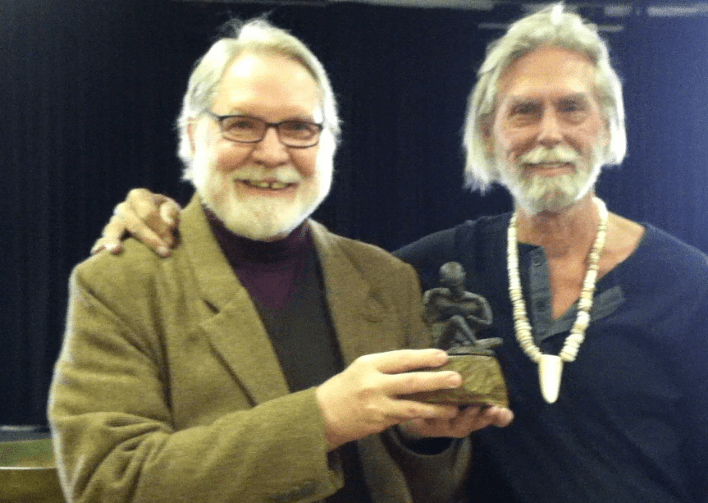
    Me, “The Thinker,” and Brian Persha

    In the spring of 1965 I was looking for a wedding present for my brother when I bumped into Brain Persha in the student union at the University of Montana. Brian was completing his MFA in ceramics under the famous Rudy Autio. Brian said he had some pieces that might do the trick, so we went to his place to check them out.

    I bought a piece called “Protocol Reversed” for my brother and his wife. It’s a lovely bronze about eight inches tall in the manner of Henry Moore. It shows a man kneeling before a woman — just the thing for a wedding present, I thought.

    But the piece that really captured my heart was one called “The Thinker,” a seated male nude. The Thinker’s emaciated form reminds me of Alberto Giacometti statues, although it lacks that artist’s elongated limbs.

    I recall commenting on Brian’s statue having no hands, and Brian telling me: “a thinker needs no hands.”

    I spent my last money on “The Thinker.” I remember wondering if I had enough cash left to buy gas and get home. I then went back to Silver Star to spend the summer working on the family ranch. I gave Protocol to the newly weds and kept The Thinker for myself. I have treasured it now for more than 50 years.

    When I heard that Brian was showing his work at the Eagle’s Club in Bozeman today, I couldn’t resist the temptation to reunite the statue with him. I walked up to where he was standing and said, “I have something to show you.”

    He called me by name and said, “Yes, you do.”

    He hefted the statue, inspected in from several angles and showed me his initial on its side. He then provided a detailed explanation of how it was cast in bronze from a wax model—an elaborate and delicate casting process that took hours.

    Brian said he remembered the day I bought the statues well. He said my enthusiasm for his work and my willingness to pay for it gave him confidence to pursue a career as an artist. He’s made his living as a studio artist ever since. It’s flattering to think I had something to do with that.

    ∞§∞

    P.S., My brother says he can’t locate “Protocol Reversed.” I do hope he finds it.

  • An Event: “An Ursine History of Yellowstone Park” in Cooke City


    Bears at Dump 2 MHS Photo
    Yellowstone tourists watching bears at a hotel dump.

    I’ve been preparing a talk titled “An Ursine History of Yellowstone Park: Stories of People and Bears” to present at the Cooke City Museum on Thursday, July 21, at 6 p.m.. It’s part of the Museum’s “Joe’s Campfire Talks,” an outdoor summer series. I’ve presented there twice before and really enjoy the venue.

    “Ursine History” is a topic I’ve been thinking about for several years and I’m glad for the opportunity to dig through my files and organize my thoughts on it. I always discover new things when I take a fresh look at my collection of more than 300 first-person accounts by Yellowstone travelers.

    Bears are resilient animals that adapt quickly to changes in their surroundings so their behavior provides an interesting way of looking at Yellowstone Park history. Examine how tourists interacted with bears across time reveals a lot about how attitudes toward wildlife and nature have changed.

    The first Euro-Americans to visit Yellowstone park were mountain men who scoured the area to trap beaver and other fur bearing animals. For them bears were a source of food —and bear grease that they used for everything from lubricants for their guns to laxatives. I like to enliven my presentations by reading first-person accounts by Yellowstone travelers, so I’ll read an excerpt from Osborne Russell’s Journal of a Trapper for this section of my talk. In the excerpt, Russell learns just how dangerous a grizzly can be when he decides to track a wounded animal.

    The congressional act that established Yellowstone Park in 1872 explicitly allowed hunting so visitors to the remote roadless wilderness could hunt for sustenance. That led to an era that some writers have called a holocaust when the population of large animals in Yellowstone was decimated. Bear hunters were among those who came to the park to bag trophies. I’ll read Jack Bean’s hilarious account of a neophyte hunter’s adventure bagging his first bear.

    When they were hunted, bears learned that humans meant danger and sightings of them became rare. But after the Army took over administration of the Park in 1886 and outlawed guns, they began to reappear. In fact, they became pests patrolling campground for garbage and unattended picnic baskets. Then hotels created dumps for kitchen garbage in nearby woods and watching bears in them became a signature experience for Yellowstone travelers.

    Bears didn’t approach horse-drawn conveyances, but with the coming of the automobile, they rapidly became accomplished roadside beggars, and bear jams backed up traffic for miles. In the 1960s park rangers began locking up garbage containers and enforcing “do not feed the bears” rules. Soon, bear sightings became rare again.

    That’s an outline of my presentation. I’m looking forward to giving it. If you’re looking for something to do on Thursday, come to the Cooke City Museum and hear “An Ursine History of Yellowstone Park.”

    ∞§∞

    • Photo from the Montana Historical Society.


  • An Event — Reading at the Museum for the Bozeman Stroll

    12295446_932919083448395_1155562728566614350_n

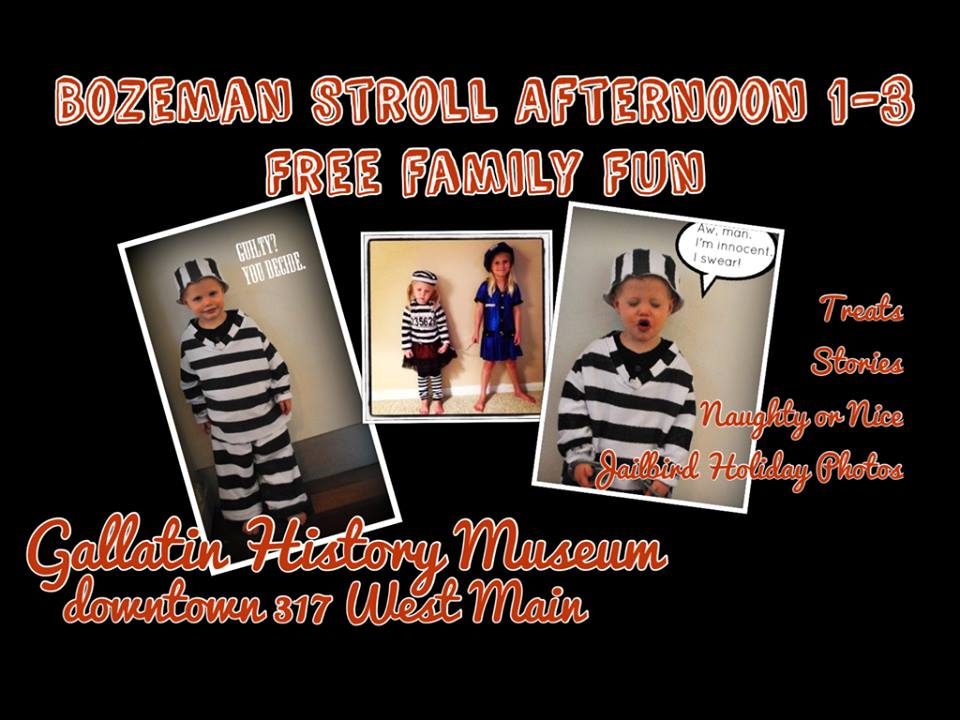
    I agreed to read from my books at the Gallatin History Museum Kid’s Day — part of the Annual Bozeman Stroll — tomorrow afternoon from 1 to 3. The Museum will be open to families for some holiday treats, stories, and holiday picture opportunities in the jail cells.  Representatives from the Gallatin County Sheriff’s department will be on hand, and kids can check out a real patrol car. The event is free and all are welcome.

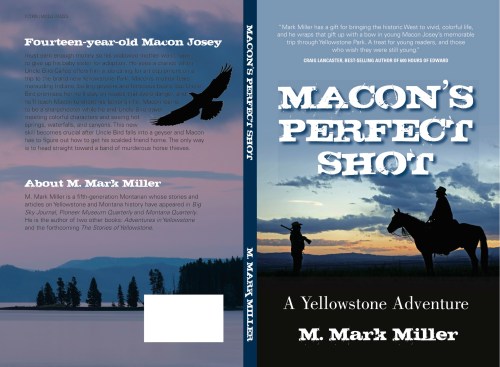
    Of course, I’m always eager to read from my books, but usually I’m addressing an adult audience so I’ll have to adjust thing a bit. Fortunately one of my books, Macon’s Perfect Shotis a middle-grades novel.

    Macon tells the story of a 14-year-old boy’s trip Yellowstone Park in the 1870s. The description on the back cover says:

    [Macon]must earn enough money so his widowed mother won’t have to give up his baby sister for adoption. He sees a chance when Uncle Bird Calfee offers him a job caring for art equipment on a trip to the brand new macons perfect shot front coverYellowstone Park. Macon’s mother fears marauding Indians, boiling geysers and ferocious bears, but Uncle Bird promises her he’ll stay on routes that avoid danger, and he’ll teach Macon to shoot his father’s rifle. Macon learns to be a sharpshooter while he and Uncle Bird travel meeting colorful characters and seeing hot springs, waterfalls, and canyons. This new skill becomes crucial after Uncle Bird falls into a geyser and Macon has to figure out how to get his scalded friend home. The only way is to head straight toward a band of murderous horse thieves.

    Macon has plenty of adventures to choose from, and I’ve been going through the book picking some of them to read tomorrow. A thing that struck me as I made my choices is how many of the chapters in Macon are based directly on stories from my collection of more than 350 first-person accounts of early travel to Yellowstone Park. Some examples:

    Of course, there are many more examples. I think one of the best things about Macon is that it provides a realistic portrayal of what it was like to visit Yellowstone Park in the 1870s when it was still a remote wilderness. That’s because the book is based on a full decade of research.

    Another interesting thing about choosing readings for the event tomorrow is that it gave me the opportunity to think about differences between fiction and non-fiction. stories front coverMany of the adventures in Macon are based on stories published in my other two books, Adventures in Yellowstone and The Stories of Yellowstone so I could compare them directly.  In fact, the general plot of Macon is patterned after Henry “Bird” Calfee’s tale of his trip to the park. Like the fictional Macon, Calfee travelled to Yellowstone when the park was brand new with a single companion, his companion fell into a geyser trying to rescue a deer, and the pair encountered a murderous band of horse thieves while they made their way home.

    Of course, the fictional Macon had even more adventures than his real life counterparts, and the opportunity to combine the stories of several people into a singleimage0018 character allows fiction to have larger and more complex stories than real life.

    Perhaps more important, fiction allows an author to imagine a characters’ inner lives — their feelings, emotions and motivations — things that real people often leave out of the stories they tell about themselves. Some people say this imagining lets the fiction writer provide a truer picture of life that a writer who sticks to the facts.

    I don’t know about that, but I do know it’s fun to compare the versions of stories that people who lived the adventures told about themselves with the versions I imagined for them as a fiction writer. And, while I didn’t plan to do it, I’ve provided opportunities for you to decide for yourself.

    All three of my books are for sale at the Gallatin History Museum Bookstore (and at your favorite bookseller, on line or brick and motor). Buy them for yourself and start comparing different versions of the same stories. And remember, buy them for your family and friends. They make great holiday gifts.

    I’d be delighted to sign copies at the Bozeman Stroll on Saturday and hope to see you there. If you miss it, don’t worry.  I’ll be back to sign books at the Gallatin History Museum author event on Sunday.

    12308512_932915040115466_6838633348210481153_n


    ∞§∞

  • An Event: Ready to Present at Cooke City Museum on Saturday

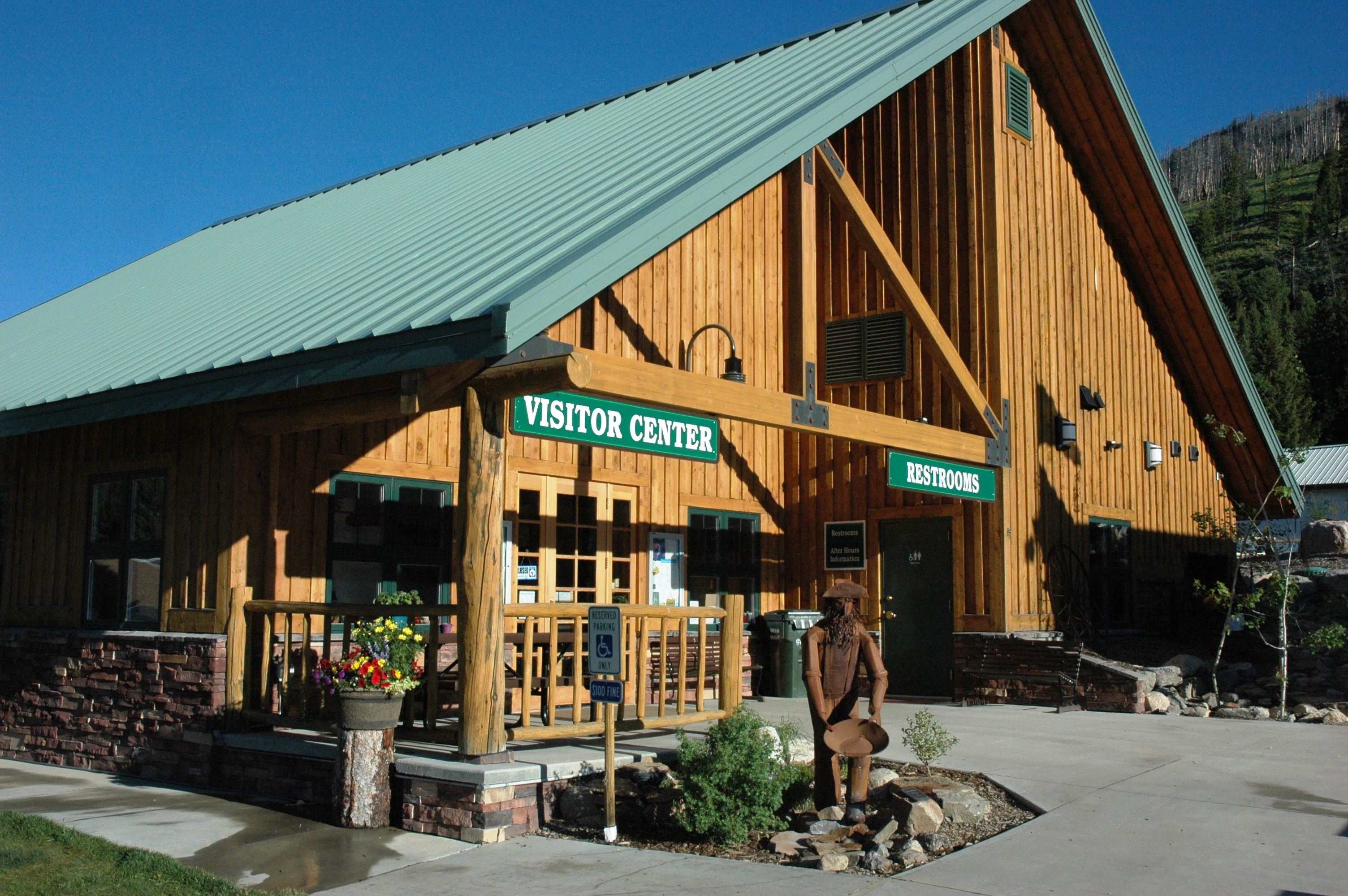
    Cooke City Visitors Center and Museum
    Cooke City Visitors Center and Museum

    I’ve been preparing a talk titled “Mountain Men Discover Yellowstone” to present at the Cooke City Museum on Saturday, August 8 at 8 p.m. It’s part of the Musuem’s “Joe’s Campfire Talks,” an outdoor summer series. I’ve presented there before and really enjoy the venue.

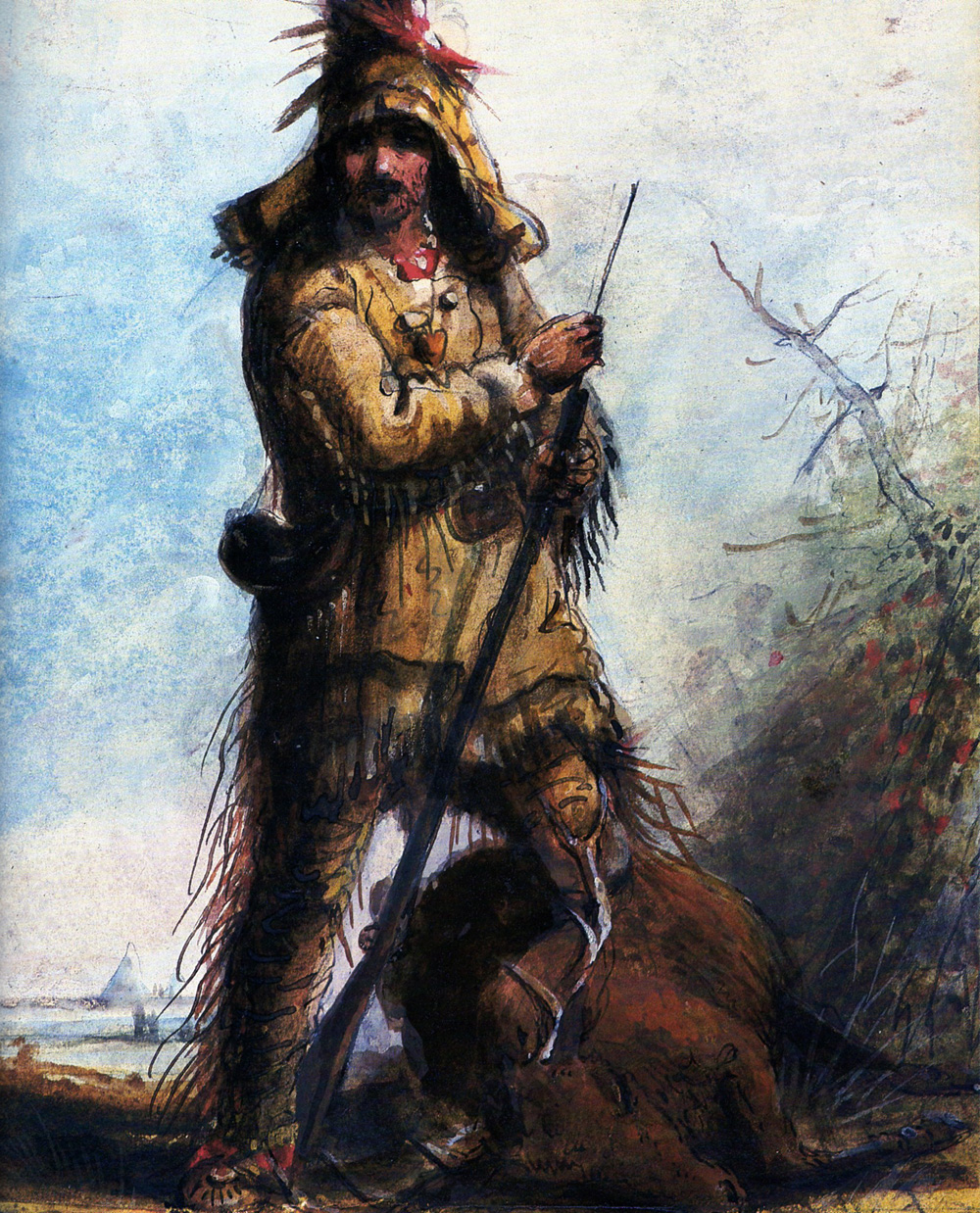
    Old_Bill_Williams wikipedia commons
    Old Bill Williams, Wikipedia Commons.

    The topic a new one for me so I had to dig through my files to find stuff, but I’m glad for a reason to explore my collection of 300 or so tales of early travel to Yellowstone Park. I always discover new things when I take a fresh look.

    I’ll begin my presentation with to following story about a first sighting of geysers:

    It was a scene of absolutely uncanny desolation, and as we looked at it we ceased to wonder at the names bestowed upon it by its first discoverers, such as “Devil’s Paint Pots,” “Hell’s Half-acre,” [and so forth].  One of our guides told us in graphic language of his first sight of this region.

    “You see,” he said, ” a party of us were out prospecting for mines, and we had traveled all day through pretty thick forests, and were pushing towards an opening we could dimly see through the trees, where, we hoped to make a comfortable camp for the night. We were very tired, and were “hurrying to get into camp, when suddenly, just as we reached the edge of the forest without a moment’s warning, we heard a most awful rumbling, the ground shook under our feet, and there burst into the air a column of water and steam that looked as if it reached the skies.

    We just fairly lost our senses, and never stopped to take a second look, but wheeled about in an instant, put spurs to our horses, and crushed away through the underbrush and tree-trunks as if the Evil One himself were after us. And the fact is,” he added, “we did not know but that he was. For what else, we asked ourselves, could such goings-on mean, but that we were on the very edge of the lower regions? We never rested till we had put miles between us and that awful place, and for years we never spoke of it for fear the fellows should think we had really been to hell, and were sold to the old fellow who lives there.”

    When I first began collecting Yellowstone travel stories, I thought such tales of freight and flight at first sight of boiling fountains of water 200 feet high would be common. But they’re not. In fact, that’s the only story like I have like that. And it’s from a reminiscence published in 1883. Since the narrator says he was “prospecting for mines” we can tell it probably was from the 1860s, decades after mountain men discovered the wonders of what became Yellowstone Park.

    The first white man to see Yellowstone was John Colter, who passed through the area in 1807 while looking for Indians to trade with. Colter, who had been a member of the famous Lewis and Clark Expedition, later told his old boss William Clark what he had seen and Clark included the information in a map he published later. While Clark’s map proves that Colter saw geothermal features, the information provided in them is vague.

    The first person to write about geysers he had actually seen was a trapper named Daniel Potts who described them in his famous “Letter From Sweet Lake,” date July 8, 1827. A newspaper published the letter anonymously and it’s author was unknown until the 1940s when two elderly ladies offered to see the original to the Park Service.

    The first mountain men who saw the geothermal features of the upper Yellowstone didn’t even know the word geyser, but their descriptions makes it clear they saw geysers. I’ll demonstrate this by reading a couple of 1834 descriptions — one by Osborne Russell and another by Warren Angus Ferris.

    I’ll end my talk with Osborne Russell’s delightful description of trappers telling tall tales  around a campfire.

    It should be a fun presentation and I’m really looking  forward to it. So if your looking for something to do on Saturday, come to Cooke City and hear about the early history of Yellowstone Park.

    ∞§∞

    • Excerpt from H.W.S., “A Lady’s Visit To The Geysers Of The Yellowstone Park,” Friends Intelligencer May 19, 1883. Pages 218-221; May 27, Pages 234-237.
  • An Event — Getting Ready for Early Travel to Yellowstone Class

    My course on “Early Travel to Yellowstone Park” begins in just a week, and I’ve been working hard to get ready. It’s a reprise of one I taught in 2013 for Montana State University’s Wonderlust Series, so preparation is mostly revising notes and slides from my files. Those are in good shape, but I’m glad for the opportunity to revise and refine them — and make the class even better.

    Car at Old Faithful YDSF16350We’ll will meet for six consecutive Saturdays (Feb. 7 through March 14) from 9:30 to 11 a.m. In the Community Room of the Gallatin County Courthouse at 311 West Main, Bozeman. Admission is free for members of the Gallatin Historical Society and $5 at the door for non-members. The fee will include admission to the Gallatin History Museum at 317 West Main.   Interested persons can purchase memberships at the door.

    The course will cover the history of the area that is now Yellowstone Park from its discovery by Euro-Americans in the early 1800s through the Model-T Era. Park history will come alive through stories in the words of the people who lived the adventure of visiting the world’s first national park when it was new and be illustrated with historic photographs.

    There will be a reception with cookies and coffee following each meeting at the Gallatin History Museum, which is next door to the Courthouse.

    Each class session is self-contained, so you can choose whichever ones appeal to you. Of course, I hope you’ll attend them all. That way you’ll get a complete picture of the World’s First National Park from the time of its discovery by Euro-Americans through the Model-T Era.

    Course Calendar

    February 7: Mountain Men — The Mountain Man Era of Yellowstone Park began in 1807 when John Colter became the first white man to see the wonders of the area. Beginning about 1820, after trappers and traders had harvested most of the beaver in lower elevations, mountain men penetrated the Yellowstone Plateau.  Brigades of men led by entrepreneurs like Jim Bridger probably found most of the wonders of the upper Yellowstone. Although trappers left few written records of what they saw, dramatic stories remain telling about encounters with Indians (some hostile, some friendly), seeing fountains that hurl boiling water hundreds of feet into the air, and telling all tales.

    February 14: Explorers — By the mid 1860s, reports of mountain men and prospectors made it apparent that the wonders near the headwaters of the Yellowstone were dramatic enough to win glory for whoever was first to document them. Several attempts were made to organize expeditions to explore the upper Yellowstone, but they fell through because of threats of Indian troubles. Finally, in 1869, three men decided a small group could get by the Indians without being noticed. This was the Folsom, Cook, Peterson expedition. The Washburn Expedition of 1870 and the Hayden Expedition of 1871 convinced everyone that the stories of Yellowstone’s wonders were true and helped persuade to the federal government to establish the park in 1872.

    February 21: First Tourists — When the Washburn Expedition returned to civilization late in the summer of 1870, the news that the rumors of wonders on the upper Yellowstone were true, the new spread like wildfire. It was too late in the season for another expedition to a land that could be snowbound by September, but soon plans were made to travel to the newly discovered wonderland. The first tourist were of three types: small groups of men from Montana Territory who travelled light and planned to live off the land, dignitaries who had the time and money to cross the country on the new transcontinental railroad and then take the stage to Yellowstone and mixed groups of men and women.

    February 28: Early Women — Doubtless, the first women in what is now Yellowstone Park were Indians who had lived there for centuries before Euro-Americans explored it. White women began visiting the park while the ink was still drying on President Grant’s signature on the bill that created it. Most women traveled only to the ends of the roads at Mammoth Hot Springs or the Lower Geyser. But a few braved the roadless wilderness on sidesaddle and returned to tell their stories of boat rides on Lake Yellowstone, frying doughnuts in bear grease and being caught in October Blizzards.

    March 7: Nez Perce Encounters — In the summer of 1877 five bands of Nez Perce Indians decided to abandon their homeland at the intersection of the Idaho, Washington and Oregon borders and make a new life in the buffalo country of Montana. After the army attacked their sleeping camp on the banks of the Big Hole River, the Indians fled on a route that took them through Yellowstone Park. While the chiefs tried to avoid conflict, groups of enraged young men waged gun battles with tourists and took two women captive.

    March 14: The Grand Tour — In 1883, the Northern Pacific completed its transcontinental railroad and immediately began building a spur from Livingston, Montana, to the northern border of the park. Gone were the days when the only Yellowstone visitors were residents of the nearby territories and well heeled dignitaries who had the time and money for elaborate trips. The railroad opened the floodgate to middle-class tourists from across America and around the world. This led to the development of touring companies that provided transportation, food, and lodging for visitors. The most expensive tours were provided by subsidiaries of the railroads that build luxury hotels at key locations and provided transportation between them. Moderately priced tours were offered by permanent camps. Of course, many tourists continued to tour the park with their own wagons, teams of horses, and camping gear. A few mobile camp companies moved their tents regularly between sights.

    ∞§∞

    Photo, Yellowstone Digital Slide File.

  • An Event: Getting Ready to Lauch THE STORIES OF YELLOWSTONE

    I’ll be launching my latest anthology, The Stories of Yellowstone, at reading and signing at 2 p.m. Sunday afternoon at the Country Bookshelf on Main Street in Bozeman. I’ll also be reading (and signing) my new middle-grades book, Macon’s Perfect Shot, and my old standby, Adventures in YellowstoneI hope to see you there. stories front coverAlso I’d appreciate it if you’d let other folks who might be interested know about the event.

    The Stories of Yellowstone covers more than a hundred years and contains 72 stories chosen to represent all kinds of Yellowstone experiences. That makes it hard to choose just two or three stories that represent the whole. Perhaps readers of this blog would be willing to help. I’ll list some candidates in categories below and you can tell me which one in each category grabs your interest the most. Just let me know in t in the comment line. You can click on the link to see the story as it was posted on this blog. These were re-edited for the book and may be a little different there.


    I’d like to read one story that highlights grand adventure. Here are three candidates:


    And a story that is laugh-out-loud funny:


    And maybe a story about a Yellowstone experience you can’t have anymore.

    I wish I could read them all on Sunday, but I’ll have to be satisfied with just two or three. You can read them all on this blog, but wouldn’t really rather have a signed book.

    I hope to see you at County Bookshelf on Sunday.

    ∞§∞


  • An Event: Ready to Talk About Women Suffrage at Senior Center

    I’ve finished preparing my remarks for a talk celebrating “Montana Day” at Bozeman Senior Center at noon this Friday. I’ve titled my talk “Women Suffrage in Gallatin County.” That’s a timely topic because November 3 was the hundredth anniversary of the vote for woman suffrage in Montana.

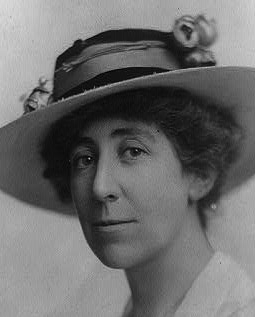
    Jeannette Rankin loc detail
    Jeannette Rankin

    I’ll begin my talk by noting that women had limited voting rights in Montana Territory. They could vote for school trustees; if they were property owners, they could vote on financial matters like bond issues. In fact, it was common for women to be elected county superintendents of schools in territorial Montana.

    I’ll tell the story of how Adda Hamilton defeated the incumbent Gallatin County School Superintendent in 1884. Miss Hamilton’s opponent was none other than William Wallace Wylie, prominent citizen who had been recruited to run Bozeman schools in 1878.

    According to General George W. Wingate, who wrote about the incident in 1885, Wylie forgot himself in a campaign speech “so much as to sneer at Miss Hamilton as ‘a school marm who came to the territory a few years ago without a dollar in her pocket.”

    As Wylie went on in this manner, Wingate said, “An Irishman in the audience stood up and interrupted him with a stentorian shout—’Boys, lets give three cheers for Miss Hamilton.’ Whereupon every man in the place stood up in in place, waved his hat and cheered for Miss Hamilton at the top of his lungs.”

    On election day, Miss Hamilton, who ran as an independent, beat her nearest opponent soundly in a three-way race. She got 1,485 votes; Wallace, 1,051, and the Democrat, 487.

    After some description of efforts to win voting rights for women in the Montana territorial era, I’ll tell the story of Clara McAdow who some say almost succeeded in making Montana the first state to grant woman suffrage. Mrs. McAdow, the story goes, stood outside the courthouse where the first state constitutional convention was held in 1889 and buttonholed delegates as they came and went. To avoid making suffrage a partisan issue, Mrs. McAdow alternated her efforts between Democrats and Republicans.

    The 1889 Constitutional Convention devoted a whole day to debating women suffrage and took three votes on the topic. On the first vote, they rejected suffrage 26 to 32. Then by a tie vote, they rejected a provision to grant suffrage without a constitutional amendment. Finally, they rejected a proposal to submit the question to the voters.

    I’ll end my talk with a description of stump speeches in Bozeman by supporters and opponents of suffrage and a description of the election results. In April, Miss Minnie Bronson of the National Association Opposed to Women’s Suffrage, spoke to a large crowd in Bozeman. She said opposition was growing rapidly and denied that her group was funded by the liquor lobby.

    Montana temperance and suffrage leader Maggie Smith Hathaway told a group of Bozeman women in October that both men and women are necessary for the smooth operation of government. Financial and commercial positions were more suited to men, Hathaway said, but women are better at “health, sanitary and moral issues.”

    Montana’s most prominent suffragist, Jeannette Rankin, spoke in Bozeman in May and stressed the need for continued organization in Gallatin County. After helping to win voting rights for women, Rankin went on to become the first women elected to the U.S. Congress.

    The election was close and early returns were in doubt. In fact, some newspapers announced that suffrage had lost in Montana. But when officials completed their final tally, the measure passed with 52 percent supporting it and 48 against.

    In Gallatin County, party officials at both Republican and Democratic headquarters though suffrage had carried there. But when the official results came in they showed 47 percent in favor and 53 percent against.

    It wasn’t until August 1920 that the Tennessee legislature passed the Nineteen Amendment to the U.S. Constitution and outlawed sex-based restrictions on voting.

    ∞§∞

    — Detail from a Library of Congress photo.

  • An Event: Ready to Launch Macon’s Perfect Shot at Gallatin History Museum

    macons perfect shot cover

    I’ve been getting ready to launch my new middle-grades novel, Macon’s Perfect Shot, with a reading Wednesday, Oct. 8, at 6 p.m. at the Gallatin History Museum, 317 W. Main, in Bozeman. The Museum’s Research Room is the perfect place for the event because it’s where I discovered the stories that inspired the book.

    My first book, Adventures in Yellowstone, is a compilation of a dozen first-person accounts of early travel to Yellowstone Park. I wanted it to be an anthology in the words of the people who live the adventures because that makes their emotions and personalities shine through.

    When I finished Adventures, I discovered I had a lot of stories left that I didn’t think were strong enough to stand on their own, so I invented a 14-year-old boy to live them. Turning to fiction let me attribute several incidents to a single character and to embellish true stories by creating dialog and exploring  motivations that weren’t explicit in the accounts in my collection of more that 300 tales.

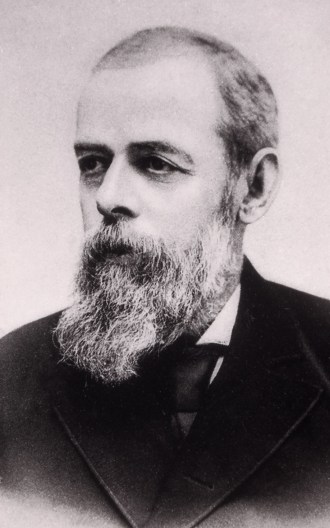
    Philetus W. Norris
    Philetus W. Norris

    The first thing I needed was an overarching story that could be used to tie a lot of little incidents together.  I chose Henry “Bird” Calfee’s account of his trip to the brand new Yellowstone National Park in 1872. Calfee told his story in a reminiscence apparently published in a newspaper many years after his trip. It’s contained in an unidentified and undated newspaper clipping in the Gallatin History Museum Reasearch Room.

    Calfee, who later became one of the first commercial photographers in Yellowstone Park, traveled with his friend, Macon Josey. The pair rode on horseback through the roadless wilderness for several weeks and visited all the major sights in the park: Mammoth Hot Spring, Yellowstone Falls. the Grand Canyon of the Yellowstone, and the geyser basins.

    Their adventure climaxed when Josey fell into a geyser and scalded himself up to his waist. Then Calfee had to figure out how to get his injured friend home and the route he chose led directly toward a murderous band of horse thieves.

    I also found a story in an 1872 issue of the Bozeman Avant Courier newspaper that described pioneer sheriff Henry Guy’s pursuit of the notorious Harlow gang that had been stealing horses in the Gallatin Valley. Based on information provided by Calfee and Josey, Sheriff Guy tracked down the gang and engaged them in a fierce gun fight that left three men dead.

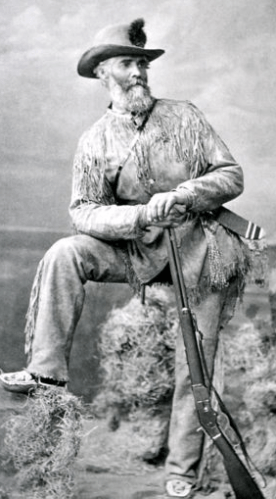
    Jack Bean with trophy.
    Jack Bean with trophy.

    The Calfee-Josey story provided a nice adventure narrative, but I wanted to create a coming-of-age story. Although the real Macon Josey was an adult, I made my character by that name a 14-year-old boy. I altered the facts and had Calfee, not Josey, fall into a geyser. That provided a strong pivot point in the plot where Macon had to grow up fast.

    After I had an overarching plot, I began looking through my story collection for other tales I could use as models for Macon’s adventures. Some of those stories have been posted on this blog.

    All the stories I used came from the 1870s, so Macon’s Perfect Shot provides a realistic picture of what travel to Yellowstone Park would have been like when it was a roadless wilderness. The book is aimed toward fifth- and sixth-graders, but I tried to write a novel that would be fun reading for any age. I think I succeeded.

    If you’d like to learn more about Macon’s Perfect Shot or early travel to Yellowstone Park, I’d love to tell you all about it at the book launch.  I hope to see you there.

    It’s free and open to the public and I’ll be available to sign copies of the new book and my first book, Adventures in Yellowstone. And watch for my next book, The Stories of Yellowstone, which is scheduled to be published in November.

    ∞§∞

  • Lost Manuscript Describing 1869 Yellowstone Expedition Found

    When I came downstairs for my morning coffee on Tuesday, my wife pointed to a headline reading “Wonderland Report” on the front page of  the Bozeman Daily Chronicle. It was over a story about a manuscript describing the 1869 Folsom-Cook-Peterson expedition to the area that became Yellowstone National Park. The manuscript was recently obtained by the Montana State University Library. I skimmed through the story and commented that the newly discovered manuscript should help historians answer some long standing questions.

    Portrait of WC Cook Artist unknown No date
    Charles Cook
    David Folsom YDSF
    David E. Folsom

    Historians generally credit the Folsom-Cook-Peterson expedition as the first serious effort to explore and document the wonders of the upper Yellowstone. Trappers and prospectors had been telling stories for decades about fountains of boiling water, canyons a thousand feet deep, and mountains of glass. At first people discounted such reports as tall tales, but by the late 1860s it became obvious that there really were wonders in the area.

    Montanans made several attempts to mount expeditions large enough to repel Indian attacks in the 1860s, but they all fizzled. Then David E. Folsom and Charles Cook figured that the Indians wouldn’t notice a small group traveling through the area. William Peterson, who worked for Cook, volunteered to go with them. The trio traveled through the area that became Yellowstone Park for about a month in September and October of 1869. When they returned home, the checkered history of the report of their adventures began.*

    At first the men were reluctant to write about what they had seen. As Folsom said later, “I doubted if any magazine editor would look upon a truthful description in any other light than the production of the too-vivid imagination of a typical Rocky Mountain liar.”

    At the behest of a friend who had connections to New York publishing, Folsom and Cook prepared a manuscript that merged separate diaries they kept during the trip. When they submitted the manuscript for publication, Folsom’s fears proved to be well founded.  The New York Tribune, Scribner’s and Harper’s magazines all turned it down.  The reason they gave was that they had reputations “they could not risk with such unreliable material.”

    Finally, the men succeeded in getting the manuscript published in the less prestigious Chicago-based Western Monthly Magazine in June of 1870Cook later complained that “the editor cut out portions of the diary which destroyed its continuity” and kept it from “giving a reliable description of  our trip.” The magazine also attributed the article solely to Cook.

    The Western Monthly offices were destroyed in the Great Chicago Fire of October 1871, which limited access to copies of the report. Also, the Montana State Historical Society had a copy of the magazine containing the story that burned in the Helena fire of 1874.  The unfortunate history of the manuscript continued after Folsom lent a copy of it to a  professor at Montana State College (now University) and it was destroyed in a fire that gutted the chemistry building in 1916.

    N.P. Langford overstated the rarity of the Western Monthly article in an introduction he wrote for Contributions to the Historical Society of Montana, which republished it in 1904. Langford, who helped organize the 1870 Washburn Expedition and became famous for his descriptions of it in Scibner’s Monthly, also mis-attributed the article to Folsom alone rather than crediting it as a joint effort. The error seems odd because Folsom, Cook and Peterson all were still alive then.

    Apparently, the Folsom-Cook article never circulated widely in Montana, so it probably had little impact. But Folsom, who took a job in the Montana Surveyor Generals’ office, worked with another Yellowstone explorer, Walter DeLacy, to produce a famous map of Montana that included the upper Yellowstone. The map showed the “Route of Messrs Cook & Folsom 1869” and provided far more detail about Yellowstone features than had been revealed before.

    Also, Folsom’s  descriptions helped inspire the Washburn Expedition of 1870, which brought the wonders of the Upper Yellowstone to national attention. The expedition led by Montana Surveyor General Henry D. Washburn included several prominent officials and businessmen whose word could not be doubted. Perhaps more important, several members of the Washburn Expedition were skilled writers with good connections to territorial newspapers and national publications. Their reports eclipsed the Folsom-Cook article and helped create Yellowstone National Park in 1872.

    Nearly a hundred years after Folsom, Cook and Peterson visited the Upper Yellowstone, Aubrey L. Haines conducted exhaustive research on their trip.  Haines, who is considered the dean of Yellowstone Park historians, scrutinized everything he could find about the trio and the University of Oklahoma Press published his findings in 1965 under the title The Valley of the Upper Yellowstone: An Exploration of the headwaters of the Yellowstone River in the Year 1869, as Recorded by Charles W. Cook, David E. Folsom, and William Peterson.  It would be interesting to compare Haines’ version with the manuscript MSU recently obtained.

    ∞§∞

    * Details surrounding publication of the Folsom-Cook-Peterson report are described in Aubrey L. Hains’ book, Yellowstone National Park: Its Exploration and Establishment, National Park Service in 1974.

    — NPS Photos.

  • An Event: Talking About “Adventures in Yellowtone” on C-SPAN

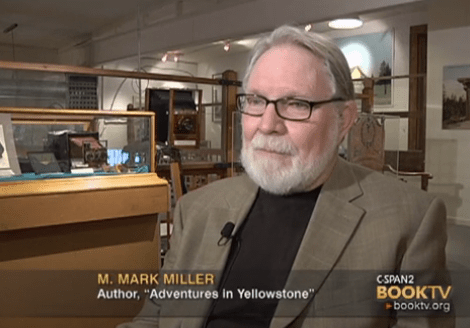
    MMM on BookTV
    Discussing “Adventures in Yellowstone” at the Pioneer Museum of Bozeman

    Color me excited. Over the weekend, C-SPAN broadcast a story about my book, Adventures in Yellowstone, on Book TV. You can watch it on their 2013 Cities Tour Page. You’ll need to scroll down to find my segment. If you’d rather, you can view it on YouTube.

    I’m impressed with the power of appearing on national television. By mid-afternoon Sunday, Amazon ranked Adventures just over 12,500. That may not sound like much, but it put my book ahead of Ivan Doig’s new novel, Sweet Thunder. I don’t expect my position to hold, but it sure is nice to be ranked ahead of an established author like Doig, if only for a while.

    It all began about a month ago. I was working at my desk when the phone rang.

    “I’m Tiffany Rocque, an associate producer for C-SPAN,” said the voice on the line.  “We’d like to interview you about your book, Adventures in Yellowstone.”

    “Yeah, right,” I thought, but something told me to resist the temptation to hang up.

    Tiffany explained that she was coming to Billings as part of C-SPAN’s 2013 Cities Tour and spending a day in Bozeman to interview authors for Book TV. I pretended I knew what she was talking about and said I’d be glad to participate. We exchanged phone numbers and email addresses and set September 11 as the date for the interview.

    As soon as we hung up, I googled “Tiffany Rocque.” Sure enough, there was a C-SPAN producer by that name, so I began searching the C-SPAN webpage for Book TV programs. I discovered the network posts Cities Tour segments on YouTube and watched several of them until I was confident that I knew what to expect.

    A few days before the interview, I asked my friend, Margie Peterson, if she would interview me for a practice session. Margie and I work together as volunteers at the Pioneer Museum of Bozeman so I knew she would do a good job of posing questions.

    We met at a coffee shop, talked about what to expect, and Margie began pitching questions. I found I could answer most of Margie’s questions and could gracefully get around others when I didn’t know the answers. The practice session was very helpful and I owe Margie big time.

    A couple of days before the interview, Tiffany, who was always a consummate professional, called to set up an exact time and location for the interview. We decided on 11 a.m. at the Pioneer Museum of Bozeman because it’s where I did a lot of my research for Adventures in Yellowstone and it could provide interesting backdrops for the interview.

    On the appointed day, I met Tiffany and we wandered about the museum looking for a good place for the shoot. She chose a display case filled with antique cameras like those photographers would have used in the Nineteenth Century to take pictures in Yellowstone Park.

    Tiffany began setting up her equipment and told me to choose stories to read from my book. I wished she had told me to do that sooner, but it gave me something to do to calm my nerves while she set up cables, lights, and microphones.

    When she was ready, Tiffany sat me in a chair and told me to count to ten. After the sound check, she asked “When was Yellowstone Park established?” and we were rolling.

    The interview lasted about 40 minutes with me describing the adventures of early travelers to Yellowstone Park and reading excerpts from my book. I stumbled a few times, but Tiffany just smiled. told me to go on and pitched another question.

    After Tiffany packed up her equipment, we went to the Pioneer Museum Research Center. There Rachel Phillips, the Research Director, helped us with a computer search of the museum’s collection of 20,000 photographs. Tiffany chose several photos to illustrate my segment and other stories she was working on.

    While I walked Tiffany to her van, I asked if she could edit out my mistakes.

    She smiled and said, “If you look good, I look good.”

    I think we both look great.

    ∞§∞

    You can watch the Adventures in Yellowstone segment on:

    You can read blog posts of some of the stories mentioned in the segment.

    And course, you should buy your own copy of Adventures in Yellowstone.