Category: First Women in Yellowstone

Stories of women who visited Yellowstone Park before 1883 when completion of the Northern Pacific’s transcontinental route brought in a new type of traveller.

  • An Event: Getting Ready To Present “The Nez Perce in Yellowstone” at The Pioneer Museum

    The big event on my schedule this week is my presentation, “The Nez Perce in Yellowstone,” at The Pioneer Museum of Bozeman on Saturday at 9:30 a.m. The talk, which is part of the Gallatin Historical Society’s Fall Lecture Series, will focus the dramatic stories told by tourists who survived run-ins with the Indians in the Summer of 1877.
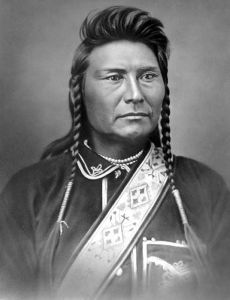
    Chief Joseph

    I’ll begin with an overview of the flight of the Nez Perce who generally had lived peacefully with whites for most of the 1800’s. After gold was discovered on Nez Perce land in 1853, settlers began moving onto their land. In 1877 the Indians were ordered onto a tiny reservation, but they decided instead to flee to the buffalo country on the plains. Most accounts of the flight of the Nez Perce emphasize things that happened outside of Yellowstone Park like broken treaties and battles, but I’ll reverse that pattern and focus in the human drama of the Indians’ encounters with tourists.

    I’ll read from my collection of first-person accounts of travel through Yellowstone Park in the 1800s. I like to present stories in the words of people who lived the adventures because that lets emotions and personalities shine through.

    The first tourist the Nez Perce found in the park was John Shively, a prospector who was familiar with the area. The Indians forced Shively to guide them all the way through the park. He was with them for thirteen days, so his story provides a good overview.

    The next tourists the Nez Perce found were the “Radersburg Party,” which included Emma Cowan and her thirteen-year-old sister, Ida. Emma and Ida were the only women to tangle with the Nez Perce inside the park. I’ll read Emma’s chilling description of the Indians shooting her husband in the head and taking her and her sister captive.

    To slow things down, I’ll talk about “Skedaddlers,” tourists who visited the park in the summer of 1877, but left before the Indians arrived. These include: the famous Civil War General William Tecumseh Sherman; Bozeman Businessman Nelson Story; English nobleman and park popularizer, The Earl of Dunraven and his companions, Buffalo Bill’s sometime partner, Texas Jack Omohundro, and Dunraven’s friend, George Henry Kingsley, a physician who patched up the Nez Perce’ victims at Mammoth Hot Springs.

    Next, I’ll talk about the Helena Party’s trip and contrast that all-male group that entered the park from the north with the co-ed Radersburg Party that entered from the west. Then I’ll read Andrew Weikert’s description of his blazing gun battle with the Nez Perce.

    I’ll describe how survivors of encounters with the Nez Perce were either rescued by soldiers looking for the Indians or made their way to Mammoth Hot Springs. I’ll explain that after Emma Cowan, her sister, and several wounded men left Mammoth for civilization, three men stayed there to see if their missing companions would appear. Then I’ll read Ben Stone’s description of the Indian attack at Mammoth that left another man dead.

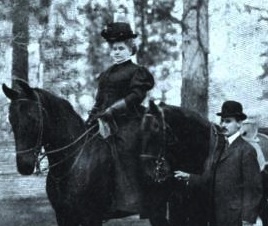
    I’ll end with my synthesis of accounts of Emma Cowan’s overnight ride from Helena to Bottler’s Ranch in the Paradise Valley to join her husband who had survived three gunshot wounds and was rescued by the army. That will give me an opportunity to talk about Encounters in Yellowstone, a book I’m writing now.

    ∞§∞

    — The presentation will be at Pioneer Museum of Bozeman,  315 E. Main. It is free and open to the public.  Please tell your friends.

    — The photo of Chief Joseph is in the public domain.
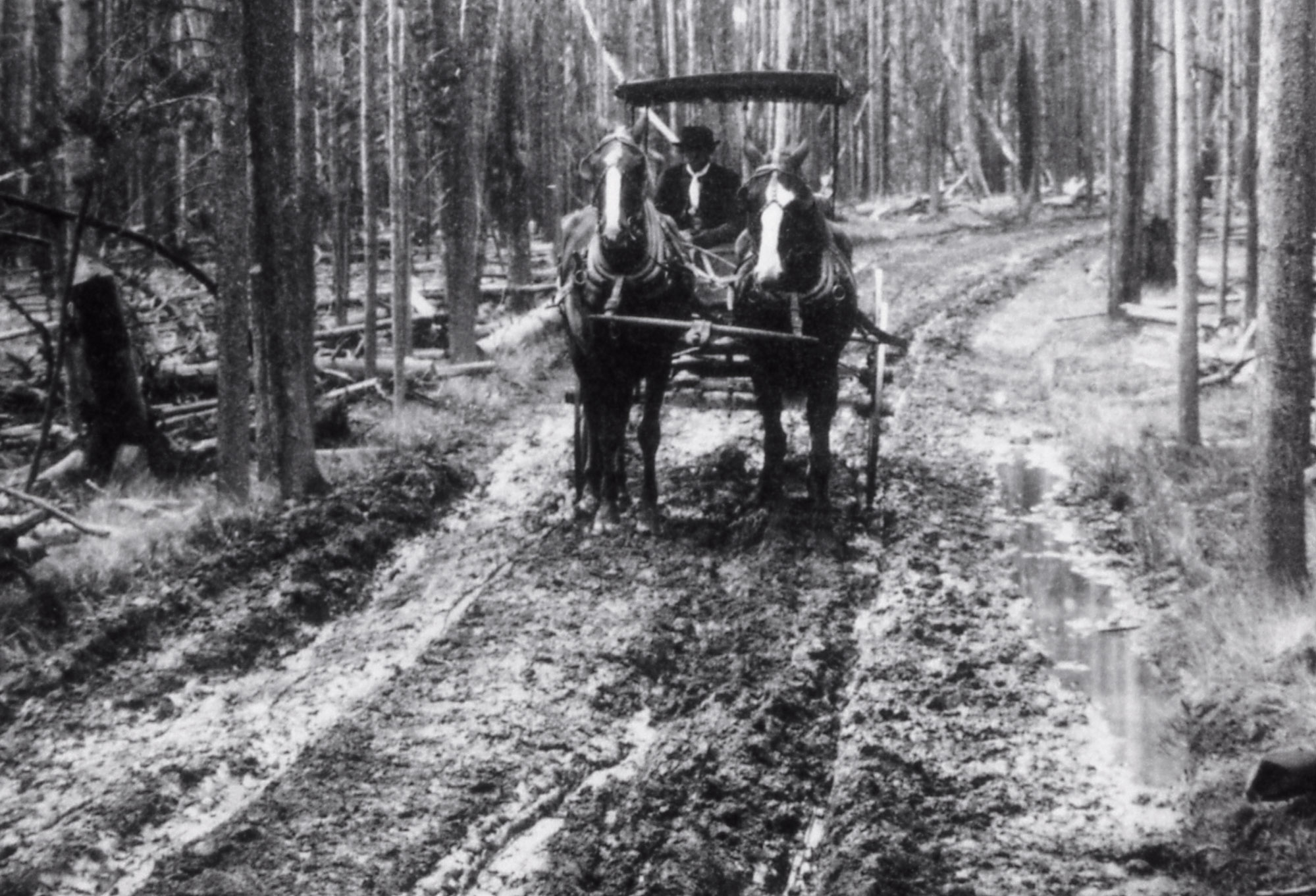
  • First Women: Mary Wylie Crosses Yellowstone Park in a Covered Wagon — 1880

    In 1880, Mary Wylie crossed Yellowstone Park as a member of the first tourist party to use a wheeled conveyance for this trip. She went from Mammoth Hot Springs to the Lower Geyser Basin in a covered wagon.

    Mary came to Montana from Iowa in 1879 with her children. Her husband, William Wallace Wylie, had arrived in Montana the year before to become Bozeman’s first school superintendent.

    Mr. Wylie came west in 1878 on the Union Pacific transcontinental railroad to Corinne, Utah, and then took a stagecoach 400 miles north. When Mary and the children took the same trip a year later, they came north on the Utah and Northern Railroad to the Montana border and traveled about 200 miles by stage from there to Bozeman.

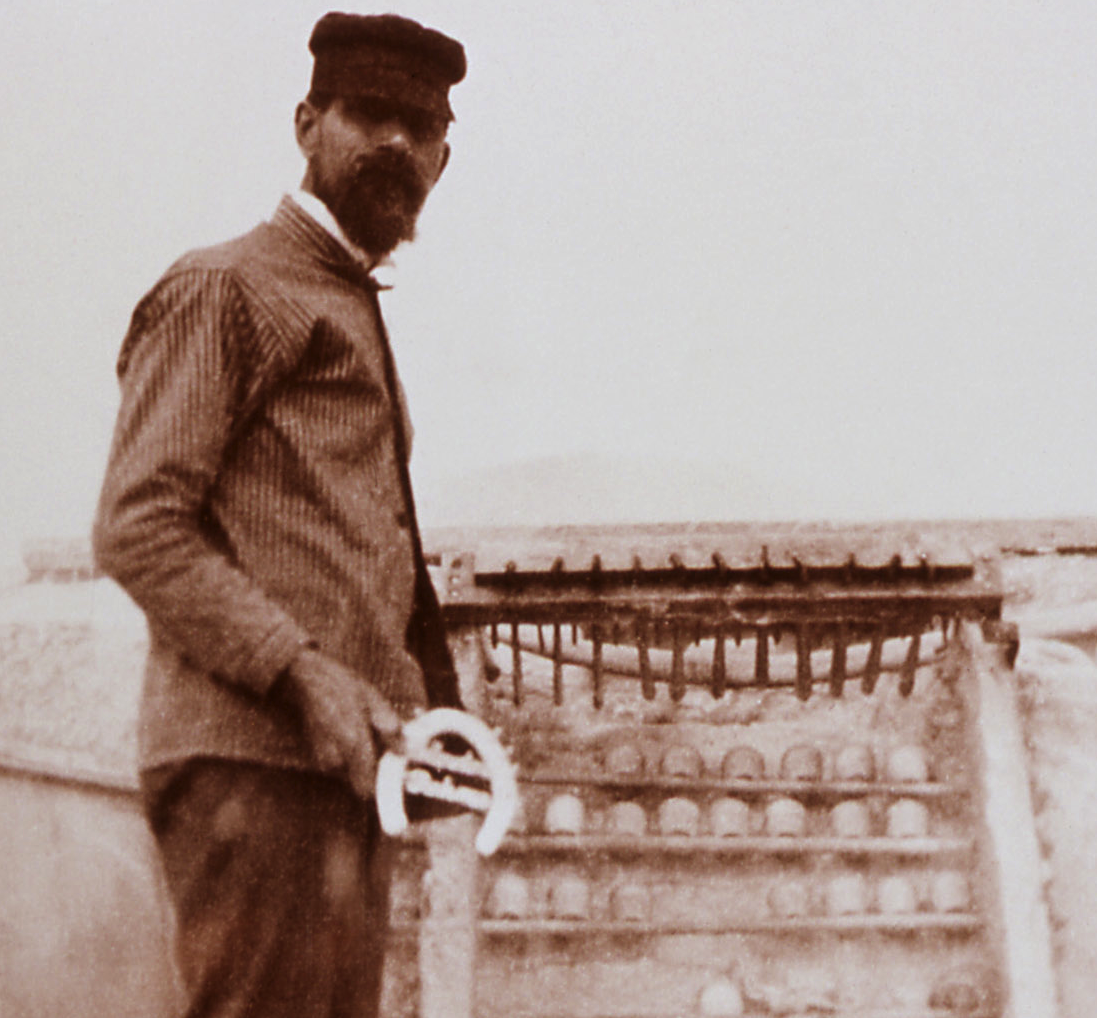
    Mr. Wylie left his mark on Yellowstone Park history as a lecturer, interpreter, and inventor of “permanent camps.” After he did a lecture tour across the nation, school teachers began asking him to guide them into the park. He said this “accidentally” launched him into the tourist business.

    In 1893, he founded the Wylie Permanent Camping Company, which specialized in tours of the park where guests stayed in tents left up for a full season. His moderately priced tours provided competition to the more expensive hotel tours and opened the park to middle class tourists.

    Wylie first visited the park in the spring of 1880. When he learned that Park Superintendent P. W. Norris was building the first road across the park and was going to have it finished by August, Wylie resolved to show his wife the wonders of Yellowstone Park.

    He returned to Bozeman, bought a lumber wagon and rigged it with an emigrant cover. He then assembled a nine-person party that included Mary and two of their children, a woman friend of Mary’s, and three men.

    The party met a couple with a spring wagon at Mammoth who went with them on their tour. This proved to be a good arrangement because the travelers often had to hitch both of their teams to a single wagon to get up steep hills and through rough country.

    Superintendent Norris’s new road was extremely rough. Sometimes tree stumps were too tall to let the wagons pass. When the wagons got stuck, the party had to hitch a team to the back of the wagon and pull it back so they could cut the stump lower. This made travel extremely slow. It took more than a week to travel from Mammoth to the Lower Geyser Basin.

    It was the first time tourists made the trip in wheeled conveyances. Wylie said this fact helped him get licenses to set up his tourists business in the park.

    A few weeks after Mary Wylie crossed the park beginning at Mammoth Hot Springs, Carrie Strahorn and her husband traversed Norris’s new road starting at the other end.  But after starting from the Lower Geyser Basin in a wagon, the Strahorns decided the road was too rough, and continued on horseback.

    Mary’s trip by covered wagon must have been quite an adventure. It’s too bad she didn’t leave a written account of it.

    ∞§∞

    — Photo from Yellowstone Digital Slide File.

    You also might enjoy Carrie Strahorn’s story about traveling Norris’s new road in 1880 and encountering a winter storm.

    — For related stories, look at “First Women in Yellowstone” under the Categories button to the upper left of this page.

  • A Tale: Mabel Cross Osmond: Dolly Saved My Life — 1874

    Coating souvenirs at Mammoth Hot Springs

    Mabel Cross Osmond was just six and half years old when she first went to Yellowstone Park with her parents in 1874. Mabel’s father Captain Robert Cross was a Civil War veteran who came to Montana to be the post trader at Crow Agency, which was then located nine miles east of the present Livingston, Montana.

    Mabel wrote her memoir more that fifty years after her trip, but she still had vivid memories of it including such details as the saddle she rode. “The blacksmith,” she said, “taking a man’s saddle, fastened a covered iron rod from the pommel around on the right side to the back. This rod and the seat were well padded with blankets.  A covered stirrup, wide enough for my two feet was hung on the left side and across this open side from the pommel to the rod in back was attached a buckled leather strap so that, when mounted, I sat as a child in a high chair.”

    Mabel of rode an Indian pony she called “Dolly” that she said saved her life “by instantly stopping when, while descending a steep trail my saddle turned, leaving me hanging head downward, helplessly strapped in until the others could reach me.”

    The Crosses had an army escort to see them though Indian country until they reached the Bottler ranch.  Mabel recalled the stop clearly.

    “We enjoyed one of Grandma Bottler’s good dinners. I remember the cute little roast Pig with an ear of corn in its mouth, and also being awakened during the night by hearing her shrilly shouting — “Fredereek, Fredereek, the skunk is after the chickuns.” Though eighty years old, she kept her ‘store teeth’ put away —‘fearing to wear them out’ — she told us.”

    At Mammoth Hot Springs, Mabel’s father made a basket out of her mother’s corset stays and laid it in one of the pools.   The running waters encrusted the item with white mineral deposits making a souvenir that Mabel still had when she wrote her memoir.

    The Crosses traveled along Indian trails and through timber so thick that it hid the sky and pack mules had difficulty carrying their wide loads between the trees.  They camped at the geyser basins for several days, plenty of time to see most of the geysers play.

    When the Crosses got the Yellowstone Lake, Mabel took a ride on the boat that Sarah Tracy had named  “The Sally” just weeks earlier.  Mabel sailed to a small island where she feasted on gooseberries and ripe red raspberries, but she attributed the seasickness she got on the return trip to rough waters.  She said her hosts named an Island for her, but it didn’t stick.

    ∞§∞

    — Adapted from Mabel Cross Osmond, Memories of a Trip Through Yellowstone National Park in 1874. Typescript, Pioneer Museum of Bozeman.

    — Photo, Yellowstone Digital Slide.

  • A Tale: Doughnuts in Bear Grease, Sarah Tracy — 1873

    Doing Laundry in a Hot Spring

    Indians stole a band of horses the day before Sarah Tracy left Bozeman for Yellowstone Park in June of 1873. But Mrs. Tracy was used to Indians. When she arrived in Bozeman in 1869 with her new husband, Bozeman Pioneer W.H. Tracy, Indians were encamped on the south side of town. She said, “They would peer in the windows if the doors were locked, or come flocking around the door begging for biscuits, soap, clothes, everything.”

    Such encounters left Mrs. Tracy with little fear of Indians, but the commander at Fort Ellis still didn’t want to let her party go to Yellowstone in the midst of “Indian troubles.” Finally, after some haggling, he agreed to provide an armed escort.

    “We were soon on our way with twelve mounted soldiers following us,” Mrs. Tracy said in a reminiscence she wrote about the trip. “With their guns and knapsacks on their shoulders, and their belts filled with cartridges, they looked very war like.” The soldiers escorted the stage across Trail Creek Pass to the Yellowstone River and then turned back after seeing no signs of Indians. The party then headed south to the Bottler brothers’ ranch. Diaries of early trips to Yellowstone often mention a stop at Bottlers.

    In 1868 Frederick and Phillip Bottler started the first permanent ranch in the Paradise Valley. The Bottlers’ ranch was a one-day ride from Bozeman and located halfway to Mammoth Hot Springs. That made it an ideal stopping point for travelers heading for the park. The Bottlers always made visitors welcome and eventually started a guesthouse.

    After a night at Bottlers, the stage headed to Mammoth Hot Springs over a new road through Yankee Jim Canyon. This road was so bad Mrs. Tracy said that it “fairly made one shudder to ride over it in a four-wheeled stage coach.” As the coach approached Mammoth passengers got a marvelous view from the top of a hill, but the descent down the mountain required chaining the stage’s rear wheels. This “rough locking” slowed the stage by making it skid and keeping it from crowding the horses.

    “We drove up to the hotel with a grand flourish of the four-horse whip, bringing the landlord and the guests to the door to meet us.” This description conjures pictures of an elegant building, but the “hotel” at Mammoth then was just an 25-by-35 foot log cabin with a sod roof. Crude as it was, the hotel had hot and cold running water; a stream of 40 degrees ran on one side and of 150 degrees on the other.

    Mrs. Tracy and her companion, Sarah Graham, waited for their husbands to join them for two days. They enjoyed fishing, climbing the terraces, two baths a day and three hearty meals. When the men arrived they all started on horseback for a tour of the Park.

    “We rode side saddles,” Mrs. Tracy said, “and it was quite difficult for an amateur rider to keep seated.” Their train of a saddle horse for each traveler and eight packhorses made an impressive appearance strung out on the trail.  Their route frequently crossed the rushing, boulder-strewn Gardiner River, and Sarah said,

    I was in great fear of crossing, but as there was no alternative, I had to hold on as best I could. At first, I dismounted to walk over the bad places, but they were so frequent, I concluded to remain in my saddle. One old mountaineer remarked, “Wait until the mountains are so steep you must hold onto the horse’s ears going up, and tail going down.” And we certainly found some mountains where the saddle would slip over the back going up, and nearly over the head coming down. We made only one ride each day, as it was too much work to repack the horses.

    At Yellowstone Lake they found the man who had guided Emma Stone’s party, E.S. Topping, and his partner, Frank Williams. The men had recently built a sailboat. They said they would let the first woman to visit name the boat.  Since Mrs. Tracy and Mrs. Graham were both named Sarah, they decided to christen the boat “The Sallie.” Mrs. Tracy said after the name was painted on the boat, “We had a fine sail across the lake and our pictures taken on board,”

    At their camp, Topping and Williams rewarded the women by letting them make doughnuts fried in bear grease. In her reminiscence, Mrs. Tracy said of her twelve-day trip:

    “The balmy breezes and mountain sunshine had done our complexions to a turn. While our clothing was little worse for wear, yet we had seen the Yellowstone National Park in its primitive beauty. And bear’s grease doughnuts had certainly agreed with us.”

    ∞§∞

    — Sarah Tracy’s reminiscence is at the Museum of the Rockies in Bozeman.

    — You also might enjoy reading about Emma Stone, the first woman to make a complete tour of Yellowstone Park.

    — Photo, Yellowstone Digital Slide File

  • A Tale: Emma Cowan Visits Mammoth — 1873

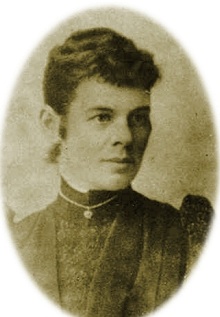
    Emma Cowan

    Most of the women who visited Yellowstone Park in the 1870s were Montana Pioneers. For them, camping out in the wilderness was no big deal. After all, they had already crossed the plains in a covered wagon, or come up the Missouri River on a crowded steamboat.

    Emma Cowan was such a pioneer. She was 10 years old when came to Montana in a covered wagon with her parents during the gold rush of 1864. Shortly after she arrived in Virginia City, Emma began hearing about the wonders of the upper Yellowstone. One day her father brought home a man who told marvelous stories.

    Emma said of the stories, “My fairy books could not equal such wonderful tales. Fountains of boiling water, crystal clear, thrown hundreds of feet into the air, only to fall back into pools of their own forming; pools of water in whose limpid depths tints of various rainbows were reflected; mounds and terraces of gaily colored sand.”

    Emma and her family thought the stories were just fantasies, but she said, “As I grew older and found truth in the statements, the desire to some day visit this land was ever present.”

    Emma’s first trip to Yellowstone Park was a visit to Mammoth Hot Springs in 1873 with her parents. She didn’t say a lot about it, but the normal starting point for such a trip would have been Bozeman, a thriving trade center and agriculture town about 75 miles from the park.

    After they left Bozeman, travelers usually would spend their first night at the Bottler brothers’ ranch—a one-day ride from Bozeman. Bottlers’ ranch was located halfway to Mammoth Hot Springs, which made it an ideal stopping point for early travelers heading to the park.

    After a night at Bottlers, Emma’s family would have gone to Mammoth Hot Springs over a new road through Yankee Jim Canyon. Emma said this road was scarcely more than a trail, but “by careful driving, unhitching the horses, and drawing the wagon by hand over the most dangerous places, we made it safely.”

    The road was so bad, Emma said, that just a few weeks before a man, who was taking his crippled wife to Mammoth to soak in mineral waters that he hoped would cure her, didn’t even try to travel by wagon. Instead, he carried her on an Indian-style travois.

    Although the park was only a year old in 1873 when Emma and her family visited there, Mammoth Hot Springs had already become a tourist destination. When her family arrived, Emma said, “We found an acquaintance or two, a number of strangers, a small hotel and a bath house.”

    At Mammoth, tourists could hire guides to take them into the roadless wilderness to see the Grand Canyon of the Yellowstone, the Falls, and, most important, the Grand Geysers. Here they could also buy supplies that included such luxuries as canned fruit, baked bread, fresh milk, and butter.

    Visitors could either camp nearby, or pay $20 a week to the hotel for room and board. In addition, they could pay five dollars for twice-daily baths in tin tubs that had been coated with a porcelain like finish by the mineral waters. Visitors often made their own souvenirs by leaving items in pools where mineral waters encrusted them.

    Emma and her family stayed at Mammoth for two weeks seeing nearby sights, soaking in hot baths, and making souvenirs. But they decided not to visit the geysers. That would have required an arduous seventy-five mile trip on horseback because there were no roads across the park.

    Several parties returned from the geysers during Emma’s stay, and their accounts intrigued her. People often told her that words couldn’t convey the wonders they had seen. “You must see them for yourself,” they told her.

    Emma’s interest was piqued. When she got home she learned everything she could about the geysers from magazines, newspapers, and friends’ accounts.

    In 1877 Emma’s wish to see the geysers came true. But the adventure was even more that she expected when Indians shot her husband and took her captive.

    Coming Soon: “Doughnuts Fried in Bear Grease, Sarah Tracy — 1874”

    — Related stories you might enjoy:

  • A Tale : Emma Stone Tours Yellowstone — 1872

    Carrie and Robert Strahorn

    While doing research for my post last week, “An October Snow Storm at Yellowstone Canyon,” I noticed that Carrie Strahorn claimed, “I was the first woman who made a complete detour of the park.” I knew that Carrie was wrong about that, but the statement wasn’t in the excerpt I used so I ignored it.

    Then I started thinking about the first women to visit Yellowstone Park. I checked my files and concluded that I had enough information to provide several posts on the topic. Here’s “First Women Yellowstone, Part 1: Emma Stone Tours Yellowstone — 1872.”

    ∞§∞

    Doubtless, the first women in what is now Yellowstone Park were Indians who had lived there for centuries before Euro-Americans explored it. As for white women, there are no official records of their early park visits. Fortunately, Yellowstone travelers have always thought their adventures were worth saving and sharing so they left a rich record of journals, diaries, reminiscences, and articles in newspapers and magazines. Examination of these documents reveals that white women penetrated the edges of the park by the early 1870s.

    One of the earliest recorded “sightings” of women in Yellowstone Park was by Sidford Hamp, a young Englishman whose rich uncle, Lord Blackmore, got him a job as a surveyor’s assistant on the second Hayden Expedition. Here’s what Hamp said about his arrival at Mammoth Hot Springs on August 27, 1872.

    “When we got about two miles from there we saw a haystack. You can’t imagine what a curiosity it was. We went on and saw a mule tied to a bush, and soon after that, came two men, more curiosities. Then we came upon a man holding in his arms the greatest curiosity of all, a baby! We went on a bit farther and saw a woman! And a house! which almost knocked us down with curiosity.”

    One of the women who visited Mammoth in 1872 was Emma Stone of Bozeman, Montana. She is credited with being the first woman to take a complete tour of the park.

    In 1872, Hiram and Emma Stone and their two sons were visiting Mammoth Hot Springs when two specimen collectors, Dwight Woodruff and E.S. Topping, returned from exploring the park and announced that they had discovered a new geyser basin (now called Norris Geyser Basin.) Such men often hung around the hotel at Mammoth looking for people to guide and the Stones hired them.

    Because there were no roads, people had to travel on horseback along Indian trails and through timber so tall, they could barely see the sky. Horses had to jump fallen logs that covered the ground. Sometimes trees were so close together that pack mules had to get on their knees to squeeze their wide loads under the lower branches.

    Travelers camped at major sights for days or even weeks. This not only provided an opportunity for such things as seeing many geysers play, but also gave spent horses time to graze and regain strength. Often the animals wandered off and many diaries record accounts of searching for them.

    The Stones visited all the geyser basins, Yellowstone Lake and Falls. Topping, in his 1888 book Chronicles of the Yellowstone, said, “It was a hard trip for the lady of the party, Mrs. Stone, but she now has the satisfaction of remembering that to her belongs the honor of being the first white woman to see the beauties of the National Park.”

    ∞§∞

    — Photo adapted from Carrie Adell Strahorn, Fifteen Thousand Miles by Stage, 1911.

    — Related stories you might enjoy:

  • A Tale: An October Snow Storm at Yellowstone Canyon — 1880

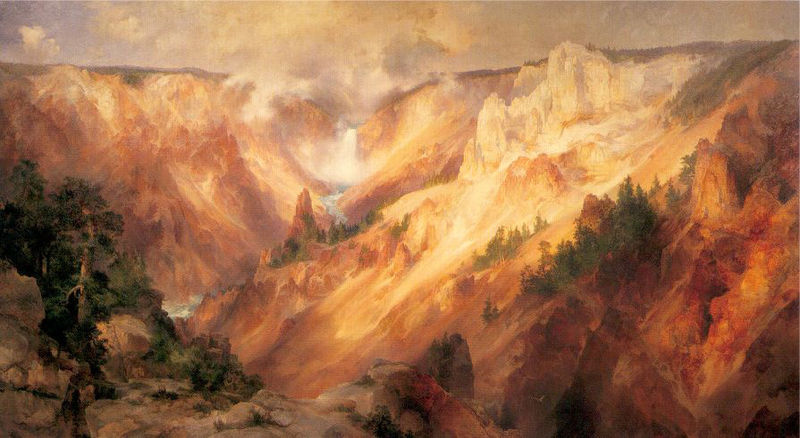
    Thomas Moran, The Grand Canyon of the Yellowstone


    Carrie Strahorn was an adventurous woman who insisted on traveling with her husband  Robert  (she called him “Pard”) as he traveled the country searching for destinations for the Union Pacific Railroad. Carrie wrote newspaper columns about her adventures and eventually collected them in a book,
    Fifteen Thousand Miles by Stage.

    Despite warnings about winter storms, the Strahorns decided to visit Yellowstone Park in October 1880. Their guide was George Marshall, who operated a stage line between Virginia City, Montana, and a hotel he built at the Lower Geyser Basin. Also, Park Superintendent Philetus Norris accompanied the Strahorns during  part of their trip.

    The weather was fine when the Strahorns began, but as they returned to Marshall’s hotel after visited the Mammoth Hot Springs, a snow storm caught them. Here’s Carrie’s story about that.

    ∞§∞

    The rain changed to snow, and through the storm we saw the disconsolate face of Mr. Marshall, as he stood near the smoldering campfire muttering to himself as if he had become demented. Upon inquiring the cause of his trouble, he said as soon as he saw the snow he went to look for the horses—and they were gone.

    “Gone!” we all exclaimed in unison and despair. The horses were gone and we were at the end of our rations with a big storm upon us. The many warnings not to go into the park so late went buzzing through our minds like bumblebees. The snow was several inches deep and falling faster every minute.

    As soon as daylight came the men started in search of the horses. I was left all alone in the camp for several hours waiting with my rifle in hand, until after a hard and hurried chase the horses were overtaken and brought back. We knew that we should hurry home as quickly as possible—but to be within five miles and not to see the falls was asking too much. With the return of the horses we resolved at once to go on.

    Superintendent Norris thought it was not best for me to go to the falls. The trip must be a hasty one, and the start home not to be delayed longer than possible for fear of continued storm. The snow ceased falling soon after daylight, but the sun did not appear and there was every indication of more snow. Pard was reluctant to leave me, and knew what disappointment lurked in my detention, but he was overruled. With Mr. Norris he started off leaving me with Mr. Marshall—who was to have everything ready for the return to Fire Hole Basin on their return.

    The more I meditated the more I felt that I could not give up seeing the canyon and falls. To be balked by a paltry five or ten miles was more than I could stand. I called to Mr. Marshall to saddle my horse at once for I was going to the falls.

    He laughingly said “all right,” but he went right on with his work and made no move toward the horse. I had to repeat the request the third time most emphatically and added that I would start out on foot if he did not get my horse without more delay.

    He said I could not follow them for I would not know the way, but I reminded him of the freshly fallen snow, and that I could easily follow the trail. He was vexed with my persistence as I was with his resistance, and he finally not only saddled my horse but his own, and rather sulkily remarked that if the bears carried off the whole outfit I would be to blame. When well on our way I persistently urged him to return to the camp and he finally did turn back, but waited watched me until I turned out of sight.

    Alone in the wild woods full of dangerous animals my blood began to cool, and I wondered what I should do if I met a big grizzly who would not give up the trail. The silence of that great forest was appalling and the newly fallen snow made cushions for the horse’s feet as I sped noiselessly on. It was a gruesome hour, and to cheer myself I began to sing, and the echoing voice coming back from the treetops was mighty good company.

    The five miles seemed to stretch out interminably. When about a mile from the falls other voices fell on my ear, and I drew rein to locate the sound, then gave a glad bound forward for it was Pard on his way back. Mr. Norris said anyone might think that Pard and I had been separated for a month, so glad were we to see each other.

    Pard could not restrain his joy that I had followed, and sending the superintendent on to the camp he at once wheeled about and went with me to the falls and canyon that I came so near missing. Up and down o’er hills and vales we dashed as fast as our horses would carry us until the upper falls were reached where we dismounted and went up to the edge of the canyon to get a better view.

    These falls are visible from many points along the canyon, and. the trail runs close to them and also by the river for several miles, the tourist many glimpses of grandeur. Above the upper falls the river is a series of sparkling cascades, when suddenly the stream narrows to thirty yards, and the booming cataract rushes over the steep ledge a hundred and twenty feet and rebounds in fleecy foam of great iridescence. The storm increased and the heavens grew darker every hour, but we pushed on.

    Moran has been chided for his high coloring of this canyon, but one glimpse of its rare, rich hues would convince the most skeptical that exaggeration is impossible. We longed to stay for days and weeks and hear this great anthem of nature and study its classical and noble accompaniment, but there was a stern decree that we must return, and that without delay.

    There was no hope for sightseeing as we kept on our way back to the Lower Geyser Basin. Without giving our horses or ourselves over half an hour to rest at noon, we rode on and on, up hill and down, through woods and plains, fording the Fire Hole River again and again, until at last the lights of Marshall camp were in sight. The storm had continued all day, turning again from snow to rain in the valley. How tired I was when we rode up to the door. Our forty-mile ride was ended at seven o’clock, but it took three men to get me off my horse.

    ∞§∞

    — Adapted from Carrie Adell Strahorn, Fifteen Thousand Miles by Stage, 1911.

    — Image, Yellowstone Digital Slide File.

    — You might also enjoy “Big Boots to Fill” by Carrie Strahorn.

    — Read more of Carrie’s story in my book,  Adventures in Yellowstone.