Category: News and Views

  • A Tale: Mabel Cross Osmond: Dolly Saved My Life — 1874

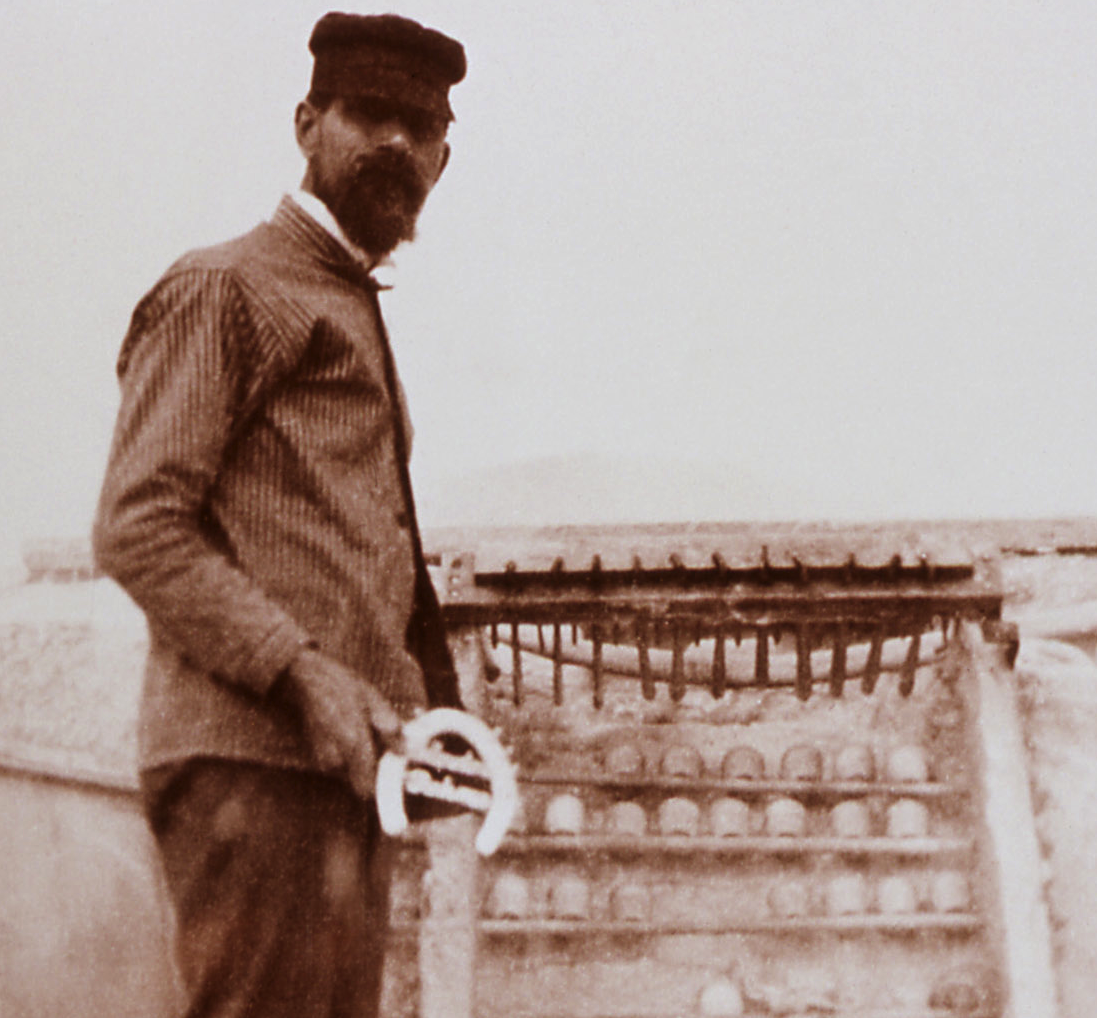
    Coating souvenirs at Mammoth Hot Springs

    Mabel Cross Osmond was just six and half years old when she first went to Yellowstone Park with her parents in 1874. Mabel’s father Captain Robert Cross was a Civil War veteran who came to Montana to be the post trader at Crow Agency, which was then located nine miles east of the present Livingston, Montana.

    Mabel wrote her memoir more that fifty years after her trip, but she still had vivid memories of it including such details as the saddle she rode. “The blacksmith,” she said, “taking a man’s saddle, fastened a covered iron rod from the pommel around on the right side to the back. This rod and the seat were well padded with blankets.  A covered stirrup, wide enough for my two feet was hung on the left side and across this open side from the pommel to the rod in back was attached a buckled leather strap so that, when mounted, I sat as a child in a high chair.”

    Mabel of rode an Indian pony she called “Dolly” that she said saved her life “by instantly stopping when, while descending a steep trail my saddle turned, leaving me hanging head downward, helplessly strapped in until the others could reach me.”

    The Crosses had an army escort to see them though Indian country until they reached the Bottler ranch.  Mabel recalled the stop clearly.

    “We enjoyed one of Grandma Bottler’s good dinners. I remember the cute little roast Pig with an ear of corn in its mouth, and also being awakened during the night by hearing her shrilly shouting — “Fredereek, Fredereek, the skunk is after the chickuns.” Though eighty years old, she kept her ‘store teeth’ put away —‘fearing to wear them out’ — she told us.”

    At Mammoth Hot Springs, Mabel’s father made a basket out of her mother’s corset stays and laid it in one of the pools.   The running waters encrusted the item with white mineral deposits making a souvenir that Mabel still had when she wrote her memoir.

    The Crosses traveled along Indian trails and through timber so thick that it hid the sky and pack mules had difficulty carrying their wide loads between the trees.  They camped at the geyser basins for several days, plenty of time to see most of the geysers play.

    When the Crosses got the Yellowstone Lake, Mabel took a ride on the boat that Sarah Tracy had named  “The Sally” just weeks earlier.  Mabel sailed to a small island where she feasted on gooseberries and ripe red raspberries, but she attributed the seasickness she got on the return trip to rough waters.  She said her hosts named an Island for her, but it didn’t stick.

    ∞§∞

    — Adapted from Mabel Cross Osmond, Memories of a Trip Through Yellowstone National Park in 1874. Typescript, Pioneer Museum of Bozeman.

    — Photo, Yellowstone Digital Slide.

  • An Event: Getting Ready for a Presentation to “Smart Women”

    Women on the Rim of Yellowstone Canyon — 1904

    I’ve been working on my presentation on Yellowstone history that’s scheduled for Wednesday at 3 p.m. at Aspen Pointe, an independent living facility run by Deaconess Hospital in Bozeman. I’ll be speaking to a group called “Smart Women” so I’ve decided to talk about women’s adventures in the park.

    As I plan my presentation, I find I have my usual frustration—deciding what to read to my audience.  My collection of first-person accounts of early travel to Yellowstone Park includes dozens of stories about women. Can you help me choose?  Take a look around this blog and decide which stories would be most interesting. Then tell me your thoughts by posting them under “Comments” below.

    To get you started, here are links to some of my favorites:

    Thanks!  I’ll let you know how things go.

    ∞§∞

    — F.J. Haynes Photo, 1904,  Coppermine Photo Gallery

  • News and Views: Brook Collection Documents Floods in Twin Bridges

    This morning the National Weather Service issued flash flood watches for several towns in southwest Montana including Twin Bridges, where I went to elementary and high school. Twin Bridges is nestled on the banks of the Beaverhead River, a Blue Ribbon trout stream. Ice jams have caused floods there several times since the Lott brothers founded the town nearly 150 years ago.

    John and Mortimer Lott came west during the gold rush era of the 1860s and were prominent figures in the Vigilantes. In 1865, they built bridges across the Big Hole and Beaverhead above the point where those rivers converge to form the Jefferson. The town of Twin Bridges sprung up there.

    In 1955, when I was in grade school, an ice jam threatened Twin Bridges.  High dikes line the riverbanks near the school so there wasn’t much danger there, but other parts of the town were flooded.

    One day, our teachers cancelled afternoon recess and warned all us school kids to stay inside. The town fathers were going to dynamite the ice jam.

    At the appointed hour, teachers checked their class roles and made sure every student was accounted for. We sat with our hands folded on our desks, waited and watched the clock on wall.

    The second hand swept up to 2 o’clock—and nothing happened. We shuffled and shifted in our seats and looked to the teacher.

    “Just wait,” she admonished.

    Seconds seemed to drag by.

    Then we heard it—a muffled boom followed by smaller secondary explosions. Then a rumbling sound—blocks of ice grinding their way down the clogged river, I suppose.

    You can see photographs of several Twin Bridges floods at the Thomas Brook Photographs Collection at Montana State University. When you get to the web site, just type “flood” in the search box. You’ll find photos of the Twin Bridges floods of 1896, 1898, 1927 and 1955.

    I remember Tom Brook as an old man who ran an electrical repair shop in Twin Bridges. My father said Mr. Brook could “fix anything that ran on juice” — industrial fuses boxes, electric motors, television sets, etc.

    He was also a remarkable photographer and collector of historic photographs. The hundreds of photos in the Brook collection contain a lot more than pictures of floods. It provides a remarkable record of a great little Montana town. I hope you’ll explore it.

    —  Photo of the 1927 Twin Bridges flood from the Brook Collection.

  • News: Holiday Spirit Lives in Small Town America

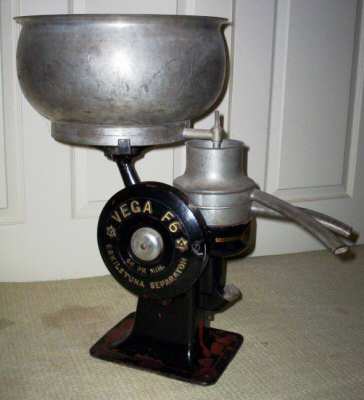
    A Cream Separator

    The highlight of my book signing last night occurred when carolers stopped at the Manhattan Museum to regale us with song. It seemed like everybody who lives in this town of 2000 was milling around downtown, greeting each other with cheerful smiles, and popping in and out of decorated stores to check out offerings and buy Christmas gifts. There was no piped in music to drown out the authentic sounds of holiday greetings, carolers, and the clip-clop of the horses that pulled a hay-ride wagon.

    I arrived early and had time to tour the new museum, which is housed in the old buidling that used to be a combination fire station and city jail. When I looked into a jail cell filled with dairy equipment—milk cans, strainers, and a cream separator—I was reminded of the times my brothers and I rushed to finish the evening milking so we could open our presents on Christmas Eve. (My parents had the wisdom to know it’s better to reward children who work in a dairy barn with early opening of presents than to make them wait until after morning milking.)

    I love these small town museums that have sprung up across Montana. They do such a good job of letting us peek into the past. I could almost smell my mother’s cooking when I looked at the collection of kitchen appliances from the time when electricity was new in rural America. I could almost see my father working in his shop when I looked at the collection of antique tools—a saw for cutting loose hay, tongs for hauling blocks of ice, and wrenches for keeping your Model T running.

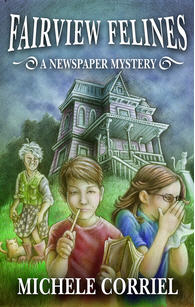
    I enjoyed chatting with fellow author, Michele Corriel, and bought a copy of her mid-grade book, Fairview Felines: A Newspaper Mystery. She reciprocated by buying two copies of Adventures in Yellowstone: Early Travelers Tell Their Tales.

    Like most authors I crave fans so it was great to hear people praise my articles from The Big Sky Journal like the one on early Yellowstone Entrepreneurs, and from The Pioneer Museum Quarterly like “Tales of the Belgrade Bull.”

    I had a good time—and sold a few books.

    ∞§∞

  • News: Adventures In Yellowstone Book Signing

    I’ll be signing copies of my book, Adventures In Yellowstone: Early Travelers Tell Their Tales, on Thursday, December 9, at the Museum in Manhattan, Montana. I’ll be appearing with fellow author Michele Corriel, the author of Fairview Felines. I’m looking forward to meeting her.

    Festivities include a chili feed at the Senior Center, horse-drawn hayrides, Christmas carolers, and activities for the kids. Shops open their doors and invite folks in for refreshment and conversation.

    Come by if you want a dose of small town holiday cheer. And don’t forget to stop by the museum for signed books.  They make great Christmas gifts.

    ∞§∞

  • News and Views: Three Recent Books Describe Early Yellowstone Travel

    I was delighted this morning to find a brand new, autographed copy of Paul Schullery’s book, Old Yellowstone Days, on my breakfast table. Now I can retire the 1977 edition that I refer to often. It’s falling apart.

    The re-issue of Paul’s book means that three collections of first-person accounts of early travel to Yellowstone National Park have been published in the last two years. Old Yellowstone Days joins Ho! For Wonderland: Travelers Accounts of Yellowstone, 1872-1914 by Lee H. Whittlesey and Elizabeth A. Watry and my book, Adventures In Yellowstone: Early Travelers Tell Their Tales.

    At a superficial level, a single blurb could describe all three books: “A collection of interesting stories about nineteenth century travel to the world’s first national park by the people who lived the adventures.” But, the books really are quite different. In fact, only two of the forty stories contained in the three books appear more than once.

    Schullery focuses on celebrities. His book includes Rudyard Kipling’s description of Yellowstone as “a howling wilderness . . . full of the freaks of nature,” and his condescending description of a Fourth of July Celebration as “wild advertisement, gas, bunkum, blow, anything you please beyond the bounds of common sense,” and Theodore Roosevelt’s lament that hunters were wiping out all of America’s big game—bison, elk and moose, as well as Frederick Remington’s description of his adventures helping soldiers capture poachers.

    Whittlesey and Watry provide a wide sample of “ordinary” Yellowstone experiences. They begin with Montana Pioneer Granville Stuart’s detailed descriptions of everything he saw when the park was just a year old in 1873. They end with Elbert and Alice Hubbard’s precious accounts of what they saw in 1914. Whittlesey and Watry approach their task in a scholarly manner liberally sprinkling their book with footnotes to explain unclear references.

    I take the opposite approach focusing on extraordinary tales filled with adventure, like Emma Cowan’s story of watching Indians shoot her husband in the head, or with humor, like the Earl of Dunraven’s hilarious explanation of how to pack a mule. I don’t use a single footnote and edit extensively for easy reading by today’s readers.

    The books are testament to the enormous diversity of the Yellowstone experience. Fans of Yellowstone Park would enjoy all of them. So would fans of history. And fans of well told stories.

    ∞§∞

  • News and Views: A Truly Great Conversation in Helena


    I had a really good time with seven scintillating dinner companions at Great Conversation in Helena on Wednesday.  I was impressed with the Helena Education Foundation, who sponsored the event and recognized ten great teachers from Helena schools.  What a wonderful show of community support for schools, teachers and — most important — students.

    I  truly enjoyed my dinner companions.  They laughed when I told them about Eleanor Corthell who announced to her husband that he should expect a bill  because she had bought a team and wagon and was taking their seven children to Yellowstone Park for the summer in 1904.  My companions were full of questions about Truman Everts and how he survived thirthy seven days alone in Yellowstone in 1870.  And, they were eager to share their own experiences from the time when bears would stall traffic to beg from cars.

    I was an overnight houseguest of Denny DeRozier and his wife, Nikki.  Denny is a friend from my childhood in Silver Star.  After we had a drink at Helena’s Silver Star Steak House, we spent a few minutes reminiscing in front of a historic photo of the Silver Star School.

    Great Fun!

    ∞§∞

    — Photo from the Yellowstone Digital Slide File

  • News and Views: Off to Helena for “Great Conversations”

    On Wednesday I’ll travel to Helena to host a table for “Great Conversations,” a fundraiser sponsored by the Helena Education Foundation.  My job will be to lead a dinner conversation (scintillating, I hope) with seven people who want to talk about early travel to Yellowstone Park.  I’ll get a free dinner, an opportunity to talk about a topic I love, and the satisfaction of supporting Helena schools.

    There’ll be twenty-eight tables at the event this year providing discussions for every taste and whim. Topics include “Raising Self-Reliant Children,” “The Neuroscience of Choice,” and “Is There a Plan of Attack for Peace?”  You can see the full list of topics.

    My topic is “Nineteenth Century Adventures in Yellowstone Park” and I’ve promised to tell exciting, funny and interesting stories.  My collection includes hundreds of tales and I’m wondering which to choose.  Can you help? Please look around through the posts on this blog and decide which ones would make for the best dinner conversation. Then tell me about your thoughts in the Comments section below.

    Just to get you started, here are links to some of my favorites:

    Why I’m Interested in Yellowstone Stories.

    Or offer a little high adventure:

    “Treed by a Lion” by Truman Everts.

    “Captured by Indians” by Emma Cowan.

    Or a touch of humor:

    “Maude Gets Her Revenge” by Louise Elliott.

    “Yellowstone’s First Car” by Henry Merry

    Or may just describe the sights:

    “Crusing Lake Yellowstone” by Hester Hensall.

    I really would like to know which stories you enjoy most. Thanks for your help.

    ∞§∞

  • News and Views: Tom McGuane and a Mind Adrift

    My friend, Billings author Craig Lancaster posted a comment about Tom McGuane on his website, A Mind Adrift in the West. A New York Times article about McGuane said, “There’s a view of Montana writing that seems stage-managed by the Chamber of Commerce — it’s all about writers like A. B. Guthrie and Ivan Doig,” he said, referring to two authors of historical novels about a rugged, frontier Montana. “It used to bother me that nobody had a scene where somebody was delivering a pizza.”

    Lancaster responded: I don’t want to toot my own horn (yeah, okay, just go with me on this one), but allow me to direct your attention to the bottom of Page 257 of 600 Hours of Edward:

    “I’m watching Dragnet almost three hours early and might even watch another episode, if I feel like it. I’m also munching on thin-crust pepperoni pizza from Pizza Hut. I didn’t go to the grocery store today. I decided I didn’t have to. Maybe I’ll go tomorrow. Or maybe not.

    I’ll do whatever I feel like doing. You live only once.”

    I commented: “I admire Tom McGuane’s mastery of craft, but his writing always strikes me as something written by a guy who moved to Montana 30 years ago and never bothered to learn the history of the place. He apparently hasn’t read the work of fine writers like you [Craig Lancaster], Kevin Canty, and Mary Clearman Blew. He’s right when he says the New York literary establishment slights western writers—and he does too. And, I recommend “Riding on the Rim.” [correction: Make that “Driving on the Rim.”]  It’s a fine novel about how a guy who moved to Montana 30 years ago thinks of the place.

    ∞§∞

  • News and Views: Meeting Ivan Doig Was Great!

    I got a few minutes to chat with Ivan Doig last night at the Friends of MSU Libraries dinner. I told him about my mother’s evaluation of his novel, English Creek. Mom was unimpressed with his description of life in rural Montana during the Great Depression. “He just wrote about things the way they were,” she said.

    Ivan chuckled politely and his wife, Carol, quickly added, “but he worked so hard to get it right.” So the joke didn’t get the hearty laugh I expected.

    Of course, I know how hard it is to bring the past to life accurately. I’ve tried it myself a few times. Besides, anybody who has read the acknowledgement sections in Doig’s books knows how hard he works to get the details right. If you haven’t read his acknowledgments, you should. That would give you a greater appreciation of Doig’s work.

    In his speech, Doig talked about his work in libraries “listening for voices in the quiet of the past” and looking for “crystallizing details” in places where “Google doesn’t go.”  Classic Doig: precise colorful phrases that stick in the skull and move the narrative.

    Doig focused on his “Montana Trilogy,” books that span the state’s first century by chronicling three generations of the fictional McCaskill family.  Much of the authentic detail for English Creek, the Depression era novel, came from the WPA Writer’s Project documents held and the Merrill G. Burlingame Special Collections of the MSU Libraries.

    Doig praised the New Deal project, which sent unemployed writers to gather and write the history of every state, as “an almost miraculous effort.” He also told the story of how Dr. Burlingame, who was a MSU History Professor, made a “heroic rescue” of the papers of the Montana writer’s project when he found they were going to be thrown in the Silver Bow County dump.

    (I’ve worked with the WPA papers several times myself, so I know what a tragedy that would have been. If you’d like to see a sample of the work that might have been lost, get a copy of An Onery Bunch: Tales and Anecdotes Collected by the WPA Montana Writer’s Project 1935-1942.)

    Doig told other tales about such incidents as putting on his coat to search for documents in the icy basement of Saint Andrew’s University Library in Scotland for another book in the Montana Trilogy, Dancing at the Rascal Fair. The main characters of this novel migrated to Montana from Scotland at the dawn of the Twentieth Century. Doig was delighted to find letters from a Scots emigrant describing a trans-Atlantic crossing and if you’ve read Dancing, you know why.

    Doig also talked about Work Song, his new novel set in Butte in 1919. In this book, he said, a library becomes a character. Doig said a photograph of the grand library building that Butte citizens built to show the world there was culture in the rugged mining city inspired him. Doig didn’t talk about his head librarian character that obviously is based on Granville Stuart, whose diaries are one of the best descriptions of frontier Montana. I’d love to hear him talk about that.

    After the speech, I chatted with a library friend who said he was amazed at what a good speaker Doig was. While I agreed that Doig’s style and finesse as a speaker is superlative, I said I wasn’t surprised. He is a master wordsmith who works hard to reach his audiences. Of course, that shows in his speaking as well as his writing.

    ∞§∞