Category: Uncategorized

  • An Event — Ready to Present Sidesaddles and Geysers in Cooke City

    An Event — Ready to Present Sidesaddles and Geysers in Cooke City

    Cooke City Visitors Center and Museum
    Cooke City Visitors Center and Museum

    I love Montana’s many small museums and it looks like I’ll get to preview a brand new one next week in Cooke City. I’ll be presenting my Humanities Montana Program, “Sidesaddles and Geysers,”  on Saturday, July 12, at 7:30 p.m. at Joe’s Campfire next to the Cooke City Community Center. Joe’s Campfire is part of the new Cooke City Museum and honors Joe Israel, a forest service employee who used to lecture there on topics of local interest. I’m thrilled to be carrying on Joe’s legacy.

    The Cooke City Museum housed inside the Community Center won’t open officially until July 19, but I may get a preview. I sure hope so because its so much fun to see how colorful communities like Cooke City preserve and display their heritage.  And I know Cooke has an intriguing history.

    Located just outside the northeast border of Yellowstone Nation Park, Cooke City is a mining town where gold was discovered in 1870. The park was created two after that so Cooke City and park history are entangled. The town is nestled in the rugged Bear Tooth Mountains and for decades the only way to get there was through Yellowstone Park. The Bear Tooth Highway that links Cooke City to Red Lodge, Montana, during summer months wasn’t opened until 1936.

    The first bridge across the Yellowstone River was built to provide access to Cooke City. Miners from Cooke City built the first road to the park up Yankee Jim Canyon. In the 1890s, the notorious buffalo poacher, Ed Howell, used Cooke City as his base of operations. I hope I’ll find out lots more about the town next week.

    My presentation, which is part of the Humanities Montana Speakers Bureau, focuses on women traveling to the park in the 1800s and early 1900s. I’ll begin with stories my grandmother used to tell about her trip to the park in 1909 and her grandfather’s trip there in 1883. Grandma went to the park with her aunt, two brothers and seven cousin. Family lore has it that they took a cow with them to provide milk for the younger children. Grandma told about baking bread in a hot spring and said her father tossed her uncle’s red flannel underwear into Old Faithful to die it pink.

    Then I’ll tell stories about the first women to visit Yellowstone Park. These brave ladies literally rode sidesaddle through the roadless wilderness in the 1870s. One of the most chilling stories is Emma Cowan’s tale of being captured by Indians in the park. Emma and her family went there in 1877, the year the Nez Perce fled their homeland in hopes of finding freedom in the buffalo country. Emma wrote a gripping account of watching Indians shoot her husband, George, in the head, and leaving him for dead, taking her, her sister and their brother captive.

    After recounting Emma’s story, I’ll slow the pace with a different kind of adventure—Eleanor Corthell’s account of leaving her husband at home and taking their seven children to the park in 1903. By then park roads were good and their was no danger from Indians. But Eleanor still had plenty to contend with while watching her children frolic near geysers and driving bears away from her cook fire.

    Then I’ll tell the store of a treacherous climb down Uncle Tom’s Trail that nearly ended with a woman tumbling down the Grand Canyon of the Yellowstone. I’ll end with a bit of humor—the story of budding romance when travelers who met on a six-day coach tour have a tough time saying good-bye.

    That should leave time for questions, and maybe an encore. After all, I have a collection of nearly 400 stories of early travel to Yellowstone Park that I could share. After the talk, of course, I’ll be available to sell and sign copies of my book, Adventures in Yellowstone.

    ∞§∞

  • My Writing Process:

    My good friend Craig Lancaster, a Billings-based author who conjures a poignant and hilarious novel every few months, tagged me as part of a blogging exercise that’s been going around. I’ll chat a bit here about my writing process. (That probably should be “writing processes” because I work in several categories: anthology, narrative history and historical fiction.) Then I’ll answer four questions about my work and then tag author friends whose work I admire (and whose methods I’d like to know more about). I’ve learned a lot from reading previous entries and recommend them to you. You can start with Craig’s entry. and then follow it back to David Abrams’ entry. Have fun surfing, then come back to compare my answers when you’re done.

    1. What are you working on?

    Like most writers, I always have several projects at various stages of development. At the moment I’m:

    • Basking the in the glory of my article on the Montana Gin Marriage Law of 1935, which just came out in the summer issue of The Montana Quarterly.
    • Working on page proofs for my next book, The Stories of Yellowstone, that Globe Pequot will publish in November.
    • Planning to publish my mid-grades novel, Macon’s Perfect Shot, about the adventures of a 14-year-old boy who visits Yellowstone Park in the 1870s.
    • Researching my next book, Encounters in Yellowstone, that will tell the stories of tourists who ran afoul of Indians in the park in 1877.

    Of course, dozens more ideas are swirling around and trying to coalesce in the cosmic muck of my mind.

    And, I’m always monitoring my haiku catcher.

    2. How does your work differ from others in its genre?

    Most of my work fits in the category of narrative history, and I dabble a bit in historic fiction. I focus on early travel to Yellowstone National Park. They say you should write about what you know and after a decade of research on early Yellowstone travel I’m getting to know that topic pretty well. I do branch out to aspects Montana history, and now and then I work on a memoir about growing up on a Montana cattle ranch.

    I am not a historian but a collector and teller of stories. I don’t try to document important facts about the past; instead, I try to recreate how things used to feel. I try to explore the ways universal themes manifest themselves at different times. For example, many of the people I write about were fortune hunters, but they tried to make their fortunes in different ways. The stories of mountain men who sought their fortunes trapping beaver and those of prospectors who wanted to strike it rich panning for gold have interesting similarities and differences.

    For me, the story is the thing, but I do care about the facts. Sometimes I work very hard to discover details that explain the motives of the people I write about. After all, it’s the details that bring stories to life. I don’t care if the people and events I write about are important as long as they’re interesting. I don’t care if the people I write about embellish the facts as long as they tell good stories. I don’t fret about verifying every assertion my sources make. Instead, I leave it to my readers to understand that we are all heroes in the stories we tell about ourselves. Of course, I warn my readers when I discover outright fabrications, but I’ll still use a story with caveats. The lies we tell that may say the most about us.

    3. Why do you write what you do?

    When I left my job as a journalism professor at the University of Tennessee and returned home to Montana in 2003, I started looking for something to do. I always wanted to write, so the questions became “write about what?” I remembered my grandmother’s tales about her trip to Yellowstone Park in 1909 and her grandfather’s trip there in 1883. All I had were dim memories of stories I heard when I was a little boy, so I decided to research early travel to Yellowstone. People have always thought the park was special and many of them left accounts of their trips there in journals, letters, diaries, reminiscences, newspaper articles, books, government reports, etc. At first, I thought the Yellowstone experience was universal, but I soon discovered things changed enormously across time. I’m still mining this rich vein of delightful stories.

    4. How does your writing process work?

    Haiku: I always keep myself alert in case a haiku happens. It goes something like this:

    An idea occurs.
    I take it captive with words.
    Then I set it free.

    Collecting: Because my writing is rooted in the past, I spend a lot of time looking for material in libraries, archives and museum. Also, lots of historical material is now available on the web, so I’m spending a lot of time looking there. I have a collection of more than 400 first-person accounts of early travel to Yellowstone Park that I use a lot. I focus my research on looking for stories, that is, situations where a person faces adversity and deals with it (or sometimes fails to deal with it.) The adversity can be something life-threatening like being attacked by hostile Indians, or humorous like an impatient tourist soaping a geyser to make it play. Sometimes, I read through thousands of words before I find a story I can use. I’ve learned to forge ahead because you never know when you’re going to find a gem on the next page.

    Editing: I harvest accounts in their original form and then excerpt the stories I’m going use. How I edit depends on how I’m going to use the stories. If a story is going into an anthology, I work to retain the author’s original voice because that conveys personality and emotion. I edit to correct factual errors and to make the stories accessible to modern readers by doing things like getting rid of archaic vocabulary. Sometimes I condense things as much as 80 percent. For my book, Adventures in Yellowstone, I condensed N.P. Langford’s account of the 1870 Washburn Expedition from 60,000-words to a 10,000-word chapter. For my blog, I cut Lewis Ransom Freeman’s account of running a wooden raft down Yankee Jim Canyon from 7,500 words to 1,500.

    Drafting: After materials have been collected and edited, putting together an anthology is mostly a matter of organizing and writing introductions. I try to arrange things so stories flow smoothly together and complement each other. I treat introductions like a fiction writer would and provide just enough context so readers can understand the story. The point of an anthology is to present authors on their own terms, but when I write narrative history or historical fiction, I assert my own voice. In fact, I’m extra careful to avoid being accused of plagiarizing. I try to follow Kurt Vonnegut’s “Eight Rules for Writing,” particularly number 3: “Every character should want something, even if it is only a glass of water.” This keeps things focused on people, their desires and emotions.

    Polishing: After I’ve finished a draft, I scrutinize it looking for different things. I focus on one thing at a time because there more important things than I can keep track of at one time. I read through once just for mechanics like spelling and grammar. I read another time just to make sure I’ve used vivid verbs. (I used to tell my writing students: “make things do things to things” and I follow that rule myself. It keeps my verbs simple and in active voice. I read another time checking for what I call “desire lines” (Vonnegut’s rule 3) to make sure it’s clear in every scene what the characters want. I read for coherence, flow and rhythm. I check plot points. I read over and over until changes don’t seem to improve things. If I’m lucky, I have time to set he draft aside for a few weeks before I submit it and go through the process again. Sometimes I go back and read things I wrote years ago. That shows me how I’ve grown as a writer and usually I’m pleased with my work.

    That’s it for me. Here are the authors I’ve tagged for next week. Bookmark their blogs so you can see how they do things.

    Max Tomlinson 

    Max is a San Francisco-based author whose trilogy of literary thrillers: Sendaro, Who Sings for the Dead and Lethal Dispatch, gripping tales set in the Amazon rain forests of Peru during the Shining Path uprising of the 1980s.

    Blythe Woolston

    Blythe’s young adult novel, Black Helicopters, is a chilling tale of a girl raised by survivalists in the Montana wilderness. It was a 2013 Montana Book Award Honor book.

    Brad Tyer

    Brad’s 2013 Montana Book Award Honor Book, Opportunity Montana, blends the story of the attempt to restore a river damaged a hundred years ago by industrial pollution with a personal narrative about his relationship with his father.

  • Happy Holidays, Everybody!

    03671
    Ghost Trees.  NPS Photo from the Yellowstone Digital Slide File
  • A Scene: Gesyers in the Moonlight — Edwin J. Stanley, 1883

    4 Upper Basin YDSF02998
    Tbe Upper Geyser Basin.

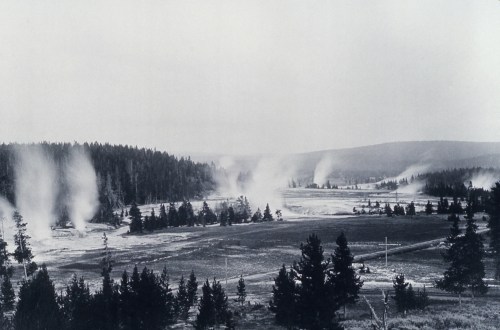
    Today tourists often stop at the Upper Geyser Basin just long enough to see Old Faithful, —just an hour or two—and then move on. But early travelers often camped near the basins for a week or more hoping to see ALL the geysers play and in all conditions: daylight, moonlight and firelight. Here’s how one man described what he saw in 1883.

    ∞§∞

    There are hundreds of springs in the basin, all differing more or less in some particular.  On a calm, clear morning, at or just before sunrise, when all the springs are sending up their columns of steam of every magnitude, and all boiling and fussing and splashing away, as if trying each to attract the greatest share of attention, and while one or two of the larger geysers are piercing the heavens with their stupendous columns, the basin presents a lively and interesting spectacle.

    The eruptions as witnessed by moonlight are truly sublime, though deprived of much of their glory, as it is difficult to distinguish between water and steam. Some of the party built bonfires and watched the eruptions by firelight, which were very fine, giving the rising volumes the appearance of fiery liquid hurled forth from the crater of a volcano.

    It is not the most quiet and agreeable place for sleeping. One is frequently disturbed during the night by the alarming detonations and subterranean thunder, making an almost constantly rumbling noise as of heavy machinery in motion, the come and go of ponderous freight-trains, the hiss and rush of escaping steam, and the loud plash of falling torrents, as the geysers, the ever-vigilant sentinels on the outposts of old Pluto’s infernal regions, sound the alarm and spout forth in the darkness. This is more sensibly realized by sleeping on the ground, and, rest assured, the sensations are not always of the most desirable character.

    ∞§∞

    — Pages 118-123 in Edwin J. Stanley, Rambles in Wonderland or Up the Yellowstone. New York: Appleton and Company, 1883.

    — National Park Service Photo, Yellowstone Digital Slide File.

    — You might also enjoy:

    — For more on this topic, click “geysers” under the Categories button to the left.

  • On Writing: From Blog to Book with Scrivener

    I emailed a complete book manuscript to my publisher yesterday, a full day ahead of the deadline specified in my contract with Globe Pequot Press. The book, Smaller Stories of Greater Yellowstone, is an anthology of seventy-two tales of early adventures in Yellowstone Park by the people who lived them.

    Smaller Stories MsThe stories in the book span the period from 1807, when John Colter first discovered the wonders of the upper Yellowstone, to the 1910s, when tourists started speeding between luxury hotels in their automobiles. The earliest stories recount mountain men’s awe at geysers hurling boiling water hundreds of feet into the air, and their gun battles with hostile Indians. The latest stories are set in a time when matrons felt comfortable taking their children to the park without an adult male accompanying them.

    I conjured the idea for Smaller Stories of Greater Yellowstone while signing copies of my first book, Adventures in Yellowstone, at Old Faithful Inn. People there told me they were looking forward to reading the 6,000-word tales in Adventures, but they really wanted shorter stories they could complete while driving between sights or sitting around their evening campfires.

    I figured it would be easy to oblige them. After all, I’ve been collecting accounts of early Yellowstone travel for more than a decade. And I’ve been excerpting tales 400 to 1,500 words long for my Humanities Montana presentations and for my blog. All I needed to do, I thought, is assemble blog posts, sort them into chapters and write introductions.

    The task was a lot easier because I use Scrivener, which is described as “a powerful content-generation tool for writers that allows them to concentrate on composing and structuring long and difficult documents.” Since the tales I wanted to use were already written, the structuring part of Scrivener was the most useful.

    First I harvested more than 200 blog posts and dumped them into separate files in Scrivener in the order they had been posted. Fortunately, it’s easy to reorganize files with Scrivener. They’re listed in a column at the left side of the display called the “Binder.” Files in the binder can be rearranged simply by dragging them to where you want them.

    The program also provides several ways to sort files including placing them in folders. I created a folder called “Non-Stories” and put all posts that I knew weren’t appropriate for the book there, things like reviews of my first book and announcements of book signings. That left about 150 blog posts—far more than enough.

    I moved the Non-Stories file from the Draft area where Scrivener keeps material headed for the final manuscript, and put it In the Research area where Scrivener keeps supporting materials. Then I looked at the number of words in the Draft area and came up with about 150,000, twice as many as I needed. So I created a filed labeled “Outtakes” and began putting weaker stories there.

    While I was reading items to decide if they went into “Outtakes,” I began creating new folders in the draft area to organize the “Keepers.” For example, items about fur trappers went into a folder called “Mountain Men,” and items about fishing in a “Fishing” folder.

    My goal was a book of a dozen parts, each contain five to seven stories totaling five or six thousand words, so there was a lot of rearranging and inventing of new categories. For example, when I found I had too many items in “hunting,” I pulled out the stories about bears and created a new folder including bear stories about other things.

    When a folder contained too many items, I searched them for weak stories or stories that were similar looking for candidates for the Outtakes folder. On the other hand, when a folder contained too few items, I searched the outtakes folder looking for candidates to add. Some stories I really liked didn’t fit into any category, so I created a folder called “Travelers’ Antics” and put them together there.

    I finally got a dozen chapters the right length and began the tasks of writing introductions and editing. With the help of a couple of friends, I finished a few weeks ago. Since then I’ve been polishing and I emailed the manuscript yesterday.

    Doubtless, my editor at Globe Pequot will be getting back to me with suggestions. When that happens, I’ll be able to locate the offending sections and fix them quickly using Scrivener.

    Shorter Stories of Greater Yellowstone should be out in the spring of 2015.

    ∞§∞

    —You also might be interested in my post, “Using Scrivener to Manage Multiple Threads in Narrative History.”

  • An Event: Hearing Sherman Alexie at the Book Festival

    I left my motel half an hour before the scheduled time for Sherman Alexie’s reading—plenty of time, I thought, to walk two blocks to the Wilma Theater and get a good seat. As I turned the corner I saw the line stretched back three quarters of a block.

    When the pedestrian light changed I rushed across the street and got in line just ahead of busloads of high school kids.  I turned and asked them: “Where are you from?”

    “Everywhere,” the said, “Polson, Arlee, Ronan.”  I recognized the names; they are the rez towns north of Missoula.

    Many of the kids carried books, sometimes two or three books, so they collect Alexie’s autograph. They were laughing, smiling, happy that they would get to see a person they truly admire

    I left the kids behind and pushed my way through the lobby. I’d better get a seat, I thought. Those kids could stand, but my new hip and arthritic knees needed for me to sit.

    I made a circuit of the main floor of the ornate old theater, but every empty seat I spotted was already claimed—and guarded by person who glared at me when I looked at it longingly. I made for the balcony.

    As I looked up the rows of balcony seats I saw a man asking four women if the two seats at the end of their row next to the stairway were taken. When they said, “no,” and made room for him to pass, I stepped forward and followed him to the precious seats.

    I waited and watched while ushers scouted out empty seats and directed late comers to them. Then the lights dimmed; welcoming speeches and introductions were made, and Sherman Alexie took the stage.

    I won’t every try to report Alexie’s remarks. Like they say, “you had to be there.” He was hilarious and serious, insulting and ingratiating, happy and sad. Like I said, “you had to be there.

    If you get a chance to hear Sherman Alexie, don’t miss it.  DON’T MISS IT.

    As i made my way out of the theater, I saw the high school kids from the rez towns waiting to get their books autographed. I’m sure they did.

    ∞§∞

  • News: Thanks to Yellowstone Gate for a Nice Article

    yg-logo-largo-1170Yellowstone Gate, an on-line magazine that covers all the news from Yellowstone and Grand Teton National Parks, has published a very nice article about me and my writing. You can also see selections from my collection of first-person accounts of early travel to Yellowstone Park by scrolling under “History.”

    Any fan of Yellowstone and Teton Parks should read Yellowstone Gate regularly. Ruffin Prevost and his staff do a marvelous job of keeping up with all the latest park news, providing gorgeous photographs and interesting features.

    ∞§∞

  • A Tale: Early Travelers Confuse Geyser Basins — Rossiter Raymond, 1871

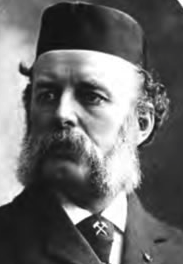
    In the summer of 1871, U.S. Commissioner of Mines Rossiter Raymond was in Virginia City, Montana, when he decided to organize a group to tour the area that would become Yellowstone National Park the next year. Of course, nobody had published any guidebooks by then, so Raymond and his companions decided to take copies of N.P. Langford’s descriptions of wonderland that Scribner’s Monthly published in its May and June 1871 issues.

    1116-7
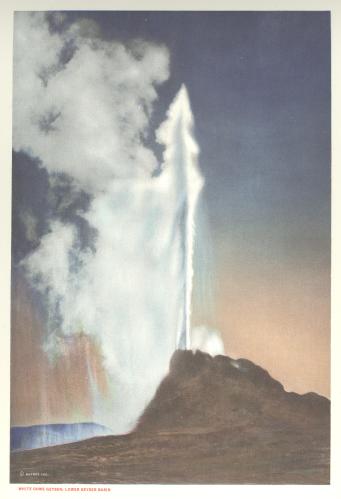
    White Dome Geyser, Lower Geyser Basin

    There were no signs in the roadless Yellowstone wilderness, so it was easy for travelers to become confused about the things they were seeing. When Augustus F. Thrasher, a photographer on the expedition, compared the Lower Geyser Basin to Langford’s descriptions of the Upper Basin, he became convinced that Langford’s description of geysers were exaggerations and decided to use his camera to prove it. 

    Raymond said, “Thrasher invests the profession of photography with all the romance and adventure . . ..  No perilous precipice daunts him, if it’s just the place for his camera.”  Given Thrasher’s passion, he must have taken some marvelous photographs, but, unfortunately, none of them are known to have survived.

     Here’s Raymond’s description of his expedition’s confusion over geysers.

    ∞§∞

    We approached the geyser basin with our expectation at the boiling-point, and ready to discharge; for we had among the baggage two copies of Scribner’s, containing Mr. Langford’s account of the wonders of the region, as seen by the Washburn exploring party. His article occupied two numbers, and we had two copies of each: so four persons could be accommodated with intellectual sustenance at one time. For the other two, it was, as one of them mournfully observed, “Testaments, or nothin’.”

    Mr. Langford’s articles were vivid and fascinating; and we found them, in the end, highly accurate. At the outset, however, we were inclined to believe them somewhat exaggerated; and Thrasher was divided between his desire to catch an instantaneous view of a spouting column two hundred and fifty-six feet high, and his ambition to prove, by the relentless demonstration of photography, that these vents of steam and hot water were not half as big as they had been cracked up to be.”

    We were not at first aware that there are two geyser basins on the Fire-Hole River; the upper one, ten miles above the other being the smaller, but containing the largest geysers. It was this one, which Washburn’s party, coming from Yellowstone Lake, first stumbled upon, and, after viewing its splendid display, naturally passed by the inferior basin with little notice. But we, emerging from the forest, and finding ourselves on the border of a great gray plain, with huge mounds in the distance, from which arose perpetually clouds of steam, supposed we had reached the great sensation, and prepared to be enthusiastic or cynical as circumstances might dictate.

    Rositer Raymond Wikipedia
    Rossister Raymond

    We rode for a mile across the barren plain picking our way to avoid the soft places. This is quite necessary in the neighborhood of the hot springs. Where they have deposited a white, hard crust, it is generally strong enough to bear horse and man; but, over large areas, the ground is like what we call, in the East, “spring-holes;” and the treacherous surface permits uncomfortable slumping through, haply into scalding water. It is not very deep; but a small depth under such circumstances is enough to make a fellow “suffer some,” like the lobster in the lobster pot. ”

    The plain contains a few scattered springs; and along the river, its western border, there are many in active ebullition. The principal group of geysers is at the upper or southern end extending for some distance up the valley of a small tributary from the east. With cautious daring, we rode up the side of the great white mound, winding among the numerous fissures, craters, and reservoirs that on every side of us hissed, gurgled, or quietly vapored, with now and then a slight explosion, and a spurt to the height of a dozen feet or more. Sawtell’s dog nosed suspiciously around several of the basins, until, finding that seemed not too hot for a bath, be plunged in, and emerged in a great hurry, with a yelp of disprobation.

    A couple of dead pines stood, lonesome enough, in the side of the hill, “whence all the rest had fled.” They had died at their posts, and to the said posts we made fast our horses, and ascended a few rods farther, until we stood by the borders of the summit springs. There were two or three large vents at the bottom of deep reservoirs or intricate caverns. It gives one an unpleasant thrill, at first, to bear the tumult of the imprisoned forces, and to feel their throes and struggles shaking the ground beneath one’s feet; but this soon passes away, and the philosopher is enabled to stand with equanimity on the rim of the boiling flood, or even to poke his inquisitive nose into some dark fissure, out of which, perhaps in a few moments more a mass of uproarious liquid and vapor will burst forth.

    We lingered much longer in this basin than my brief notice of it indicates; for, you see, we thought we had found the geysers; and oh the hours that we spent “identifying” the individual springs that Langford had described! Since, the largest eruptions we observed did not exceed forty-five feet in height, we set down his account as hugely overdrawn, and were deeply disgusted at the depravity of travelers. But Sawtell remarked, in his quiet way, that, “if it were not for that there article in that there magazine, these yer springs would be considered a big thing, after all, and perhaps it was just as well to let the magazine go to thunder, and enjoy the scenery.”

    This sensible advice we followed with much profit and pleasure; and we are all now ready to admit that our happening upon the wrong lot of geysers first was a most fortunate occurrence, since we should otherwise have been tempted to pass them by as insignificant. The truth is that in some of the elements of beauty and interest the lower basin is superior to its more thrilling rival. It is broader, and more easily surveyed as a whole; and its springs are more numerous though not so powerful. Nothing can be lovelier than the sight at sunrise, of the white steam-columns tinged with rosy morning ascending against the background of the dark pinewoods and the clear sky above. The variety in form and character of these springs is quite remarkable.

    ∞§∞

    — Excerpt from Rossiter Raymond, “Wonders of the Yellowstone.” Pages 153-207 in Camp and Cabin, New York: Fords, Hubbard & Howard, 1880.

    — Geyser postcard, Pioneer Museum of Bozeman; Raymond photo, Wikipedia Commons.

    — You might also enjoy Calvin Clawson’s tale about “First Blood” on the Raymond Expedition.

    — Find out more about Yellowstone’s first tourist guide, Gilman Sawtell.

    — For tales by N.P. Langford, click “Langford” under the Categories button above.

  • Season’s Greetings

    P e a c e

    08088
    “Winter Grass,” Yellowstone Digital Slide File.
  • An Event: Presenting ‘Montana’s Gin Marriage Law’ on Saturday

    Ruth Boyd-Charles Miller Wedding, Silver Star, Montana, August 1935.

    I will reprise my presentation. “The Montana Gin Marriage Law of 1935” on October 9, 2013, at 3 p..m. at Aspen Point in Bozeman. Look for details under the Events button above.

    My parents wedding may have been the only one in Montana in August of 1935. Certainly, it was one of very few. The reason was the Montana Gin Marriage law, which made it impossible to get a wedding license. The law, which went into effect on July 1, required couples to get a health certificate signed by a doctor, and wait three days to get a marriage license. When doctors refused to sign the certificates, Montanans discovered there was no legal way they could get married.

    This Saturday, September 28, at 9:30 a.m., I will tell about efforts to circumvent the little-known law and get it repealed. The presentation at the Pioneer Museum of Bozeman is free and open to the public. It is the last of the Gallatin Historical Society Fall Lecture Series for this year.

    My parents wanted to avoid the cost and hassle of a physical exam, so they bought their wedding license in June and held onto it until the August wedding date that they had been planning for several months. The way things worked back then, a couple could buy a marriage license from the County Clerk and then find a justice of the peace or a clergyman to perform their wedding ceremony whenever they liked. The marriage was official when the couple returned the signed license to the clerk. A few couples bought licenses in June for July weddings, but not many held them for two months like my parents did.

    Many states passed Gin Marriage laws in the 1920s and 30s. But Montana went further than most with the physical exam. It was primarily a eugenics law designed to improve humankind by keeping people from having defective children.

    The new law had teeth. If doctors signed the certificates without a proper physical, they would be guilty of a felony and could lose their medical licenses. Doctors said signing the certificates made them liable if the couple ever came down with any of the listed diseases, or had a defective child. Doctors refused to sign the certificates so County clerks couldn’t issue marriage licenses.

    The law set off a long chain of events. As my mother put it, “There was a rush to the altar in June of 1935, and a rush to the delivery room nine months later.” Mom was right.

    Examination of county records shows there were twice as many marriage licenses issued in June of 1935 as in the same month of 1934 or 1936. Mom said my Uncle Jim and Aunt Sally were typical of the young couples who rushed to get married. They had known each other less than a month on their wedding day.

    The impact of the law on the birth rate was also dramatic. Nine months after the explosion in weddings, March 1936, Saint James Hospital in Butte recorded 177 births, twice as many as in March of the year before. One of those births was my cousin. When Mom went to visit Aunt Sally and her new baby boy at Saint James, expectant mothers lined the hallways on cots. They had to actually deliver their babies before they could get a room with a regular bed.

    Shortly after the law took effect, newspapers began publishing stories about its impact. In Butte a young couple turned away from the county clerk’s office went from doctor to doctor trying to find one who would sign the required health certificate. An Idaho couple that requested a wedding license in Butte left the county clerk’s office in disgust and returned home where marriage laws remained more lax.

    On July 19, William A. Patt, a retired judge in Dubois, Idaho, announced that he was willing to marry Montanans there. “It isn’t right, that system in Montana, that discourages marriage,” Judge Patt said. He offered to perform marriages “at any hour of the day or night.” An Idaho marriage license cost $3 and Judge Patt charged $5 to perform the ceremony. That was a tremendous profit for the kindly old judge.

    By the end of July, a citizens’ group in Billings announced plans for a petition to put the Gin Marriage Law on the 1936 election ballot. The referendum effort, spearheaded by the Billings Commercial Club, was immediately joined by the Billings Federation of Women’s Clubs. They sought help from chambers of commerce, commercial clubs, and women’s’ club federations across the state.

    The Montana Constitution provided that the law would be suspended as soon as at least 5 percent of the voters from at least 40 percent of the counties signed the petition. The signatures had to be collected within six months of the end of the session when the law was passed. That left just over a month to gather signatures, get county clerks to verify them, and submit the petitions to the Secretary of State.

    The people trying to get rid of the law raced to gather signatures, and by September 4, 41 counties turned in its petitions with 21,648 signatures, more than the required number. The Secretary of State immediately announced that the law was suspended. The next day Montana’s began buying wedding licenses and getting married.

    With couples able to marry without hassles, the gin marriage law quickly faded from memory. It did appear on the 1936 ballot, but generated little attention as the public focused on the presidential race that served as a referendum on the New Deal. Voters rejected Gin Marriage with 64 percent opposing it. The fluctuations in marriage and birth rates that are so obvious in monthly statistics cancel out in annual reports so they became invisible. Also, support for eugenics waned when people learned about its horrible applications by the Nazis in the aftermath of World War II. Today few people have even heard of Montana’s Gin Marriage law.

    If you’d like to know more, come to my presentation on Saturday. I’d love to see you there.

     ∞§∞

    — Photo courtesy of Fern Kirley, the bride’s sister.