I’ve been asked to discuss the 2010 Montana Book Award winner and this year’s honor books on Tuesday, April 12, at 7 p.m. at Country Bookshelf in Bozeman. I’m really excited to speak at this premier independent bookstore where so many great authors have done readings.
The Montana Book Awards are a great bunch of books this year. As a member of the awards committee, I have read all the nominees. I know it was hard to choose just one winner from all the wonderful titles that were submitted this year. The rules limit the number of Honor Books to four so several really good nominees were left out.
My talk will come right after the MBA award presentation ceremony at the Montana Library Association meeting in Billings. I’ll get a chance there to chat with the winning authors. Also, I’ll participate in a panel discussion of the books at MLA. These things should deepen my appreciation of the books and improve my presentation.
I hope you’ll join me at Country Bookshelf for a discussion of some really great new Montana Books. Come early and spend some time perussing the great selection of new books and classics.
On June 25, 1876, General George Armstrong Custer attacked a coalition of Sioux and Cheyenne near the Little Bighorn River in Montana Territory. A day later Custer and 268 of his men lay dead after one of the most famous battles in history.
More than 40 books have been written about that bloody day so it’s easy to question the need for another one. But new facts emerge all the time so every generation deserves a fresh synthesis and interpretation. That’s what Nathaniel Philbrick provides in his 2010 Montana Book Award honoree, The Last Stand.
Philbrick builds a compelling narrative around two charismatic characters: George Armstrong Custer, who thought his success as a cavalry officer during the Civil and Indian wars might launch him into the U.S. presidency, and Sitting Bull, whose political savvy welded the Sioux and Cheyenne tribes into the largest Indian alliance in history. In addition to these two, Philbrick brings life a large cast of supporting characters. Readers get to know not only combatants—Indians, officers, soldiers and scouts—but also the officers’ wives, the steamboat men who ferried soldiers and supplies up the Yellowstone River, and the people who lined the shores to watch the boat bring survivors to safety.
Based on his painstaking and comprehensive research, Philbrick braids together the strands of information that come from contemporary accounts of the battle, interviews conducted by participants on both sides, reminiscences, and new findings from archeologists. The result is a compelling narrative about one of the iconic events of American history.
Visions of the Big Sky: Painting the Northern Rocky Mountain West is a gorgeous book, but don’t be fooled into thinking is just a collection of 140 illustrations. University of Montana history professor Dan Flores has provided erudite essays that elucidate the work of the greatest artists of the American West.
Flores includes several artists who are famous for their work in other locations, but the bullseye of his target is smackdab in the middle of Montana. Inclusion of artists like Ansel Adams and Albert Bierstadt, who are famous for their work in other locations, shows that the western artists of the Big Sky are world class.
Because of my interest in Yellowstone National Park, I paid particular attention to Flores’ chapters on William Henry Jackson and Thomas Moran, who accompanied the 1871 Hayden Expedition. Jackson’s photographs are credited with helping to convince the U.S. Congress to establish Yellowstone as the world’s first national park, and Moran’s painting of the Grand Canyon of the Yellowstone was hung in the U.S. Capital. I found Flores’ essays on these two artists accurate and enlightening. Doubtless his descriptions of artists I know less about are too.
Of course, the book includes the icons of Montana art like Charles M. Russell and Evelyn Cameron. After all, it is part of the Charles M. Russell Series on Art and Photography of the American West from the University of Oklahoma Press.
Visions of the Big Sky would be a great book to put on your coffee table for your guests to leaf through. But they shouldn’t skip the marvelous text. Neither should you.
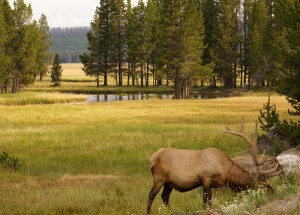
Hunters have been blaming the introduction of Wolves for the recent decline in the number of elk in Yellowstone National Park, but new research indicates that climate change may be to blame. New West has provided a nice summary of the evidence.
The news reminded me that several of the accounts of early travel to Yellowstone Park talk about summer snow storms bigger than anything we see now. Of course, the storytellers may have been exaggerating, but perhaps I should see if travel accounts provide evidence of climate change.
Also, early travelers who went to the Park in August (apparently to avoid bad weather) often couldn’t find game. Before the Army outlawed hunting in 1886, many groups counted on living off the land, so when game was scarce they went hungry. Several stories tell about the great joy of returning to the ranches near the park and getting “civilized grub.”
The Earl of Dunraven, who visited the Park in 1874, commented explicitly about how weather affects the migration of elk and other game.
∞§∞
The herds of game move according to the seasons. In Estes Park, for instance, near Denver, you might go out in winter or in early spring, when the snow is deep upon the ranges and shoot blacktail deer till you were sick of slaughter. I daresay you might—if you knew where to go—sit down, and, without moving, get ten, fifteen, or even as many as twenty shots in the day.
At other seasons you might walk the flesh off your bones without seeing a beast of any kind. Yet the deer are somewhere all the time; and, if you can only find out to what deep recesses of the forest, or to what high mountain pastures they have betaken themselves in their search for cool shelter, or in their retreat from mosquitoes and other insect pests, you would be amply rewarded for your trouble.
It is the same with wapiti. Sometimes the park will be full of them; you may find herds feeding right down on the plains among the cattle; and in a fortnight there will be none left. All will have disappeared; in what is more, it is almost impossible to follow them up and find them, for they are much shyer than the deer.
Where do they go? Not across the snowy range, certainly. Where then? Up to the bare fells, just under the perpetual snow, where they crop the short sweet grass that springs amid the debris fallen from the highest peaks; to the deep black recesses of primeval forest; to the valleys, basins, little parks and plains, hidden among the folds of the mountains, where even the wandering miner has never disturbed the solitude.
∞§∞
— Excerpt from The Great Divide by the Earl of Dunraven.
— New West Photo.
— You can read a condensed version of the Earl’s 1874 trip to Yellowstone Park in my book, Adventures in Yellowstone.
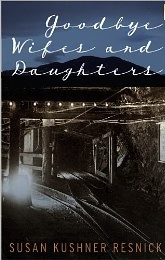
Goodbye Wifes and Daughters tells an archetypical story, one that Montanans know all too well. Some men cut corners to maximize profit; others willingly work in dangerous places to support their families, and many men die. It might have been hard rock miners in Butte or asbestos processors in Libby, but Susan Kushner Resnick chose to tell the story of coal miners in Bear Creek, Montana.
On the morning of February 27, 1943, an explosion ripped through Smith Mine #3 killing 75 men that day and the town of Bear Creek over the next decade. Resnick puts the story in context. She tells how the pressures of World War II make men feel it’s their patriotic duty face danger to keep up production. How owners exploit that patriotism to maximize profit. How methane builds and sparks ignite it.
All that is important. But the power of the book lies in Resnick’s recreation of the life in a small town. Resnick has researched deeply and she uses the details she dug up to bring the people to life. She tells us not just that the the town took pride in its high school basketball team, she tells us how many points to the top scorer made, and who sat on the bench, and where they went with their girlfriends after the game. Such exquisite detail brings the people—both those who died and those who survived—to life.
∞§∞
— To find out more about my work with the Montana Book Award look under the “Categories Button” on the right.
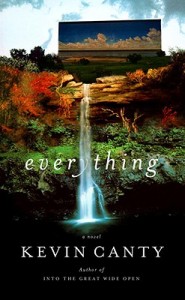
The only fiction on this year’s list of Montana Book Award winners tells the intertwined stories of a fishing guide and his friends as they encounter challenges that life might throw at any of us. Missoula author Kevin Canty’s novel doesn’t quite live up to its title, Everything: A Novel, but it sure comes close. Among the issues Canty addresses are the death of a life partner, dealing with cancer, loving a child while watching her make bad decisions, falling in love with married partner, and selling a piece of real estate you love so you can live in comfort.
Canty explores these universal themes in a specific setting, Missoula and the valleys and mountains that surround it. His clear prose is equally adept at evoking the splash of a fish jumping in a mountain stream and the clatter of beer glasses in a student bar.
The central character is a middle-aged fishing guide who calls himself “RL.” The book opens with RL and his friend, June, drinking whiskey on the bank of the Clark Fork to commemorate her late husband. RL’s daughter, Leila, falls in love in love with one of his employees whose marriage is on the rock. And RL rekindles his affair with June, an old flame who’s in town for cancer treatments.
There’s not a strong central plot that links together the several stories, but Canty proved he is a master of the short in his earlier books (Where the Money Went and AStranger in This World: Stories) and the shared links to RL and the Missoula location are plenty to hold the book together. It’s Canty’s characters and their problems that make the book stick in the reader’s memory like a well set fishhook.
∞§∞
— To find out more about my work with the Montana Book Award look under the “Categories Button” on the right.
In the 1870s a curious conflict developed over who got to kill wildlife in Yellowstone Park. After decimating the bison herds on the great plains, hide hunters converged on the park and slaughtering elk by the thousand leaving their carcasses to rot.
Sport hunters condemned commercial hunting, but reserved their own right to blast away at anything that moved. On the other hand, hide hunters said they were just trying to make a living and condemned killing “just for fun.”
The differing attitudes are illustrated in the story below. It comes from the reminiscence of Jack Bean, an Indian fighter and commercial hunter who hired on as a guide to the Hayden Expedition of 1872.
Lord William Blackmore, a wealthy Englishman who had helped fund the expedition, was Hayden’s guest and an avid fisherman. Here’s what Bean says happened when he went fishing with Lord Blackmore.
∞§∞
While the doctor was geologizing the country there, I went fishing with Sir William Blackmore in Lake Abundance.
You could see plenty of trout close to shore in the lake, but when he got to catching them he thought it would be wonderful if he caught one for each year he was old—fifty four. He soon caught the fifty four and tried for a hundred, and was not long catching this and made a try for fifty-four more and kept fishing for another hundred, and another fifty-four.
As we had gotten two thirds of the way around the lake by this time, I told him that I would quit as I had all the fish I could drag along on the grass, being two hundred and fifty-four. I dragged them into camp which was close along the lake and wanted to make a little show of these fish.
Sir Blackmore, whenever he would see any bones would always ask, “How come those bones there?” I would tell him they were left by skin hunters in the winter. He thought that all skin hunters should be put in jail for such vandalism and I told him he would do the same if he were in this country for the winter.
So when I had shook all these fish off from the strings they made such a sight that I called Dr. Hayden’s attention to what Sir Blackmore would do if he had a chance. He colored up considerable and excused himself by saying, “The fish were so plenty it was Godsend to catch some of them out.”
∞§∞
In 1886 the U.S. Army took over administration of the Park and ended the holocaust by forbidding hunting for any purpose and regulating fishing.
— For more stories about fishing in Yellowstone Park, click on “fishing” under the “Categories” button on the right.
— Excerpt from Jack Bean’s Reminiscence, Pioneer Museum of Bozeman.
How does he do that? When you pick up one of Craig Lancaster’s books, he grabs you by the throat and drags you kicking and screaming into the story. You’ve got no choice.You just turn the pages until you get to the end. Then you say, “that was good.”
Craig’s writing is invisible like a crystal clear mountain stream. You know it’s there not because you can see it, but because of what you can see in it. You never say “that guy sure know’s how to create characters.” You fall in love with the good guys (and hate the bad guys). You don’t say “he sure knows how to describe a scene.” You see a street in Billings or a mountain in Utah. You don’t tell yourself “his plots really work.” You just keep turning the pages.
I should have figured it out when I read Craig’s first novel, 600 House of Edward, but I was having too much fun. Maybe I’ll see it when I read his new novel,Summer Son, but I doubt it. I’ll just enjoy the book first. Then I’ll go back and look for things that make his writing work.
Like me, Craig is an admirer of the invisible prose of Ernest Hemingway—as Craig puts it—”the spare, almost parched, approach to language, in which simple words built simple sentences that stacked up into simple paragraphs, the sum of which was not simple at all.”
On his blog a while back Craig recalled a summer trip to Yellowstone Park. That’s perfect, I thought, I’ll ask him to write a guest blog about two of my favorite subjects, Yellowstone Park and Ernest Hemingway.
He obliged me.
∞§∞
Considering the summer of 1987 through the lens of nearly a quarter century, I wish now that I’d kept a journal or carried a camera to capture every little moment and object that demanded my interest. That summer, my parents packed up the Grand Marquis, tossed me, my sister Karen and my brother Cody into the back seat and pointed the car north, toward Yellowstone National Park, for a two-week vacation.
To be perfectly frank, I’d have rather stayed home in suburban Fort Worth and continued putting the moves on Lisa Fravert (who, it turns out, was far less interested in me than I was in her), but my folks compelled me to go. I cordoned off my share of the back seat, threatened my much-younger siblings with imminent death if they crossed into my territory, and dropped myself into two things that I hoped would stave off boredom and family interaction (which, if you think about it, are the same thing to a teenage boy): my Sony Walkman and Ernest Hemingway’s For Whom the Bell Tolls.
(Quick digression: Seriously, a Sony Walkman! Cassette-style, even. In my lifetime alone, a blink-of-the-eye 41 years, I’ve known music on eight-tracks, vinyl, cassettes, compact discs and, now, computer files so compressed that 400 songs can fit on a device half the length of my index finger. We cannot be far away from new music being piped directly into our cranial nodules, pre-selected by an algorithm that assesses every song we’ve ever heard and sends us new selections based on our biochemical responses of pleasure. It’s going to be great.)
I’d discovered Hemingway the previous spring, when I was assigned to read A Farewell to Arms by my honors English teacher, Janelle Eklund. I hadn’t held out much hope for it. Hemingway struck me as hopelessly rooted in an era that had nothing to do with me or my life, a name on the spine of books in my parents’ house that I’d never seen cracked. It was only after I did the work of crawling inside the book that I saw and appreciated Hemingway’s genius—the spare, almost parched, approach to language, in which simple words built simple sentences that stacked up into simple paragraphs, the sum of which was not simple at all. To write in such a way requires supreme control, an unwillingness to expend a single unnecessary syllable. Long before I read Hemingway for the first time, I’d resolved to be a writer, and in my teens, I was still flailing around for my voice, often with poor results. On a given day, I could do bad imitations of Dave Barry, Stephen King and, God help me, Andy Rooney—sometimes all three of them in a single paragraph. In Hemingway, I found an approach to writing that I could understand and an ethic I could emulate. He had built his creative writing on a foundation of journalism, the career path I came to follow. It was, in so many ways, a perfect convergence of my developing sensibility and a tangible manifestation of where it could lead.
In Casper, Wyoming, where we spent a few days with extended family, I ventured into a mall bookstore and bought a collection of Hemingway’s short stories, and this wrenched open a whole new realization of the man’s talent. I’m going to employ an out-of-left-field comparison here, one I’ve used before: Hemingway’s short stories remind me John McEnroe’s career in doubles tennis. Both derived their greatest fame for other things—Hemingway for his novels, McEnroe for his Grand Slam singles titles and obnoxious bearing on the court. And yet, in these sidelight endeavors, both are possibly the greatest who ever lived. It’s an incredible level of ability for one person to possess.
Onward, we drove, hooking up with my mother’s sister and her family in Billings, where I live today. The merged families then made their way to Red Lodge, up the switchbacks on the Beartooth Highway, to Cooke City—where I met a woman who’d known Hemingway, a connection to him that knocked me out—and into the park. This is where the haze of memory fails me a bit; I cannot remember the order in which we took in the sights, or how many days we stayed, or even the finer details of the majesty we saw. I spent a lot of time on narrow trails leading to viewing platforms, my 4-year-old cousin Dani riding on my shoulders. The rest of the time, I spent with my nose in Hemingway’s prose and my ears under assault by Rush’s Moving Pictures.
(Another quick digression: What’s it going to take to put Rush into the Rock ‘n’ Roll Hall of Fame? I’m serious. I can think of few pop-culture travesties that irritate me more.)
I was 17 years old that summer, and now I am the age my mother was back then. The calendar turned over faster than I could have imagined, but even though time has erased the sharp edges of memory of that vacation, it will never leave me. I can glance to my left as I write this and see those two books—the very ones I manhandled that summer—sitting in my bookcase. I can walk out my door and into my city and state and know that I’m finally at home in the land I fell in love with as a teenager. I can pull up my current manuscript—backed up nightly on a Web-based server, a phrase I couldn’t have conceived of twenty-four years ago—and know that I’m working at the dream Ernest Hemingway helped nurture in me, the writer’s life.
Simply put, I’m a lucky man.
∞§∞
Craig Lancaster is the author of the novels 600 Hours of Edward (a Montana Honor Book and High Plains Book Award winner) and The Summer Son. Visit him at his website (www.craiglancaster.net) and/or his blog (http://craiglancaster.wordpress.com).
The Montana Book Award honors books that have a Montana setting or author, or —in the case of this year’s winner—both. Not only does Great Falls author Ruth McLaughlin live in Montana, she grew up here. In fact, her memoir about life in the northeast corner of the state is a quintessential Montana story.
Bound Like Grass: A Memoir of the Western High Plains tells the story of McLaughlin’s idealistic grandparents’ pursuing their dreams by homesteading and her parents’ hardscrabble existence trying to hang onto the land.
The book begins with McLaughlin finding the only remains of the house where she grew up are a blackened chimney and rubble—perfect symbols of the broken dreams caused by the Montana homestead era of the early twentieth century.
Historians agree that big chunks of the three million acres of Montana land that were claimed under the Dessert Land Act of 1877 should never have been homesteaded. Promoters enticed homesteaders to try dry land farming with the slogan, “Rain Follows the Plow.” That was always a dubious statement and it proved to be false —if not an outright lie. Dry land farmers enjoyed some success in the relatively wet years in the 1900s and 1910s, but then drought set in launching an exodus on par with the dustbowl.
While it helps to know the background, McLaughlin’s book isn’t a history lesson. It a story about the descendants of the rugged people who kept their land through the Great Depression and the tough lives they led. In addition to their struggle to make the meager land yield enough to put food on the table, her parents contended with raising four children, including two disabled daughters. McLaughlin tells the heartbreaking stories of her sisters with loving candor.
Even more heart rending is the story of her brother’s escape to California and his troubled relationship with their father. After his father gives up farming, the son asks for only one thing—a worn out tractor that could be restored into a valuable collector’s item. The old man sells the tractor for a few dollars—a searing symbol of toxic relationship.
McLaughlin writes with the blazing clarity of prairie sun on a cloudless day. She uses writing techniques like a master novelist to turn what might seem the most ordinary of lives into a compelling story. Ruth McLauglin’s Bound Like Grass belongs on your bookshelf with Montana’s other masterpiece memoirs: Ivan Doig’s This House of Sky, Mary Clearman Blew’s All But the Waltz, and Judy Blunt’s Breaking Clean.
∞§∞
— To find out more about my work with the Montana Book Award look under the “Categories Button” on the right.
The Montana Book Award winner and honors books are listed the the news release below. I will provide reviews of them—and maybe some good books that didn’t win awards—over the next few days.
You can read my post about the selection process here.
∞§∞
BOUND LIKE GRASS WINS 2010 MONTANA BOOK AWARD
The 2010 Montana Book Award winner is Bound Like Grass by Ruth McLaughlin, published by University of Oklahoma Press. This annual award recognizes literary and/or artistic excellence in a book written or illustrated by someone who lives in Montana, is set in Montana, or deals with Montana themes or issues. Presentations and a reception with the winning authors will take place Thursday, April 7, during the Montana Library Association Conference in Billings.
Bound Like Grass: A Memoir from the Western High Plains is an honest, beautifully written memoir of McLaughlin’s own and her family’s struggle to survive on their isolated wheat and cattle farm. With acute observation, she explores her roots as a descendant of Swedish American grandparents who settled in Montana at the turn of the twentieth century with high ambitions, and of parents who barely managed to eke out a living on their own neighboring farm.
Four Honor Books Were Chosen:
Everything by Kevin Canty, published by Nan A. Talese/Doubleday. Canty’s novel chronicles a year in the lives of five appealingly aimless Montanans. Layla, a bright college student, and her heavy-drinking father, RL, fall into parallel adulterous romances—she with Edgar, a promising young painter, he with Betsy, an exgirlfriend undergoing cancer treatment. Meanwhile, June, a friend of both father and daughter, struggles to put the death of her husband behind her. There is a lot of booze and heartbreak in the book, yet it is full of optimism and humanity.
Goodbye Wifes and Daughters by Susan Resnick, published by University of Nebraska Press. One morning in 1943, close to eighty men descended into the Smith coal mine in Bearcreek, Montana. Only three came out alive. “Goodbye wifes and daughters . . .” wrote two of the miners as they died. The story of that tragic day and its aftermath unfolds in this book through the eyes of those wives and daughters—women who lost their husbands, fathers, and sons, livelihoods, neighbors, and homes, yet managed to fight back and persevere.
The Last Stand: Custer, Sitting Bull, and the Battle of the Little Bighorn by Nathaniel Philbrick, published by Viking. In his tightly structured narrative, Nathaniel Philbrick brilliantly sketches the two larger-than-life antagonists: Sitting Bull, whose charisma and political savvy earned him the position of leader of the Plains Indians, and George Armstrong Custer, one of the Union’s greatest cavalry officers and a man with a reputation for fearless and often reckless courage. Philbrick reminds readers that the Battle of the Little Bighorn was also, even in victory, the last stand for the Sioux and Cheyenne Indian nations.
Visions of the Big Sky: Painting and Photographing the Northern Rocky Mountain West by Dan Flores, published by University of Oklahoma Press. Dan Flores has assembled some of the most important and evocative artwork created in the region, depicting scenes from the Wind River Range of Wyoming to the Canadian border country. The accompanying essays are insightful and solidify Montana’s art history identity.
The Montana Book Award was founded by the Friends of the Missoula Public Library in 2001 and winners are selected by a committee of individuals representing areas throughout Montana. Members of the 2010 Montana Book Award committee included Honore Bray, Missoula; Adam Kish, Twin Bridges; Mark Miller, Bozeman; Carole Ann Clark, Great Falls; Jill Munson, Fort Benton; Gordon Dean, Forsyth; and Samantha Pierson, Libby.
∞§∞
— To find out more about my work with the Montana Book Award look under the “Categories Button” on the right.
 this year. As a member of the awards committee, I have read all the nominees. I know it was hard to choose just one winner from all the wonderful titles that were submitted this year. The rules limit the number of Honor Books to four so several really good nominees were left out.



 M. Mark Miller, Author