Tag: bear hunting

  • A Tale: Colonel Pickett’s Version of Bagging His First Bear — 1877

    When two people  describe the same event, interesting differences often occur. That certainly happened when Colonel William D. Pickett’s and his guide, Jack Bean, described the Colonel’s first bear hunt.

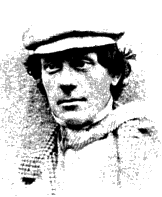
    Col. Pickett

    The hunt happened shortly after the Nez Perce Indians fled through Yellowstone Park following the bloody Big Hole Battle on August 9, 1877. Although there was still a possibility of danger from Indians remaining in the Park, Pickett was eager to hunt for grizzly bears there so he hired Jack Bean, an old Indian fighter and frontiersman, as his guide.

    Bean’s version of their trip presented the Colonel as a bit of a buffoon. Here’s how Colonel Pickett, who lated became a famous bear hunter, described his first kill.

    ∞§∞

    It was learned the hostile Indians had passed through the National Park, followed by Howard’s forces. As there was still time to make a hasty trip through the Park before the severe winter set in, I determined to do so. I was urged not to make the attempt on account of the hostiles’ sick or wounded that might have been left behind, and of other Indians. I recognized the risk, but since as a youngster I had served during the Mexican war as a mounted volunteer on the northwest frontier of Texas against the Comanches, and all the bad Indians of the Indian Territory and of the Kansas Territory who infested that frontier, I had some knowledge of Indian ways. Added to this, was the experience of four years’ service in the War Between the States. These experiences qualified me to judge of the credence to be placed in war rumors. I was anxious to make the trip.

    Only one man of suitable qualities could be found willing to make the trip—Jack Bean. He knew the routes through the Park; he was a good packer and mountain man, cautious, but resolute. We went light. I rode my hunting mare Kate; Jack his horse, and we packed my little red mule Dollie. I was armed with a .45-90-450 Sharpe long-range rifle, and Jack with a .44-40-200 repeater. In addition to a belt of cartridges, Bean carried around his neck a shot bag pretty full of cartridges, so that in case of being set afoot, they would be handy. When Dollie was packed there was not much visible except her ears and feet.

    We left Bozeman September 11, and nooned in the second canyon of the Yellowstone on the 13th. While there, a portion of the cavalry that accompanied Colonel Gilbert on his trip around from the head of the Madison, passed down toward Fort Ellis, having with them Cowan and Albert Oldham, who had survived the hostile Indians near the Lower Geysers.

    In the afternoon, we passed up the river, by the cabin of Henderson, burned by hostiles, turned up Gardiner’s River and camped within three miles of Mammoth Hot Springs. As this squad of cavalry passed down, we were conscious that we had to depend entirely on our own resources for the remainder of the trip, for there was probably not another white man in the Park. A note in my diary says: “International rifle match commences today.”

    Early on the 14th, we went on to the Hot Springs, and spent two or three hours viewing their beauties and wonders. We passed by the cabin, in the door of which the Helena man had been killed a few days before, after having escaped the attack on the camp above the Grand Falls. During the day’s travel, there were splendid mountain views from the trail.

    In the afternoon of September 15, the trail descended to the valley of the Yellowstone and passed within one mile of Baronett’s Bridge, across which Howard’s command passed on the 5th of September in pursuit of the Nez Perces. We soon dropped into the trail taken by that command and followed it back to Tower Falls.

    September 16, we packed up and began the ascent of the Mt. Washburn range. For a few miles, the trail followed an open ridge, exposing us to a northeast blizzard, accompanied by snow. After descending into the gulch, up which the trail leads to the pass in the range, the snow became deeper, and toward the summit of the range, it was eighteen or twenty inches, knee-deep, which compelled us to dismount and lead the horses, as the ascent was very hard on them. In view of future possibilities, we made every effort to save their strength. It was one of the most laborious day’s work of my experience.

    When near the summit, going through open pine timber, we discovered a large bear approaching us. He was moving along the side of the steep mountain to the left, about on a level, and would have passed out of safe range. I immediately dismounted and cut across as rapidly as the snow and the ascent admitted, to intercept him. He had not discovered us. When within about one hundred yards, watching my opportunity through the timber, I fired at his side. He was hit, but not mortally. As my later experience told me, those bears when hit always either roll down hill or go “on the jump.” On the jump this bear came, passing about twenty yards in our front. A cartridge was ready, and against Jack’s injunction “Don’t shoot,” I fired; yet, it failed to stop him, and Jack turned loose with his repeater, I shooting rapidly with my rifle. By the time the bear had reached the gulch he stopped, to go no further.

    The excitement caused by this incident and my enthusiasm on killing my first grizzly—for I claimed the bear—dispelled at once all feelings of hardship and fatigue. The bear was a grizzly of about four hundred pounds weight, fat and with a fine pelt. We had not time to skin him, nor could the hide have been packed. After getting a few steaks, a piece of skin from over the shoulder and one of his forepaws, we continued our laborious ascent of the mountain. Still excited by this incident, the work was now in the nature of a labor of love.

    ∞§∞

    — Abridged from William D. Pickett, Hunting at High Altitudes, (George Bird Grinnell, ed.) Harper & Brothers: New York, 1913. Pages 62-68.

    —Photo from the book.

    — Read more about Jack Bean in my book Adventures in Yellowstone.

    You might also enjoy these stories:

  • A Tale: In a Country Swarming With Grizzly Bears — 1874

    Dr. George Henry Kingsley

    While doing research for my next book, Encounters in Yellowstone , I’ve kept a list of  everbody who was in the park when the Nez Perce passed through there in 1877. I’ve discovered some interesting people who skedaddled before the Indians arrived.

    Among them was an intrepid trio that was reprising a trip they had made to Yellowstone Park in 1874.  They were “Texas Jack” Omohundro, a frontiersman and sometimes partner of Buffalo Bill Cody and his Wild West Show; The Earl of Dunraven, whose book The Great Divide popularized Yellowstone Park in England, and George Henry Kingsley, an English physician and adventurer.

    After Dr. Kingsley’s death, his daughter, Mary Henrietta Kingsley, compiled his papers into a book entitled Notes on Sport and Travel.  Here’s Dr. Kingley’s account of hunting grizzlies in Yellowstone Park in 1874 from that book.

    ∞§∞

    We have had very poor sport, for though we have been in a country swarming with grizzly bears we have only killed one. I was mousing around by myself the other day with the little Ballard—(a little, single-barreled rifle)—and hearing something smashing about in the willow beds, and thinking that it might be a deer, I proceeded quietly to investigate, when out there lounged the great-grandfather of all the grizzlies.

    He looked at me for a moment, and then turned and trotted off, and I trotted after him, when he, being suddenly struck with the idea that valor was the better part of discretion, faced round and walked straight at me, stopping about thirty yards off.

    As I only had the Ballard, and was quite out in the open, away from any decently sized trees, I hardly knew what to do. We stood facing each other thus for a few moments, and I could plainly see his pink tongue licking his lips, and his bright little eyes twinkling with rage.

    I put up the rifle, but could not cover any part of him where a ball would have been mortal, and if I had only wounded him, he would have been at me in a brace of shakes. After interviewing one another thus, he said “hough” and decided to advance, and I decided to retreat, which I did with considerable decision up the thickest sapling in the neighborhood, hoping, however, that he would follow me at least to the foot of it.

    I was in no small state of exultation at the prospect of killing my bear single-handed, but before I was settled, he swerved and went crashing away through the willows, and I saw him no more. He looked as big as an ox.

    Texas Jack quizzed me tremendously about this on my return, but the very next day he came back to camp with a far-away look in his eye and requested whisky. He too had come across a grizzly. He found him in a patch of trees, covering up the carcass of an elk—they are wonderfully cunning, these bears, and will plaster mud and moss over carcasses they don’t want at once, will even plaster over their wounds when they have been shot.

    Jack fired. Hit him. The bear gave one tremendous yell—looked round a moment—then tore up the ground like mad and flew at the trees, sending the bark flying in all directions. Jack lay as flat as a flounder behind a tree, and when, at length, the bear made off, came home a wiser man.

    After hearing his account I was rather glad, on the whole, that my friend had not followed to the foot of my sapling, for had I not killed him first shot, he would certainly have made it a very shaky perch to reload on.

    ∞§∞

    — Frmm Notes on Sport and Travel by George Henry Kingsley, 1900.

    — Illustration from Notes on Sport and Travel.

    — For more stories about The Earl of Dunraven, click on “Dunraven” under the “Categories” button to the right.

  • A Tale: Lord Blackmore Riles His Guide by Catching 254 Fish in One Day — 1872

    In the 1870s a curious conflict developed  over who got to kill wildlife in Yellowstone Park. After decimating the bison herds on the great plains, hide hunters converged on the park and  slaughtering elk by the thousand leaving their carcasses to rot.

    Sport hunters condemned commercial hunting, but reserved their own right to blast away at anything that moved. On the other hand, hide hunters said they were just trying to make a living and condemned killing “just for fun.”

    The differing attitudes are illustrated  in the story below. It comes from the reminiscence of Jack Bean, an Indian fighter and commercial hunter who hired on as a guide to the Hayden Expedition of 1872.

    Lord William Blackmore, a wealthy Englishman who had helped fund the expedition, was Hayden’s guest and an avid fisherman. Here’s what Bean says happened when he went fishing with Lord Blackmore.

    ∞§∞

    While the doctor was geologizing the country there, I went fishing with Sir William Blackmore in Lake Abundance.

    You could see plenty of trout close to shore in the lake, but when he got to catching them he thought it would be wonderful if he caught one for each year he was old—fifty four. He soon caught the fifty four and tried for a hundred, and was not long catching this and made a try for fifty-four more and kept fishing for another hundred, and another fifty-four.

    As we had gotten two thirds of the way around the lake by this time, I told him that I would quit as I had all the fish I could drag along on the grass, being two hundred and fifty-four. I dragged them into camp which was close along the lake and wanted to make a little show of these fish.

    Sir Blackmore, whenever he would see any bones would always ask, “How come those bones there?” I would tell him they were left by skin hunters in the winter.  He thought that all skin hunters should be put in jail for such vandalism and I told him he would do the same if he were in this country for the winter.

    So when I had shook all these fish off from the strings they made such a sight that I called Dr. Hayden’s attention to what Sir Blackmore would do if he had a chance. He colored up considerable and excused himself by saying, “The fish were so plenty it was Godsend to catch some of them out.”

    ∞§∞

    In 1886 the U.S. Army took over administration of the Park and ended the holocaust by forbidding hunting for any purpose and regulating fishing.

    — For more stories about fishing in Yellowstone Park, click on “fishing” under the “Categories” button on the right.

    — Excerpt from Jack Bean’s Reminiscence, Pioneer Museum of Bozeman.

    — NPS llustration, Yellowstone Digital Slide.

    — You might enjoy Jack Bean’s sarcastic description of guiding a greenhorn in Colonel Pickett Gets His Bear.  It fun to compare Bean’s story with Colonel Pickett’s version.

    — You can read more of Bean’s delightful reminiscence in my book, Adventures in Yellowstone.

  • News and Views: A Truly Great Conversation in Helena


    I had a really good time with seven scintillating dinner companions at Great Conversation in Helena on Wednesday.  I was impressed with the Helena Education Foundation, who sponsored the event and recognized ten great teachers from Helena schools.  What a wonderful show of community support for schools, teachers and — most important — students.

    I  truly enjoyed my dinner companions.  They laughed when I told them about Eleanor Corthell who announced to her husband that he should expect a bill  because she had bought a team and wagon and was taking their seven children to Yellowstone Park for the summer in 1904.  My companions were full of questions about Truman Everts and how he survived thirthy seven days alone in Yellowstone in 1870.  And, they were eager to share their own experiences from the time when bears would stall traffic to beg from cars.

    I was an overnight houseguest of Denny DeRozier and his wife, Nikki.  Denny is a friend from my childhood in Silver Star.  After we had a drink at Helena’s Silver Star Steak House, we spent a few minutes reminiscing in front of a historic photo of the Silver Star School.

    Great Fun!

    ∞§∞

    — Photo from the Yellowstone Digital Slide File

  • A Tale: Photos—A Grizzly Chases a Yellowstone Bison

    Generally, I focus my interest in Yellowstone Park stories on things that happened before 1915, but I couldn’t resist  joining the thousands of others who shared this remarkable photo.

  • A Tale: Yellowstone’s First Tourists Seek “First Blood”

    When the Washburn expedition returned from exploring the upper Yellowstone in 1870, they confirmed the rumors of the wonders there. Interest in the area surged when people learned it really did contain a grand canyon, a giant lake, geysers and petrified forests.

    Washburn and his companions returned to civilization in late summer—too late to mount another expedition to the Yellowstone plateau where blizzards could trap traveler in September. But in 1871—a year before the national park was created—a small group of men set off “to see Wonderland.”

    The group, considered by many to be Yellowstone’s first tourists, was led by Professor Rossiter Raymond. Their principal chronicler was Calvin C. Clawson who wrote about the trip in a series of 17 articles for The New Northwest, a Deer Lodge newspaper.

    Clawson not only describes the sights the party encountered, he speculates on such things as using of the finely ground minerals found in the geyser basins for lady’s cosmetics, and embalming bodies in the calcium-laden waters. Clawson also describes the antics men out for an enjoyable adventure. Like groups everywhere, they sometimes entertained themselves with strange contests—like seeing who could get “First Blood.”

    ∞§∞

    The morning of the eleventh was very pleasant, and a calm air was highly appreciated after a boisterous night. While we made preparations to start, a large eagle sailed over and alighted in a tree half a mile down the creek. Prof. Raymond and Eiler immediately mounted their horses and gave chase.

    As yet we had taken no game—not even a chicken killed or a fish caught—and there was a strife among us to see who would get the first blood.

    I knew that when we got to Bear Creek, among the berries, with my dog Nig’s assistance, I could get a bear—for he was celebrated for hunting that kind of game.

    Bear Creek is well named. Its underbrush furnishes bears with ample and secure hiding places. Here berries grow in abundance, and the industrious ant rears her ingenious palace. Bruin is fond of both.

    After the horses were unsaddled and secured, in company with the dog and my gun, I took a stroll up the creek to see if we couldn’t bag a Bruin before the eagle hunters came up. As we advanced, the “signs” became more and more numerous—until I was satisfied we would soon be rewarded with a bear fight.

    All of a sudden I was brought to my senses by a terrible noise in the bushes ahead of me, as of the rushing and snorting of wild animals. Of course it was a bear out berrying, and he was coming directly towards me. Nearer and nearer he came. I could see the tops of the high berry bushes bending before him.

    Now it occurred to me there might be two—two bears are a good many. I would have whistled for Nig, but to attract attention would prove ruinous, for the bear was coming plenty fast already. If the gun should fail, there would be no alternative but to trust to my knife, and that would bring me face to face with the enemy.

    Old hunters say a bear can be successfully handled (in an emergency) by waiting till he rises on his hind feet, and then smiting him under the fifth rib till he dies. They never tell how the bear amuses himself in the meantime—whether he “throws up his hand” or goes for his foe “tooth and toe nail.”

    These things have to be considered—and I considered them. I recollected that I had never seen but one man who stabbed a bear. We had to take two horses to get him (not the bear) to camp—he was too much scattered to carry on one. The best surgical assistance never could make anything else out of him but a torn up man—although he lived.

    Closer and closer come the bears—I thought I got a glimpse of them through the bushes.   There was a drove of them—two abreast, rushing on me—another minute and the fight would begin. There was no tree in reach. I held a council of war—a change of base was considered in order. I immediately stepped behind a point of rocks half a mile down the creek. After waiting a reasonable time for the enemy to appear, I walked into camp—demoralized, but not damaged. The dog soon followed, panting as though he too had a race for life.

    In a short time the eagle hunters made their appearance—with their hats bedecked with trophies in the shape of eagle feathers, and an eagle hanging to the horn of each saddle—while the wings dragged the ground.

    The old one had showed fight when she saw the hunters approaching, and settled down by the nest to protect her young. After several shots from a rifle, she was disabled—and Mr. Raymond climbed the tree as far as possible, threw a rope over the limb, and shook the two young out—then brought them to camp. They were monsters for their age, and after admiring them a while, we turned them loose to shift for themselves.

    The first blood was unanimously accorded to the Professor by the balance of the party, but if the other parent bird had been at home they might have “got away” with the invaders.

    ∞§∞

    — You can read Clawson’s complete account of the 1871 trip to the upper Yellowstone in A Ride to the Infernal Regions edited by Eugene Lee Silliman.

    —Photo from the Yellowstone Digital Slide File.

  • A Tale: Colonel Pickett Gets His Bear — 1877


    Jack Bean with trophy bear.

    After word spread about the magnificent big game in Yellowstone Park, hunters from the eastern United States and Europe began coming to bag a trophy. Even if they were skilled hunters where they came from, they needed someone to guide them in the rugged West. Jack Bean had the perfect credentials for the job. Before hiring out as a guide, Bean had been a trapper, hunter, and Indian fighter.

    In the summer of 1877, the army hired Bean to look for Chief Joseph and his band of Nez Perce Indians along the Madison River and in Yellowstone Park. He returned to Bozeman after locating the Indians and telling the Army they were headed into Yellowstone Park, to discover that a Colonel Pickett wanted to hire him as a hunting guide. In his memoir, Bean tells this tale about the intrepid Colonel.

    ∞§∞

    The Colonel was very anxious to kill a bear and had only seen a bear entering the brush on his previous hunting trips.

    The next morning our trail led us over Mount Washburn where it commenced to snow. By the time we had reached our highest point in the trail the snow was about a foot deep. As the Colonel had only summer shoes, he had to walk to keep warm. So the Colonel stopped to dig the snow off his shoes and tie them a little tighter. I looked back behind me and saw a big bear crossing the trail. I spoke to the Colonel, “There goes a bear. ” But he kept tying his shoe. When he had finished he raised his head and with a southern accent answered me, “Whar?”

    I advised him that a bear didn’t wait for a man to tie his shoe. Our trail now left the ridge and descended down to the head of Tower Creek where we saw another big bear in the trail coming toward us. So I told the Colonel, “There comes a bear.”

    “Whar?” he answered so I showed him. He got off his horse and walked quietly up the trail. I watched Mr. Bear and saw him leave the trail and start up the grassy hillside.

    I was afraid that the Colonel would shoot him when the bear was right above him and it would come down and use him rather roughly. The Colonel saw him when he was on the hill side about 30 yards away, so I dismounted and slipped up behind the Colonel. When the Colonel shot the bear it made a big growl and came down the hill on the run and passed him within 30 feet. The Colonel didn’t know I was so close behind him until I spoke.

    I told him to hold his fire until the bear jumped the creek, but he wouldn’t do it. As the bear passed the Colonel shot and missed him. When the bear crossed the creek I opened fire with my Winchester. By the time the Colonel could load and was ready to shoot again I had put five Winchester balls into him. But the Colonel gave him his last shot through the breast while the bear was falling. It rolled into the creek dead.

    We found when we had examined the bear that the Colonel’s first shot just went under the skin in the bear’s neck, which caused him to come down the hill so rapidly.

    I knew that the Colonel would want to take this hide along. But we only had one packhorse between the two of us and it was too loaded to carry the wet and green hide. So I decided that I had better spoil it. So I gave my knife a lick on the steel and as we got to the bear stuck my knife between the ears and split the skin down the backbone clean to the tail.

    The Colonel gave me a slap on the back and says, “Bean, that’s my bear.”

    I told him, “All right.” It was no credit to me to kill a bear.

    “Well,” he says, “We’ll take this skin.”

    I said, “Why didn’t you say so before I split the skin—why I’ve spoiled it.”

    The Colonel was very much put out to lose the skin. He tramped the snow down for ten feet around and finally concluded he would take the front paw and hind foot and a good chunk of meat to eat. I only took meat enough for him, as I didn’t care for bear meat. And after dissecting the bear we journeyed on our way to the Yellowstone Falls and made camp.

    That night he wanted me to cook him plenty of bear meat, but I cooked bacon for myself. I noticed that after chewing the bear meat a little, he would throw it out of his mouth when he thought I wasn’t looking. I gave him bear meat for about two days and throwed the balance away, which was never inquired for.

    ∞§∞

    — Adapted from Jack Bean, Real Hunting Tales, typed manuscript, Pioneer Museum of Bozeman.  Pages 31-33.

    — You might enjoy Colonel Picket’s version of bagging his first grizzly.

    — Pioneer Museum Photo.

    — Read more about Jack Bean in my book Adventures in Yellowstone.