Tag: grizzly

  • A Tale: Watching a Giant Grizzly — Grace Gallatin Seton, 1896

    In 1915 a giant grizzly that roamed between the Meeteesee region of Wyoming and Yellowstone Park was so well known that The New York Times published the news that he had been shot to death. He was Wahb, a bear made famous by the naturalist and writer Ernest Thompson Seton. Seton, who was instrumental in founding the Boy Scouts of America, described Wahb in his popular book, Biography of a Grizzly, and in his story “Johnny Bear.”

    Seton’s wife, Grace Gallatin Seton, also wrote about Wahb. In her version, Grace called her husband “Nimrod,” after the mighty hunter of the Bible. She called A. A. Anderson, the owner of the ranch where she first saw Wahb’s tracks, “The Host.” Here’s Grace’s story.

    ∞§∞

    A fourteen-inch track is big, even for a grizzly. That was the size of Wahb’s. The first time I saw it, the hole looked big enough for a baby’s bathtub. The Host said there was only one bear in that region that could make a track like that; in spite of the fact that this was beyond his range, it must be Meeteetsee Wahb. He got off his horse and measured the track Yes, the hind foot tracked fourteen inches. What a hole in the ground it looked!

    The Host said the maker of it was probably far away, as he judged the track to be several weeks old. I had heard so many tales of this monster that when I gazed upon his track I felt as though I were looking at the autograph of a hero.

    It was not till the next year that I really saw Wahb. It was at his summer haunt, the Fountain Hotel in the Yellowstone National Park. If you were to ask Nimrod to describe the Fountain Geyser or Hell Hole, or any of the other tourist sights thereabouts, I am sure he would shake his head and tell you there was nothing but bears around the hotel. For this was the occasion when Nimrod spent the entire day in the garbage heap watching the bears, while I did the conventional thing and saw the sights.

    About sunset, I got back to the hotel. Much to my surprise, I could not find Nimrod; and neither had he been seen since morning, when he had started in the direction of the garbage heap in the woods some quarter of a mile back from the hotel. Anxiously I hurried there, but could see no Nimrod. Instead, I saw the outline of a Grizzly feeding quietly on the hillside. It was very lonely and gruesome.

    Under other circumstances, I certainly would have departed quickly the way I came, but now I must find Nimrod. It was growing dark, and the bear looked a shocking size, as big as a whale. Dear me, perhaps Nimrod was inside—Jonah style. Just then, I heard a sepulchral whisper from the earth.

    “Keep quiet, don’t move, it’s the Big Grizzly.”

    I looked about for the owner of the whisper and discovered Nimrod not far away in a nest he had made for himself in a pile of rubbish. I edged nearer.

    “See, over there in the woods are two black bears. You scared them away. Isn’t he a monster?indicating Wahb.

    I responded with appropriate enthusiasm. Then after a respectful silence, I ventured to say:

    “How long have you been here?”

    “All day—and such a day—thirteen bears at one time. It is worth all your geysers rolled into one.

    “H’m—Have you had anything to eat?”

    “No.” Another silence, then I began again.

    “Aren’t you hungry? Don’t you want to come to dinner?”

    He nodded yes. Then I sneaked away and came back as soon as possible with a change of clothes. The scene was as I had left it, but duskier. I stood waiting for the next move. The Grizzly made it. He evidently had finished his meal for the night, and now moved majestically off up the hill towards the pine woods. At the edge of these he stood for a moment, Wahb’s last appearance, so far as I am concerned, for, as he posed, the fading light dropped its curtain of darkness between us, and I was able to get Nimrod away.

    ∞§∞

    — Condensed from Grace Gallatin Seton, “What I Know About Wahb of the Big Horn Basin,” A Woman Tenderfoot. Doubleday, Page and Co.: New York, 1900.

    — Illustration from Grace Gallatin Seton, “A Woman Tenderfoot and a Grizzly.” The Puritan: A Journal for Gentlewomen. October 1900. Pp. 109-117.

    You also might enjoy:

  • A Tale: Photographing Grizzlies With Flash Powder — 1906

    At the dawn of the Twentieth Century, a self-described hunter-naturalist named William Henry Wright decided to start carrying a camera on his various expeditions. He soon began taking excursions just to photograph animals. After a while, he decided to take on the challenges of photographing grizzlies.

    Because the grizzlies are shy and tend to be nocturnal, Wright said, chances of taking a daylight photo were slim, so he began experimenting with ways to use batteries and tripwires to ignite flash powder. By 1906 he had perfected his techniques enough to go to Yellowstone Park to try them out.

    It took several attempts before Wright succeeded in getting a decent photograph. Here’s his description of his first try.

    ∞§∞

    I followed some of the more travelled trails for several miles and found that nearly all of the grizzlies had their headquarters in the range of mountains around Mt. Washburn. I then selected their largest highway, and after setting up my camera, concealed myself one evening about a hundred feet from the trail and to leeward of it, and watched for the coming of the grizzlies. Across the trail I had stretched a number forty sewing thread, one end attached to the electric switch and the other to a small stake driven into the ground beyond the trail. Just below where I had located, there was an open park in which the bears had been feeding, as was shown by the grass that had been nipped and the holes that had been dug for roots.

    For some hours I waited in the bushes and fought gnats and mosquitoes. I saw several black bears pass along the hillside, but not a grizzly showed his nose until after the sun had set and the little marsh in the park was covered with a mantle of fog. Suddenly then, far up the trail, appeared what at first looked like a shadow, so slowly and silently did it move. But I knew at once, by the motion of the head and the long stride, that a grizzly was coming to the bottom for a few roots and a feed of grass.

    I was, of course, very anxious to see what he would do when he came to the thread across the trail, and I had not long to wait, for he came on steadily but slowly and, when within ten feet of the thread, he stopped, poked out his nose and sniffed two or three times, raised up on his hind feet, took a few more sniffs, and then bolted up the trail in the direction from which he had come.

    A few minutes after he had gone, three more appeared. These were evidently of one litter and appeared to be between two and three years old. They came on with the same cautious movements, and when they were close upon the thread, they also stopped and went through a similar performance. The one in front pushed out his nose and sniffed gingerly at the suspicious object. Those in the rear also stopped, but being curious to learn what was causing the blockade, the second one placed his forefeet on the rump of the one in front, in order to see ahead, while the third one straightened up on his hind legs and looked over the other two.

    They made a beautiful group, and just as they had poised themselves, the one in front must have touched the string a little harder than he had intended to, for there was a sudden flash that lit up the surroundings, and I expected to see the bears go tearing off through the timber, but, to my utter surprise, nothing of the kind happened.

    They all three stood up on their hind legs, and looked at each other as much as to say, “Now, what do you think of that?” and then they took up their investigation where it had been interrupted, followed the thread to where it was fastened to the stick, clawed up the spool, which I had buried in the ground, sniffed at it, and then went back to the trail, where they had first found the thread. Here they again stood up, and then, having either satisfied their curiosity or becoming suspicious, they turned around and trailed away through the timber.

    As far as I could see them they went cautiously, and stopped at frequent intervals to stand up and look behind them to see if there were any more flashes or if anything was following them. Unfortunately this picture was utterly worthless. I had failed to use enough flash powder, and when I came to develop the plate, it showed only the dimmest outline of the animals.

    ∞§∞

    — From William Henry Wright, The Grizzly Bear: The Narrative of a Hunter Naturalist,  Scribner’s Sons: New York, 1909.

    — Photo from the book.

  • A Tale: Colonel Pickett’s Version of Bagging His First Bear — 1877

    When two people  describe the same event, interesting differences often occur. That certainly happened when Colonel William D. Pickett’s and his guide, Jack Bean, described the Colonel’s first bear hunt.

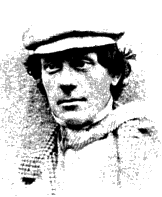
    Col. Pickett

    The hunt happened shortly after the Nez Perce Indians fled through Yellowstone Park following the bloody Big Hole Battle on August 9, 1877. Although there was still a possibility of danger from Indians remaining in the Park, Pickett was eager to hunt for grizzly bears there so he hired Jack Bean, an old Indian fighter and frontiersman, as his guide.

    Bean’s version of their trip presented the Colonel as a bit of a buffoon. Here’s how Colonel Pickett, who lated became a famous bear hunter, described his first kill.

    ∞§∞

    It was learned the hostile Indians had passed through the National Park, followed by Howard’s forces. As there was still time to make a hasty trip through the Park before the severe winter set in, I determined to do so. I was urged not to make the attempt on account of the hostiles’ sick or wounded that might have been left behind, and of other Indians. I recognized the risk, but since as a youngster I had served during the Mexican war as a mounted volunteer on the northwest frontier of Texas against the Comanches, and all the bad Indians of the Indian Territory and of the Kansas Territory who infested that frontier, I had some knowledge of Indian ways. Added to this, was the experience of four years’ service in the War Between the States. These experiences qualified me to judge of the credence to be placed in war rumors. I was anxious to make the trip.

    Only one man of suitable qualities could be found willing to make the trip—Jack Bean. He knew the routes through the Park; he was a good packer and mountain man, cautious, but resolute. We went light. I rode my hunting mare Kate; Jack his horse, and we packed my little red mule Dollie. I was armed with a .45-90-450 Sharpe long-range rifle, and Jack with a .44-40-200 repeater. In addition to a belt of cartridges, Bean carried around his neck a shot bag pretty full of cartridges, so that in case of being set afoot, they would be handy. When Dollie was packed there was not much visible except her ears and feet.

    We left Bozeman September 11, and nooned in the second canyon of the Yellowstone on the 13th. While there, a portion of the cavalry that accompanied Colonel Gilbert on his trip around from the head of the Madison, passed down toward Fort Ellis, having with them Cowan and Albert Oldham, who had survived the hostile Indians near the Lower Geysers.

    In the afternoon, we passed up the river, by the cabin of Henderson, burned by hostiles, turned up Gardiner’s River and camped within three miles of Mammoth Hot Springs. As this squad of cavalry passed down, we were conscious that we had to depend entirely on our own resources for the remainder of the trip, for there was probably not another white man in the Park. A note in my diary says: “International rifle match commences today.”

    Early on the 14th, we went on to the Hot Springs, and spent two or three hours viewing their beauties and wonders. We passed by the cabin, in the door of which the Helena man had been killed a few days before, after having escaped the attack on the camp above the Grand Falls. During the day’s travel, there were splendid mountain views from the trail.

    In the afternoon of September 15, the trail descended to the valley of the Yellowstone and passed within one mile of Baronett’s Bridge, across which Howard’s command passed on the 5th of September in pursuit of the Nez Perces. We soon dropped into the trail taken by that command and followed it back to Tower Falls.

    September 16, we packed up and began the ascent of the Mt. Washburn range. For a few miles, the trail followed an open ridge, exposing us to a northeast blizzard, accompanied by snow. After descending into the gulch, up which the trail leads to the pass in the range, the snow became deeper, and toward the summit of the range, it was eighteen or twenty inches, knee-deep, which compelled us to dismount and lead the horses, as the ascent was very hard on them. In view of future possibilities, we made every effort to save their strength. It was one of the most laborious day’s work of my experience.

    When near the summit, going through open pine timber, we discovered a large bear approaching us. He was moving along the side of the steep mountain to the left, about on a level, and would have passed out of safe range. I immediately dismounted and cut across as rapidly as the snow and the ascent admitted, to intercept him. He had not discovered us. When within about one hundred yards, watching my opportunity through the timber, I fired at his side. He was hit, but not mortally. As my later experience told me, those bears when hit always either roll down hill or go “on the jump.” On the jump this bear came, passing about twenty yards in our front. A cartridge was ready, and against Jack’s injunction “Don’t shoot,” I fired; yet, it failed to stop him, and Jack turned loose with his repeater, I shooting rapidly with my rifle. By the time the bear had reached the gulch he stopped, to go no further.

    The excitement caused by this incident and my enthusiasm on killing my first grizzly—for I claimed the bear—dispelled at once all feelings of hardship and fatigue. The bear was a grizzly of about four hundred pounds weight, fat and with a fine pelt. We had not time to skin him, nor could the hide have been packed. After getting a few steaks, a piece of skin from over the shoulder and one of his forepaws, we continued our laborious ascent of the mountain. Still excited by this incident, the work was now in the nature of a labor of love.

    ∞§∞

    — Abridged from William D. Pickett, Hunting at High Altitudes, (George Bird Grinnell, ed.) Harper & Brothers: New York, 1913. Pages 62-68.

    —Photo from the book.

    — Read more about Jack Bean in my book Adventures in Yellowstone.

    You might also enjoy these stories:

  • A Tale: Ernest Thompson Seton Retells the Story of a Bear Fight

    Wahb, The Grizzly

    Some stories are just so good they deserve to be told twice. Ernest Thompson Seton, who was  an enomously popular writer, artist and naturalist at the dawn of the Twentieth Century, found one when he visited Yellowstone Park in 1898.

    At the time, watching bears at the garbage dumps near the park’s grand hotels was a spectacle not to be missed. One day Seton took his notebook, sketchpad and camera to the dump near the Fountain Hotel and hid out in the garbage to watch bears parade in and hold a banquet. That’s when he saw a mother black bear attack a huge grizzly to protect her sickly little cub.

    The incident not only provided material for Seton’s most famous short story, “Johnny Bear,” it also appeared in his book, The Biography of a Grizzly. The biography chronicles the life of Wahb, a grizzly who lived most of the year east of Yellowstone Park in an area called Meteetsee and was the scourge of ranchers there. But as Seton discovered, Wahb spent his summers dining in the dumps in Yellowstone Park. Here’s an excerpt from The Biography of a Grizzly.

    ∞§∞

    The Bears are especially numerous about the Fountain Hotel. In the woods, a quarter of a mile away, is a smooth open place where the steward of the hotel has all the broken and waste food put out daily for the Bears, and the man whose work it is has become the Steward of the Bears’ Banquet. Each day it is spread, and each year there are more Bears to partake of it. It is a common thing now to see a dozen Bears feasting there at one time. They are of all kinds—Black, Brown, Cinnamon, Grizzly, Silvertip, Roachbacks, big and small, families and rangers, from all parts of the vast surrounding country. All seem to realize that in the Park no violence is allowed, and the most ferocious of them have here put on a new behavior. Although scores of Bears roam about this choice resort, and sometimes quarrel among themselves, not one of them has ever yet harmed a man.

    Year after year they have come and gone. The passing travelers see them. The men of the hotel know many of them well. They know that they show up each summer during the short season when the hotel is in use, and that they disappear again, no man knowing whence they come or whither they go.

    One day the owner of the Palette Ranch came through the Park. During his stay at the Fountain Hotel, he went to the Bear banquet-hall at high meal-tide. There were several Blackbears feasting, but they made way for a huge Silvertip Grizzly that came about sundown.

    “That,” said the man who was acting as guide, “is the biggest Grizzly in the Park; but he is a peaceable sort, or Lud knows what ‘d happen.”

    “That!” said the ranchman, in astonishment, as the Grizzly came hulking nearer, and loomed up like a load of hay among the piney pillars of the Banquet Hall.” That! If that is not Meteetsee Wahb, I never saw a Bear in my life!  Why, that is the worst Grizzly that ever rolled a log in the Big Horn Basin.”

    ” It ain’t possible,” said the other, “for he ‘s here every summer, July and August, an’ I reckon he don’t live so far away.”

    “Well, that settles it,” said the ranchman; “July and August is just the time we miss him on the range; and you can see for yourself that he is a little lame behind and has lost a claw of his left front foot. Now I know where he puts in his summers; but I did not suppose that the old reprobate would know enough to behave himself away from home.”

    The big Grizzly became very well known during the successive hotel seasons. Once only did he really behave ill, and that was the first season he appeared, before he fully knew the ways of the Park.

    He wandered over to the hotel, one day, and in at the front door. In the hall he reared up his eight feet of stature as the guests fled in terror; then he went into the clerk’s office. The man said: “All right; if you need this office more than I do, you can have it,” and leaping over the counter, locked himself in the telegraph-office, to wire the superintendent of the Park: “Old Grizzly in the office now, seems to want to run hotel; may we shoot?”

    The reply came: “No shooting allowed in Park; use the hose.” Which they did, and, wholly taken by surprise, the Bear leaped over the counter too, and ambled out the back way, with a heavy thud thudding of his feet, and a rattling of his claws on the floor. He passed through the kitchen as he went, and, picking up a quarter of beef, took it along.

    This was the only time he was known to do ill, though on one occasion he was led into a breach of the peace by another Bear. This was a large she-Blackbear and a noted mischief-maker. She had a wretched, sickly cub that she was very proud of—so proud that she went out of her way to seek trouble on his behalf. And he, like all spoiled children, was the cause of much bad feeling. She was so big and fierce that she could bully all the other Blackbears, but when she tried to drive off old Wahb she received a pat from his paw that sent her tumbling like a football. He followed her up, and would have killed her, for she had broken the peace of the Park, but she escaped by climbing a tree, from the top of which her miserable little cub was apprehensively squealing at the pitch of his voice. So the affair was ended; in future the Blackbear kept out of Wahb’s way, and he won the reputation of being a peaceable, well-behaved Bear.

    ∞§∞

    — Excerpt from The Biography of a Grizzly, Ernest Thompson Seton, 1900.

    — The illustration is a detail from a drawing by Seton in the same source.

    — You might also enjoy:

    — Read Ernest Thompson Seton’s “Johnny Bear” in my book, Adventures in Yellowstone.

    — To find more stories about bears, click on “Bears” under the “Categories” button to the left.

  • A Tale: In a Country Swarming With Grizzly Bears — 1874

    Dr. George Henry Kingsley

    While doing research for my next book, Encounters in Yellowstone , I’ve kept a list of  everbody who was in the park when the Nez Perce passed through there in 1877. I’ve discovered some interesting people who skedaddled before the Indians arrived.

    Among them was an intrepid trio that was reprising a trip they had made to Yellowstone Park in 1874.  They were “Texas Jack” Omohundro, a frontiersman and sometimes partner of Buffalo Bill Cody and his Wild West Show; The Earl of Dunraven, whose book The Great Divide popularized Yellowstone Park in England, and George Henry Kingsley, an English physician and adventurer.

    After Dr. Kingsley’s death, his daughter, Mary Henrietta Kingsley, compiled his papers into a book entitled Notes on Sport and Travel.  Here’s Dr. Kingley’s account of hunting grizzlies in Yellowstone Park in 1874 from that book.

    ∞§∞

    We have had very poor sport, for though we have been in a country swarming with grizzly bears we have only killed one. I was mousing around by myself the other day with the little Ballard—(a little, single-barreled rifle)—and hearing something smashing about in the willow beds, and thinking that it might be a deer, I proceeded quietly to investigate, when out there lounged the great-grandfather of all the grizzlies.

    He looked at me for a moment, and then turned and trotted off, and I trotted after him, when he, being suddenly struck with the idea that valor was the better part of discretion, faced round and walked straight at me, stopping about thirty yards off.

    As I only had the Ballard, and was quite out in the open, away from any decently sized trees, I hardly knew what to do. We stood facing each other thus for a few moments, and I could plainly see his pink tongue licking his lips, and his bright little eyes twinkling with rage.

    I put up the rifle, but could not cover any part of him where a ball would have been mortal, and if I had only wounded him, he would have been at me in a brace of shakes. After interviewing one another thus, he said “hough” and decided to advance, and I decided to retreat, which I did with considerable decision up the thickest sapling in the neighborhood, hoping, however, that he would follow me at least to the foot of it.

    I was in no small state of exultation at the prospect of killing my bear single-handed, but before I was settled, he swerved and went crashing away through the willows, and I saw him no more. He looked as big as an ox.

    Texas Jack quizzed me tremendously about this on my return, but the very next day he came back to camp with a far-away look in his eye and requested whisky. He too had come across a grizzly. He found him in a patch of trees, covering up the carcass of an elk—they are wonderfully cunning, these bears, and will plaster mud and moss over carcasses they don’t want at once, will even plaster over their wounds when they have been shot.

    Jack fired. Hit him. The bear gave one tremendous yell—looked round a moment—then tore up the ground like mad and flew at the trees, sending the bark flying in all directions. Jack lay as flat as a flounder behind a tree, and when, at length, the bear made off, came home a wiser man.

    After hearing his account I was rather glad, on the whole, that my friend had not followed to the foot of my sapling, for had I not killed him first shot, he would certainly have made it a very shaky perch to reload on.

    ∞§∞

    — Frmm Notes on Sport and Travel by George Henry Kingsley, 1900.

    — Illustration from Notes on Sport and Travel.

    — For more stories about The Earl of Dunraven, click on “Dunraven” under the “Categories” button to the right.

  • A Tale: Photos—A Grizzly Chases a Yellowstone Bison

    Generally, I focus my interest in Yellowstone Park stories on things that happened before 1915, but I couldn’t resist  joining the thousands of others who shared this remarkable photo.

  • A Tale: Watching Bears Fight at a Dump — 1896

    Tourists watching bears.Bears are remarkably adaptive animals that adjust their behavior to the activities of people they encounter. When people began visiting the Park in the 1870s, bears were fearless and easy to find. But they soon figured out that rifle shots are deadly. By the 1880s bear sightings were rare.

    In 1883 the Army forbade firearms in the Park and soon developers built grand hotels. The hotels began dumping their kitchen scraps in the woods and bears took that as an invitation to dinner. Watching bears at the dump soon became a popular pastime and it continued until the Park Service began locking garbage away in the 1960s.

    When cars were admitted to the Park in 1915, bears discovered they could approach them because there were no horses to scare. Bear jams blocked traffic and became a nuisance until the Park clamped down on feeding bears in the 1960s.

    While visiting Yellowstone Park in 1896, author and naturalist Ernest Thompson Seton decided to study bears. So he spent a day in the garbage dump hiding among the carrot tops, rotting potato peels and tomato cans with his notebook and sketchpad. The bears obliged him by trooping into the dump to eat scraps and lick jam jars. A large female and her three-legged, pot-bellied son caught Seton’s attention. The sickly little bear became the inspiration of Seton’s famous story, “Johnny Bear.”

    Despite his infirmities, Johnny Bear’s mother, Grumpy, loved him dearly. Like all momma bears, Grumpy was fearless when it came to protecting her son. She drove the other bears away from Johnny and left him alone to lick syrup cans.

    When Johnny got his head stuck in a can, he yowled, and complained, and struggled until he was able to pull it off. Then he punished the offending container by smashing it flat with his little paws.

    Suddenly, a huge grizzly ambled into the dump between Johnny and Grumpy. To protect her son, Grumpy charged the much larger animal and thumped him on the head. The grizzly responded with a terrible blow that sent her sprawling. The two bears clinched and rolled around in a battle that left Seaton nothing to watch but clouds of dirt and flailing legs. Johnny climbed to the top on a tree and whined as the battle raged. The grizzly easily defeated Grumpy so she dashed up the tree to join her son.

    While the grizzly ambled though the dump grazing, Seton decided he need photographs the combatants. So he began snapping pictures of Grumpy and Johnny. He then pointed his camera at the grizzly and it began moving toward him. When the giant got within five yards, Seton thought he had met his end. But the bear turned away and began licking tomato cans.

    Seton returned to the hotel after his day of bear watching, but the hotel staff refused to let the stinking naturalist in. They made him take off his clothes in the woods behind the hotel. Then they brought a fresh change from his hotel room. But Seton wasn’t humiliated. He considered the day a great success. After all, he had the material for his most famous story.

    ∞§∞

    —Read a condensed version Ernest Thompson Seton’s “Johnny Bear” in my book, Adventures in Yellowstone.

    — F.J. Haynes Postcard, Copperplate Photo Gallery.

    — To find more stories about bears, click on “Bears” under the “Categories” button to the left.