Tag: John Colter

  • An Event: Ready to Present at Cooke City Museum on Saturday

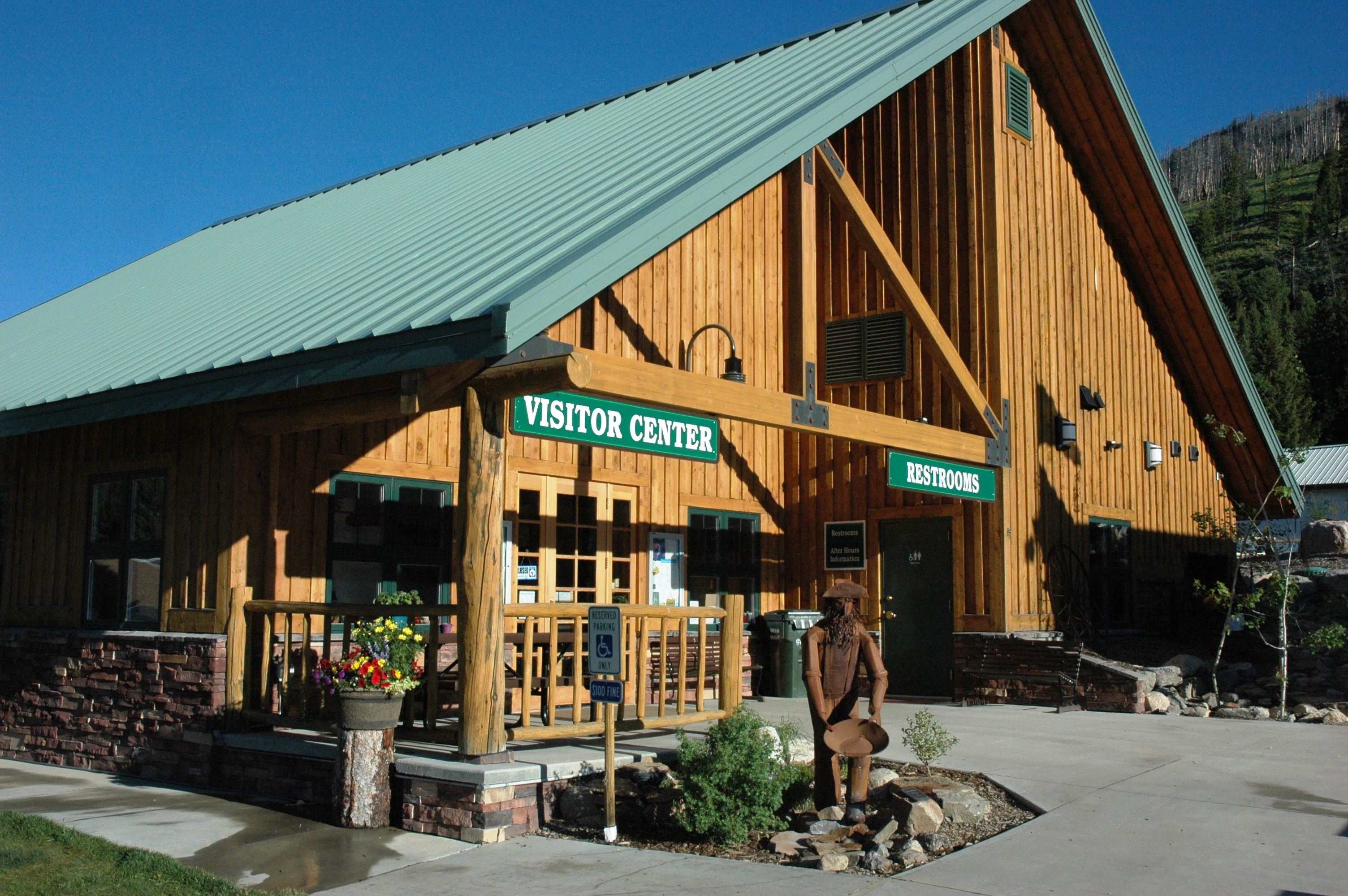
    Cooke City Visitors Center and Museum
    Cooke City Visitors Center and Museum

    I’ve been preparing a talk titled “Mountain Men Discover Yellowstone” to present at the Cooke City Museum on Saturday, August 8 at 8 p.m. It’s part of the Musuem’s “Joe’s Campfire Talks,” an outdoor summer series. I’ve presented there before and really enjoy the venue.

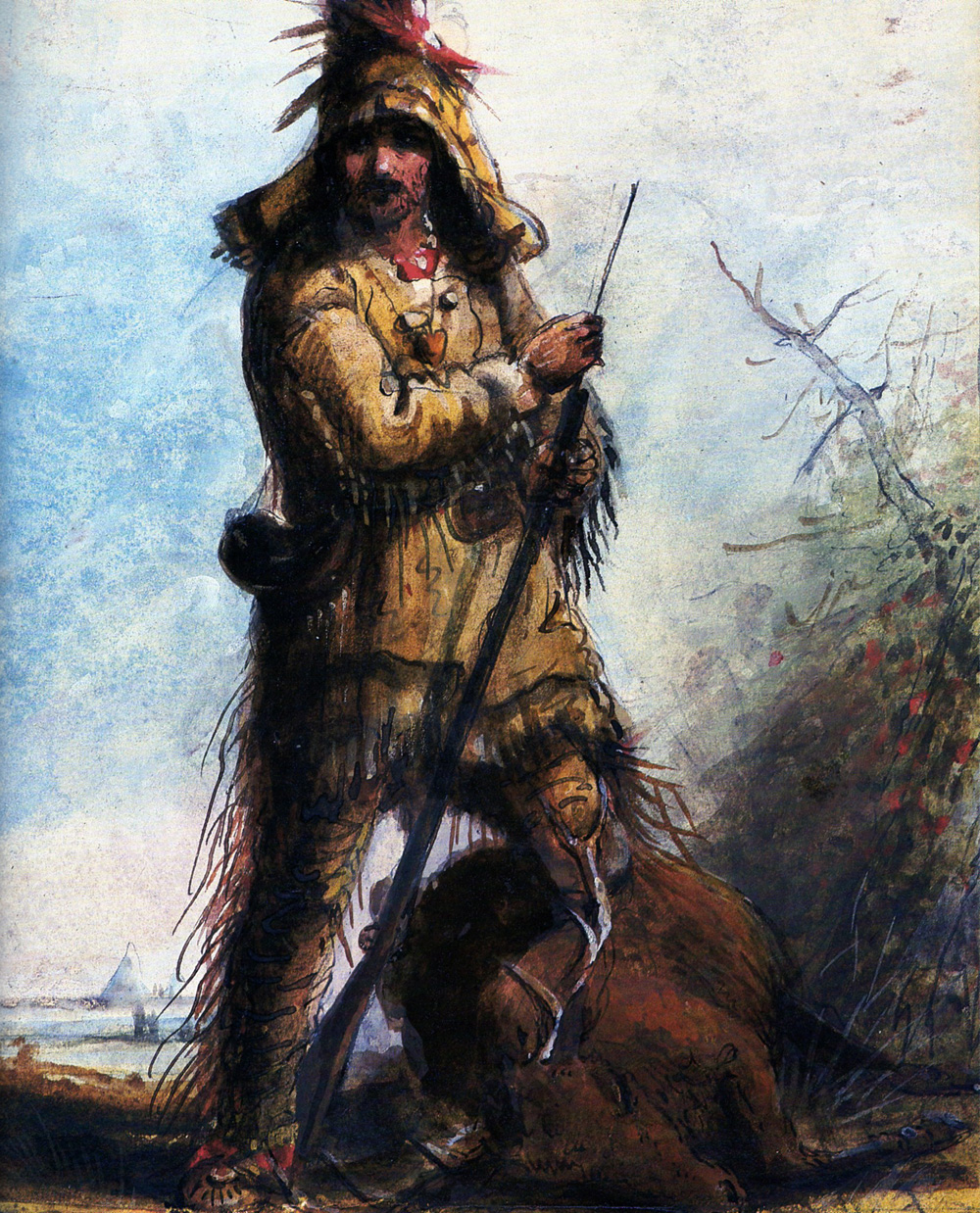
    Old_Bill_Williams wikipedia commons
    Old Bill Williams, Wikipedia Commons.

    The topic a new one for me so I had to dig through my files to find stuff, but I’m glad for a reason to explore my collection of 300 or so tales of early travel to Yellowstone Park. I always discover new things when I take a fresh look.

    I’ll begin my presentation with to following story about a first sighting of geysers:

    It was a scene of absolutely uncanny desolation, and as we looked at it we ceased to wonder at the names bestowed upon it by its first discoverers, such as “Devil’s Paint Pots,” “Hell’s Half-acre,” [and so forth].  One of our guides told us in graphic language of his first sight of this region.

    “You see,” he said, ” a party of us were out prospecting for mines, and we had traveled all day through pretty thick forests, and were pushing towards an opening we could dimly see through the trees, where, we hoped to make a comfortable camp for the night. We were very tired, and were “hurrying to get into camp, when suddenly, just as we reached the edge of the forest without a moment’s warning, we heard a most awful rumbling, the ground shook under our feet, and there burst into the air a column of water and steam that looked as if it reached the skies.

    We just fairly lost our senses, and never stopped to take a second look, but wheeled about in an instant, put spurs to our horses, and crushed away through the underbrush and tree-trunks as if the Evil One himself were after us. And the fact is,” he added, “we did not know but that he was. For what else, we asked ourselves, could such goings-on mean, but that we were on the very edge of the lower regions? We never rested till we had put miles between us and that awful place, and for years we never spoke of it for fear the fellows should think we had really been to hell, and were sold to the old fellow who lives there.”

    When I first began collecting Yellowstone travel stories, I thought such tales of freight and flight at first sight of boiling fountains of water 200 feet high would be common. But they’re not. In fact, that’s the only story like I have like that. And it’s from a reminiscence published in 1883. Since the narrator says he was “prospecting for mines” we can tell it probably was from the 1860s, decades after mountain men discovered the wonders of what became Yellowstone Park.

    The first white man to see Yellowstone was John Colter, who passed through the area in 1807 while looking for Indians to trade with. Colter, who had been a member of the famous Lewis and Clark Expedition, later told his old boss William Clark what he had seen and Clark included the information in a map he published later. While Clark’s map proves that Colter saw geothermal features, the information provided in them is vague.

    The first person to write about geysers he had actually seen was a trapper named Daniel Potts who described them in his famous “Letter From Sweet Lake,” date July 8, 1827. A newspaper published the letter anonymously and it’s author was unknown until the 1940s when two elderly ladies offered to see the original to the Park Service.

    The first mountain men who saw the geothermal features of the upper Yellowstone didn’t even know the word geyser, but their descriptions makes it clear they saw geysers. I’ll demonstrate this by reading a couple of 1834 descriptions — one by Osborne Russell and another by Warren Angus Ferris.

    I’ll end my talk with Osborne Russell’s delightful description of trappers telling tall tales  around a campfire.

    It should be a fun presentation and I’m really looking  forward to it. So if your looking for something to do on Saturday, come to Cooke City and hear about the early history of Yellowstone Park.

    ∞§∞

    • Excerpt from H.W.S., “A Lady’s Visit To The Geysers Of The Yellowstone Park,” Friends Intelligencer May 19, 1883. Pages 218-221; May 27, Pages 234-237.
  • A Tale: Another Version of Colter’s Run

    If there’s a story that deserves retelling, it is John Colter’s tale of his escape from a band of Blackfeet Indians. Colter mustered out of Lewis and Clark’s Corps of Discovery in 1806 and began his career as a trapper and Indian trader. In 1807, while searching for Indians to trade with, Colter passed through the area that is now Yellowstone National Park. In 1808 he made his famous run from the Blackfeet.
    Colter apparently was illiterate, but there are at least two versions of his tale that were written by men who heard him tell it. The one below is from Thomas James’ book, Three Years Among the Indians and Mexicans.  It generally agrees with John Bradbury’s version, but differs in some details. It’s interesting to compare these two versions of Colter’s Run.

    ∞§∞

    Colter had gone with a companion named Potts to the Jefferson River, which is the most western of the three Forks, and runs near the base of the mountains. They were both proceeding up the river in search of beaver, each in his own canoe, when a war party of about eight hundred Black-Feet Indians suddenly appeared on the east bank of the river.

    The Chiefs ordered them to come ashore, and apprehending robbery only, and knowing the utter hopelessness of flight, and having dropped his traps over the side of the canoe from the Indians, into the water, which was here quite shallow, he hastened to obey their mandate.

    On reaching the shore, he was seized, disarmed and stripped entirely naked. Potts was still in his canoe in the middle of the stream, where he remained stationary, watching the result. Colter requested him to come ashore, which he refused to do, saying he might as well lose his life at once, as be stripped and robbed in the manner Colter had been. An Indian immediately fired and shot him about the hip; he dropped down in the canoe, but instantly rose with his rifle in his hands.

    “Are you hurt,” said Colter.

    “Yes, said he, too much hurt to escape; if you can get away do so. I will kill at least one of them.”

    He leveled his rifle and shot an Indian dead. In an instant, at least a hundred bullets pierced his body and as many savages rushed into the stream and pulled the canoe, containing his riddled corpse, ashore. They dragged the body up onto the bank, and with their hatchets and knives cut and hacked it all to pieces, and limb from limb. The entrails, heart, lungs &c, they threw into Colter’s face.

    The relations of the killed Indian were furious with rage and struggled, with tomahawk in hand, to reach Colter, while others held them back. He was every moment expecting the death blow or the fatal shot that should lay him beside his companion.

    A council was hastily held over him and his fate quickly determined upon. He expected to die by tomahawk, slow, lingering and horrible. But they had magnanimously determined to give him a chance, though a slight one, for his life.

    After the council, a Chief pointed to the prairie and motioned him away with his hand, saying in the Crow language, “go—go away.” He supposed they intended to shoot him as soon as he was out of the crowd and presented a fair mark to their guns. He started in a walk, and an old Indian with impatient signs and exclamations, told him to go faster, and as he still kept a walk, the same Indian manifested his wishes by still more violent gestures and adjurations.

    When he had gone a distance of eighty or a hundred yards from the army of his enemies, he saw the younger Indians throwing off their blankets, leggings, and other encumbrances, as if for a race. Now he knew their object. He was to run a race, of which the prize was to be his own life and scalp.

    Off he started with the speed of the wind. The war-whoop and yell immediately arose behind him; and looking back, he saw a large company of young warriors, with spears, in rapid pursuit. He ran with all the strength that nature, excited to the utmost, could give; fear and hope lent a supernatural vigor to his limbs and the rapidity of his flight astonished himself.

    The Madison Fork lay directly before him, five miles from his starting place. He had run half the distance when his strength began to fail and the blood to gush from his nostrils. At every leap, the red stream spurted before him, and his limbs were growing rapidly weaker and weaker. He stopped and looked back; he had far outstripped all his pursuers and could get off if strength would only hold out.

    One solitary Indian, far ahead of the others, was rapidly approaching, with a spear in his right hand, and a blanket streaming behind from his left hand and shoulder. Despairing of escape, Colter awaited his pursuer and called to him in the Crow language, to save his life.

    The savage did not seem to hear him, but letting go his blanket, and seizing his spear with both hands, he rushed at Colter, naked and defenseless as he stood before him and made a desperate lunge to transfix him.

    Colter seized the spear, near the head, with his right hand, and exerting his whole strength, aided by the weight of the falling Indian, who had lost his balance in the fury of the onset, he broke off the iron head or blade which remained in his hand, while the savage fell to the ground and lay prostrate and disarmed before him.

    Now was his turn to beg for his life, which he did in the Crow language, and held up his hands imploringly, but Colter was not in a mood to remember the golden rule, and pinned his adversary through the body to the earth by one stab with the spearhead. He quickly drew the weapon from the body of the now dying Indian, and seizing his blanket as lawful spoil, he again set out with renewed strength, feeling, he said to me, as if he had not run a mile.

    A shout and yell arose from the pursuing army in his rear as from a legion of devils, and he saw the prairie behind him covered with Indians in full and rapid chase. Before him, if anywhere, was life and safety; behind him certain death; and running as never man before sped the foot, except, perhaps, at the Olympic Games, he reached his goal, the Madison river and the end of his five mile heat.

    Dashing through the willows on the bank he plunged into the stream and saw close beside him a beaver house, standing like a coal-pit about ten feet above the surface of the water, which was here of about the same depth. This presented to him a refuge from his ferocious enemies of which he immediately availed himself.

    Diving under the water he arose into the beaver house, where he found a dry and comfortable resting place on the upper floor or story of this singular structure. The Indians soon came up, and in their search for him, they stood upon the roof of his house of refuge, which he expected every moment to hear them breaking open. He also feared that they would set it on fire.

    After a diligent search on that side of the river, they crossed over, and in about two hours returned again to his temporary habitation in which he was enjoying bodily rest, though with much anxious foreboding. The beaver houses are divided into two stories and will generally accommodate several men in a dry and comfortable lodging.

    In this asylum, Colter kept fast till night. The cries of his terrible enemies had gradually died away, and all was still around him, when he ventured out of his hiding place . . .

    He traveled day and night, stopping only for necessary repose, and eating roots and the bark of trees, for eleven days. He reached the Fort, nearly exhausted by hunger, fatigue and excitement. His only clothing was the Indian’s blanket, whom he had killed in the race, and his only weapon, the same Indian’s spear which he brought to the Fort as a trophy. His beard was long, his face and whole body were thin and emaciated by hunger, and his limbs and feet swollen and sore. The company at the Fort did not recognize him in this dismal plight until he made himself known

    ∞§∞

    — Adapted from Thomas James, Three Years Among the Indians and Mexicans.  Saint Louis, Missouri Historical Society, 1916. [Edited with notes and biographical sketches by Walter B. Douglas] Pages 57-64.

    — Image, “Old Bill Williams.” Wikipedia Commons.

    — You might also enjoy John Bradbury’s version of Colter’s Run.
  • A Tale: Colter’s Run — 1807

    People have told and retold John Colter’s adventures with embellishments that turn him into a legendary figure like Pecos Bill and Paul Bunyon. But Colter really did cross the plains naked after outrunning hundreds of Blackfeet warriors who were screaming for his scalp. He really was the first white man to visit what is now Yellowstone Park. And his reports of a stinking place where springs spout steam and boiling water were greeted as fantasy and labeled “Colter’s Hell.”

    Colter was a member of the famous Lewis and Clark Expedition that first explored the American West beginning in 1803. He came within a hundred miles of what is now the park in 1806 when he accompanied William Clark on the return trip down the Yellowstone River.

    Later, Colter sought permission to muster out of the Corps of Discovery so he could return upriver with a pair of trappers. After extracting a promise from the rest of the men that they wouldn’t seek similar treatment, the Captains acceded to his request.

    Colter’s partnership soon broke up and he joined  Manuel Lisa’s Missouri Fur Company. In 1807, Lisa sent Colter up the Yellowstone River to make friends with the Crow Indians and bring them back to his trading post. While he was on this mission, Colter passed through parts of what is now Yellowstone National Park.

    Apparently illiterate, Colter left no written accounts of his travels. But on a visit to Saint Louis, Colter told his adventures to the English writer and naturalists William Bradbury. In a footnote in his 1819 book, Travels in the Interior of America, Bradbury reported the famous story of Colter’s Run.

    ∞§∞

    Colter came to St. Louis in May, 1810, in a small canoe, from the headwaters of the Missouri, a distance of three thousand miles. I saw him on his arrival, and received from him an account of his adventures. One of these, from its singularity, I shall relate.

    He trapped in company with a hunter named Potts. Aware of the hostility of the Blackfeet Indians, they set their traps at night, and took them up early in the morning, remaining concealed during the day.

    They were examining their traps early one morning, in a creek about six miles from that branch of the Missouri called Jefferson’s Fork, and were ascending in a canoe. Suddenly they heard a great noise, resembling the trampling of animals. But they could not ascertain the cause, as the high, perpendicular banks on each side of the river impeded their view.

    Colter immediately pronounced it to be occasioned by Indians, and advised an instant retreat. Potts accused him of cowardice and insisted that the noise was caused by buffaloes. In a few minutes their doubts were removed by a party of Indians making their appearance on both sides of the creek—five or six hundred—who beckoned them to come ashore.

    As retreat was now impossible Colter turned the head of the canoe to the shore. At the moment of its touching, an Indian seized the rifle belonging to Potts. But Colter, who is a remarkably strong man, immediately retook it. He handed it to Potts, who remained in the canoe, and on receiving it pushed off into the river.

    He had scarcely quitted the shore when an arrow was shot at him, and he cried out, “Colter, I am wounded.” Colter remonstrated with him on the folly of attempting to escape, and urged him to come ashore.

    Instead of complying, he instantly leveled his rifle at an Indian, and shot him dead on the spot. This conduct may appear to have been an act of madness, but it was doubtless the effect of sudden and sound reasoning. For if taken alive, Potts must have expected to be tortured to death, according to their custom. He was instantly pierced with arrows so numerous that, to use the language of Colter, “be was made a riddle of.”

    They now seized Colter, stripped him entirely naked, and began to consult on the manner in which he should be put to death. They were first inclined to set him up as a mark to shoot at. But the chief interfered, and seizing him by the shoulder, asked him if he could run fast.

    Colter, who had been some time amongst the Crow Indians, had in a considerable degree acquired the Blackfoot language. He was also well acquainted with Indian customs. He knew that he had now to run for his life, with the dreadful odds of five or six hundred against him. Therefore he cunningly replied that he was a very bad runner—although he was considered by the hunters as remarkably swift.

    The chief now commanded the party to remain stationary, and led Colter out on the prairie three or four hundred yards—and released him, bidding him to save himself if he could.

    At that instant the horrid war whoop sounded in the ears of poor Colter. Urged with the hope of preserving life, he ran with a speed at which he was himself surprised.

    He proceeded towards the Jefferson Fork, having to traverse a plain six miles in breadth, abounding with prickly pear, on which he was every instant treading with his naked feet. He ran nearly halfway across the plain before he ventured to look over his shoulder.

    He perceived that the Indians were very much scattered—and that he had gained ground to a considerable distance from the main body. But one Indian, who carried a spear, was much before all the rest, and not more than a hundred yards from him.

    A faint gleam of hope now cheered the heart of Colter. He derived confidence from the belief that escape was within the bounds of possibility. But that confidence was nearly fatal to him. He had exerted himself to such a degree that the blood gushed from his nostrils—and almost covered the forepart of his body.

    He had now arrived within a mile of the river, when he distinctly heard the appalling sound of footsteps behind him, and every instant expected to feel the spear of his pursuer. Again he turned his head, and saw the savage not twenty yards from him.

    Determined if possible to avoid the expected blow, he suddenly stopped, turned round, and spread out his arms. The Indian, surprised by the suddenness of the action, and perhaps of the bloody appearance of Colter, also attempted to stop. But exhausted with running, he fell whilst endeavoring to throw his spear, which stuck in the ground and broke in his hand.

    Colter instantly snatched up the pointed part, with which he pinned him to the earth, and then continued his flight. The foremost of the Indians, on arriving at the place, stopped till others came up to join them, when they set up a hideous yell. Every moment of this time was improved by Colter, who, although fainting and exhausted, succeeded in gaining the skirting of the cottonwood trees, on the borders of the fork, through which he ran and plunged into the river.

    Fortunately for him, a little below this place there was an island, against the upper point of which a raft of drift timber, had lodged. He dived under the raft, and after several efforts, got his head above the water amongst the trunks of trees, covered over with smaller wood to the depth of several feet. Scarcely had he secured himself when the Indians arrived on the river, screeching and yelling, as Colter expressed it, “like so many devils.” They were frequently on the raft during the day, and were seen through the chinks by Colter, who was congratulating himself on his escape, until the idea arose that they might set the raft on fire.

    In horrible suspense he remained until night, when hearing no more of the Indians, he dived under the raft, and swam silently down the river to a considerable distance. He landed and traveled all night. Although happy in having escaped from the Indians, his situation was still dreadful. He was completely naked, under a burning sun—the soles of his feet were entirely filled with the thorns of the prickly pear—he was hungry. He had no means of killing game—although he saw abundance around him. He was at least seven days’ journey from the nearest Fort.

    These were circumstances under which almost any man but an American hunter would have despaired. He arrived at the fort in seven days, having subsisted on a root much esteemed by the Indians.

    ∞§∞

    — Story adapted from pages 17-21 (footnote) in John Bradbury, Travels in the Interior of America in the Years 1809, 1810, and 1911 (London: Sherwood, Neely, and Jones, 1817).

    — Illustration, “Old Bill Williams,” Wikipedia Commons.

    — You might also enjoy “Jim Bridger’s Descriptions of Yellowstone.”

    — Here’s another version of Colter’s Run.