Tag: Wapiti

  • News: Climate Change—Not Just Wolves—May Cause Fewer Yellowstone Elk

    Hunters have been blaming the introduction of Wolves for the recent decline in the number of elk in Yellowstone National Park, but new research indicates that climate change may be to blame. New West has provided a nice summary of the evidence.
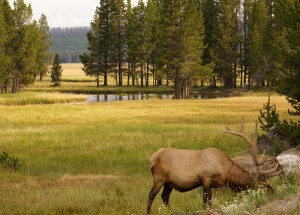
    The news reminded me that several of the accounts of early travel to Yellowstone Park talk about summer snow storms bigger than anything we see now. Of course, the storytellers may have been exaggerating, but perhaps I should see if travel accounts provide evidence of climate change.

    Also, early travelers who went to the Park in August (apparently to avoid bad weather) often couldn’t find game. Before the Army outlawed hunting in 1886, many groups counted on living off the land, so when game was scarce they went hungry. Several stories tell about the great joy of returning to the ranches near the park and getting “civilized grub.”

    The Earl of Dunraven, who visited the Park in 1874, commented explicitly about how weather affects the migration of elk and other game.

    ∞§∞

    The herds of game move according to the seasons. In Estes Park, for instance, near Denver, you might go out in winter or in early spring, when the snow is deep upon the ranges and shoot blacktail deer till you were sick of slaughter. I daresay you might—if you knew where to go—sit down, and, without moving, get ten, fifteen, or even as many as twenty shots in the day.

    At other seasons you might walk the flesh off your bones without seeing a beast of any kind. Yet the deer are somewhere all the time; and, if you can only find out to what deep recesses of the forest, or to what high mountain pastures they have betaken themselves in their search for cool shelter, or in their retreat from mosquitoes and other insect pests, you would be amply rewarded for your trouble.

    It is the same with wapiti. Sometimes the park will be full of them; you may find herds feeding right down on the plains among the cattle; and in a fortnight there will be none left. All will have disappeared; in what is more, it is almost impossible to follow them up and find them, for they are much shyer than the deer.

    Where do they go? Not across the snowy range, certainly. Where then? Up to the bare fells, just under the perpetual snow, where they crop the short sweet grass that springs amid the debris fallen from the highest peaks; to the deep black recesses of primeval forest; to the valleys, basins, little parks and plains, hidden among the folds of the mountains, where even the wandering miner has never disturbed the solitude.

    ∞§∞

    — Excerpt from The Great Divide by the Earl of Dunraven.

    — New West Photo.

    — You can read a condensed version of the Earl’s 1874 trip to Yellowstone Park in my book, Adventures in Yellowstone.
  • A Tale: Wapiti Are The Stupidest Brutes — 1874

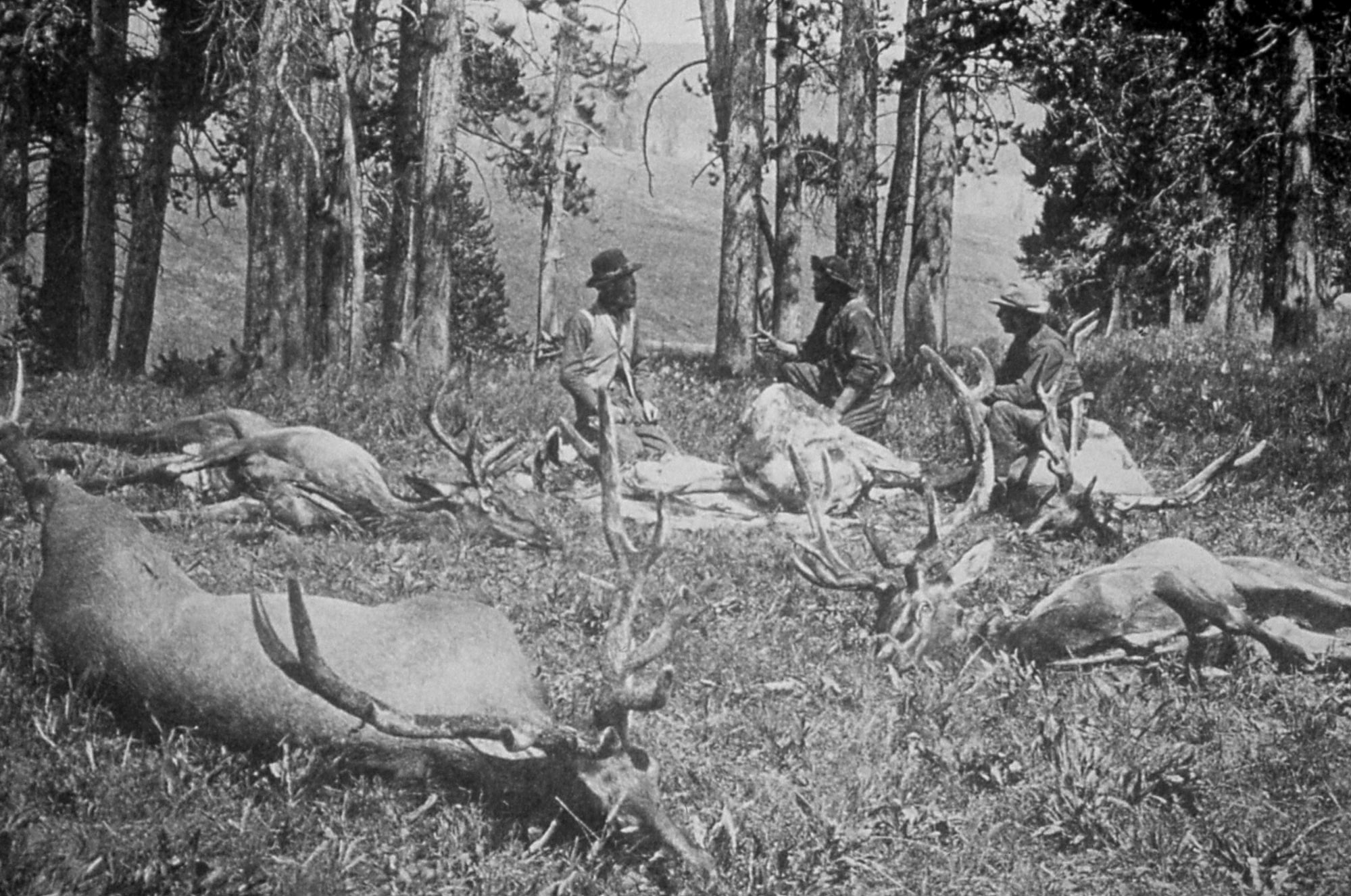
    Most early Yellowstone tourists came from the adjacent territories because getting to the park was too expensive for other people. But a few wealthy adventurers from distant places found the time and money to make the long trip. Hunting, which was perfectly legal until the Army took over administration of Yellowstone Park in 1886, was a prime attraction.

    One such traveler was Windham Thomas Wyndam-Quin, the fourth Earl of Dunraven. A fabulously wealthy Irish nobleman, Lord Dunraven hired several men to accompany him. One of them was Fredrick Bottler, a rancher who settled in the Paradise Valley on the Yellowstone River in 1868. Bottler was familiar with Yellowstone’s wonders and served as an outfitter, guide and hunter for several early expeditions.

    Dunraven, who had been a war correspondent for British newspapers, was an astute observer with a droll wit. In addition to his stories about watching geysers and hunting big game, he offers humorous advice on how to pack a mule, and tells about roasting fresh elk meat over a campfire.

    He wrote several books about his travel adventures. Here’s his description of Elk Hunting from The Great Divide, one of his most popular.

    ∞§∞

    We wound our way towards the head of the valley, half asleep, for the day was very hot. Before long I jerked my horse on to his haunches and slid quietly off. The others followed my example without a word, for they too had caught a glimpse of the dark brown forms of some wapiti feeding quietly in the wood. Bottler, in his enthusiasm, seized me violently by the arm and hurried into the timber, ejaculating at every glimpse of the forms moving through the trees.

    “There they go! There they go! Shoot! Now then! There’s a chance.” At the time he was dragging me along, and I could no more shoot than fly. At last I shook myself clear of him, and, getting a fair easy shot at a large fat doe, fired and killed her.

    Wapiti are the stupidest brutes in creation; and, instead of making off at once, the others all bunched up and stared about them, so that we got two more before they made up their minds to clear out. There was a fine stag in the herd, but, as is usually the case, he managed to get himself well among the hinds out of harm’s way, and none of us could get a chance at him.

    Bottler and I followed his tracks for an hour, but could not come up with him; and, finding that he had taken clear up the mountain, we returned to the scene of action. There we found the rest of the party busily engaged in cutting up the huge deer. One of them was a hind, in first-rate condition and as fat as butter. We were very glad of fresh meat, and, as the ground was very suitable, determined to camp right there, and send some of the flesh down to the main camp in the morning. We pitched our Lilliputian tents at the foot of one of a hundred huge hemlocks, set a fire, and proceeded to make ourselves comfortable for the night.

    We were all smoking round the fire—a most attentive audience, watching with much interest the culinary feats which Bottler was performing—when we were startled by a most unearthly sound.

    Bottler knew it well, but none of us strangers had ever heard a wapiti stag roaring before, and it is no wonder we were astonished at the noise. The wapiti bellows forth one great roar, commencing with a hollow, harsh, unnatural sound, and ending in a shrill screech like the whistle of a locomotive.

    In about ten minutes this fellow called again, a good deal nearer, and the third time he was evidently close to camp, so we started out. Advancing cautiously, we presently, through a bush, distinguished in the gloom the I saw body and antlered head of a real monarch of the forest as he stalked out into an open glade and stared with astonishment at our fire.

    He looked perfectly magnificent. He was a splendid beast, and his huge bulk, looming large in the uncertain twilight, appeared gigantic. He stood without betraying the slightest sign of fear or hesitation; but, as if searching with proud disdain for the intruder that had dared to invade his solitude, he slowly swept round the branching spread of his antlers, his neck extended and his head a little thrown back, and snuffed the air.

    I could not see the fore sight of the little muzzle-loader, but luck attended the aim, for the bullet struck high up the shoulder; and, shot through the spine, the largest wapiti stag that I had ever killed fell stone-dead in his tracks.

    It was early in the season, and his hide was in first rate condition, a rich glossy brown on the sides and jet black along the back and on the legs; so we turned to, cut off his head and skinned him; and, by the time we had done that and had packed the head and hide into camp, it was pitch dark, when we were ready for supper and blankets.

    ∞§∞

    —From Dunraven, The Great Divide, 1875.

    —William Henry Jackson Photo, Yellowstone Digital Slide File.

    — To see more stories by this author, click on “Dunraven” under the “Categories” button to the left.