Tag: Warren Angus Ferris

  • An Event: Ready to Present at Cooke City Museum on Saturday

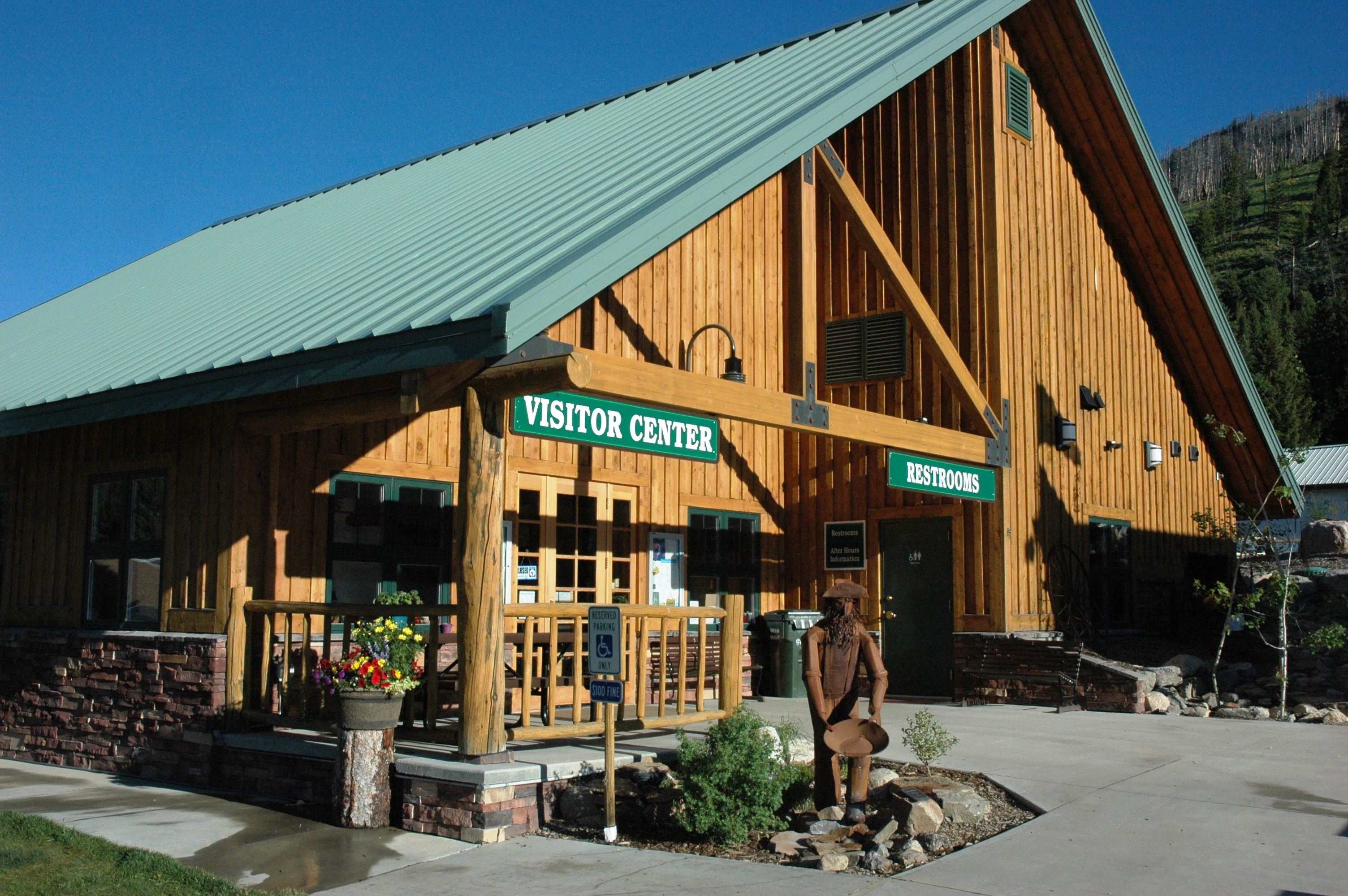
    Cooke City Visitors Center and Museum
    Cooke City Visitors Center and Museum

    I’ve been preparing a talk titled “Mountain Men Discover Yellowstone” to present at the Cooke City Museum on Saturday, August 8 at 8 p.m. It’s part of the Musuem’s “Joe’s Campfire Talks,” an outdoor summer series. I’ve presented there before and really enjoy the venue.
    Old_Bill_Williams wikipedia commons
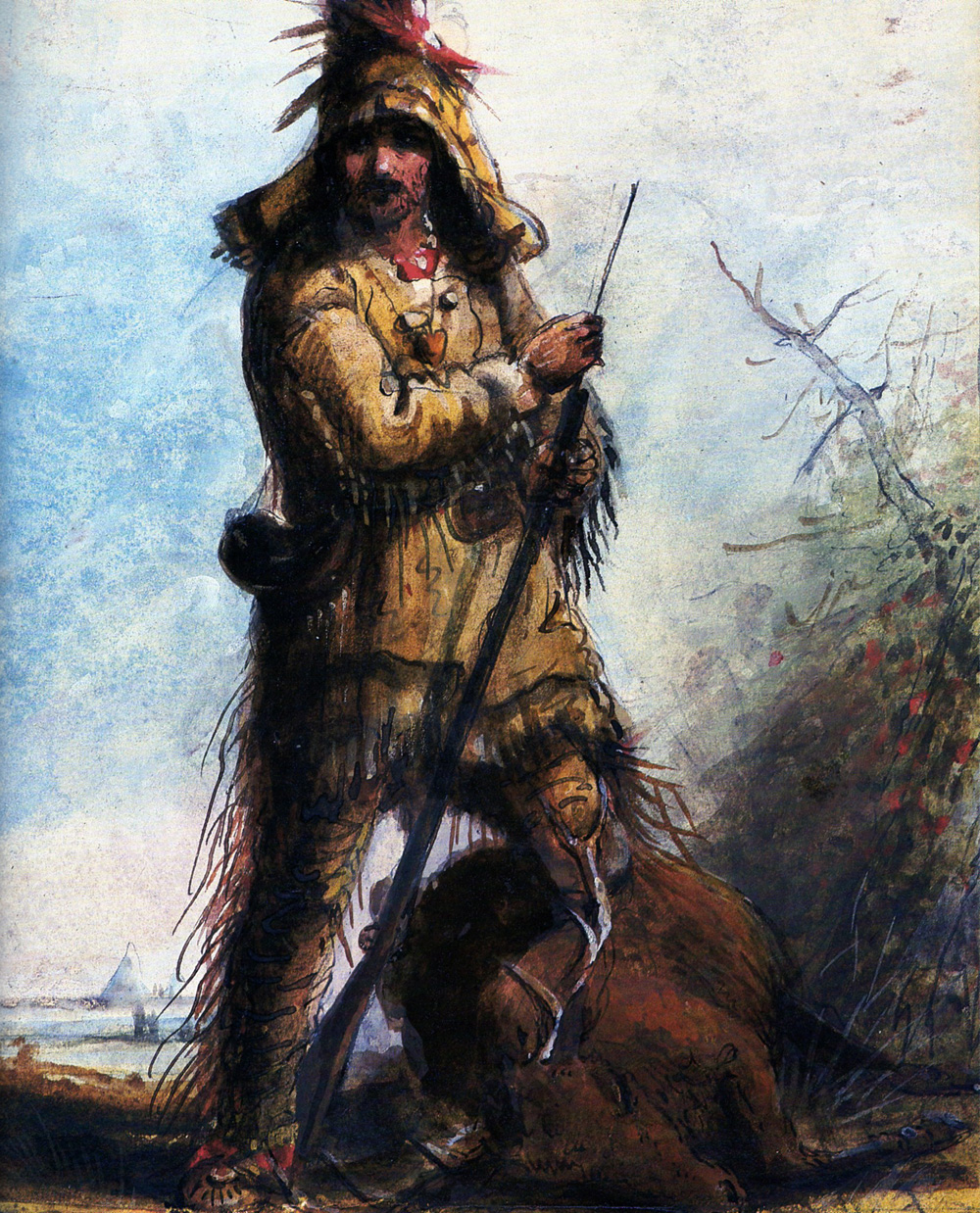
    Old Bill Williams, Wikipedia Commons.

    The topic a new one for me so I had to dig through my files to find stuff, but I’m glad for a reason to explore my collection of 300 or so tales of early travel to Yellowstone Park. I always discover new things when I take a fresh look.

    I’ll begin my presentation with to following story about a first sighting of geysers:

    It was a scene of absolutely uncanny desolation, and as we looked at it we ceased to wonder at the names bestowed upon it by its first discoverers, such as “Devil’s Paint Pots,” “Hell’s Half-acre,” [and so forth].  One of our guides told us in graphic language of his first sight of this region.

    “You see,” he said, ” a party of us were out prospecting for mines, and we had traveled all day through pretty thick forests, and were pushing towards an opening we could dimly see through the trees, where, we hoped to make a comfortable camp for the night. We were very tired, and were “hurrying to get into camp, when suddenly, just as we reached the edge of the forest without a moment’s warning, we heard a most awful rumbling, the ground shook under our feet, and there burst into the air a column of water and steam that looked as if it reached the skies.

    We just fairly lost our senses, and never stopped to take a second look, but wheeled about in an instant, put spurs to our horses, and crushed away through the underbrush and tree-trunks as if the Evil One himself were after us. And the fact is,” he added, “we did not know but that he was. For what else, we asked ourselves, could such goings-on mean, but that we were on the very edge of the lower regions? We never rested till we had put miles between us and that awful place, and for years we never spoke of it for fear the fellows should think we had really been to hell, and were sold to the old fellow who lives there.”

    When I first began collecting Yellowstone travel stories, I thought such tales of freight and flight at first sight of boiling fountains of water 200 feet high would be common. But they’re not. In fact, that’s the only story like I have like that. And it’s from a reminiscence published in 1883. Since the narrator says he was “prospecting for mines” we can tell it probably was from the 1860s, decades after mountain men discovered the wonders of what became Yellowstone Park.

    The first white man to see Yellowstone was John Colter, who passed through the area in 1807 while looking for Indians to trade with. Colter, who had been a member of the famous Lewis and Clark Expedition, later told his old boss William Clark what he had seen and Clark included the information in a map he published later. While Clark’s map proves that Colter saw geothermal features, the information provided in them is vague.

    The first person to write about geysers he had actually seen was a trapper named Daniel Potts who described them in his famous “Letter From Sweet Lake,” date July 8, 1827. A newspaper published the letter anonymously and it’s author was unknown until the 1940s when two elderly ladies offered to see the original to the Park Service.

    The first mountain men who saw the geothermal features of the upper Yellowstone didn’t even know the word geyser, but their descriptions makes it clear they saw geysers. I’ll demonstrate this by reading a couple of 1834 descriptions — one by Osborne Russell and another by Warren Angus Ferris.

    I’ll end my talk with Osborne Russell’s delightful description of trappers telling tall tales  around a campfire.

    It should be a fun presentation and I’m really looking  forward to it. So if your looking for something to do on Saturday, come to Cooke City and hear about the early history of Yellowstone Park.

    ∞§∞

    • Excerpt from H.W.S., “A Lady’s Visit To The Geysers Of The Yellowstone Park,” Friends Intelligencer May 19, 1883. Pages 218-221; May 27, Pages 234-237.
  • A Tale: A Fur Trader Travels to Geyserland — Ferris, 1834

    Only a few of the rugged mountain men who penetrated the area that became Yellowstone National Park could read and write. One who could was Warren Angus Ferris,  a clerk for the American Fur Company. Ferris kept a journal that was published in serialized form in 1843-44 in the Western Literary Messenger and later as a book entitled Life in the Rocky Mountains. In these writings he offered one of the earliest written descriptions of the grand geysers in the Upper Geyser Basin.

    ∞§∞

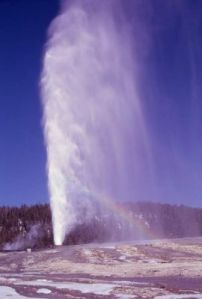
    Beehive Geyser

    I had heard in the summer of 1833, while at rendezvous, that remarkable boiling springs had been discovered, on the sources of the Madison, by a party of trappers in their spring hunt; of which the accounts they gave, were so very astonishing, that I determined to examine them myself, before recording their descriptions, though I had the united testimony of more than twenty men on the subject, who all declared they saw them, and that they really were, as extensive and remarkable as they had been described.

    Having now an opportunity of paying them a visit, and as another or a better might not soon occur, I parted with the company after supper, and, taking with me two Pen-d’orielles, set out at a round pace, the night being clear and comfortable. We proceeded over the plain about twenty miles, and halted until daylight on a fine spring, flowing into Cammas Creek.

    Refreshed by a few hours sleep, we started again after a hasty breakfast, and entered a very extensive forest called the Piny Woods, which we passed through, and reached the vicinity of the springs about dark, having seen several small lakes or ponds, on the sources of the Madison; and rode about forty miles; which was a hard day’s ride, taking into consideration the rough irregularity of the country through which we had travelled.

    We regaled ourselves with a cup of coffee, and immediately after supper lay down to rest, sleepy, and much fatigued. The continual roaring of the springs, however, for some time prevented my going to sleep, and excited an impatient curiosity to examine them; which I was obliged to defer the gratification of, until morning; and filled my slumbers with visions of water spouts, cataracts, fountains, jets d’eau of immense dimensions, etc. etc.

    When I arose in the morning, clouds of vapor seemed like a dense fog to overhang the springs, from which frequent reports or explosions of different loudness, constantly assailed our ears. I immediately proceeded to inspect them, and might have exclaimed with the Queen of Sheba, when their full reality of dimensions and novelty burst upon my view, “The half was not told me.”

    From the surface of a rocky plain or table, burst forth columns of water, of various dimensions, projected high in the air, accompanied by loud explosions, and sulphurous vapors, which were highly disagreeable to the smell. The rock from which these springs burst forth, was calcareous, and probably extends some distance from them, beneath the soil. The largest of these wonderful fountains, projects a column of boiling water several feet in diameter, to the height of more than one hundred and fifty feet—in my opinion; but the party of Alvarez, who discovered it, persist in declaring that it could not be less than four times that distance in height accompanied with a tremendous noise.

    These explosions and discharges occur at intervals of about two hours. After having witnessed three of them, I ventured near enough to put my hand into the water of its basin, but withdrew it instantly, for the heat of the water in this immense cauldron, was altogether too great for comfort, and the agitation of the water, the disagreeable effluvium continually exuding, and the hollow unearthly rumbling under the rock on which I stood, so ill accorded with my notions of personal safety, that I reheated back precipitately to a respectful distance.

    The Indians who were with me, were quite appalled, and could not by any means be induced to approach them. They seemed astonished at my presumption in advancing up to the large one, and when I safely returned, congratulated me on my “narrow escape.”  They believed them to be supernatural, and supposed them to be the production of the Evil Spirit. One of them remarked that hell, of which he had heard from the whites, must be in that vicinity.

    The diameter of the basin into which the water of the largest jet principally falls, and from the centre of which, through a hole in the rock of about nine or ten feet in diameter, the water spouts up as above related, may be about thirty feet. There are many other smaller fountains, that did not throw their waters up so high, but occurred at shorter intervals. In some instances, the volumes were projected obliquely upwards, and fell into the neighboring fountains or on the rock or prairie. But their ascent was generally perpendicular, falling in and about their own basins or apertures.

    These wonderful productions of nature, are situated near the centre of a small valley, surrounded by pine covered hills, through which a small fork of the Madison flows. Highly gratified with my visit to these formidable and magnificent fountains, jets, or springs, whichever the reader may please to call them, I set out after dinner to rejoin my companions.

    ∞§∞

    — From Warren Angus Ferris, A Diary of Wanderings on the sources of the Rivers Missouri, Columbia, and Colorado from February, 1830, to November, 1835.

    — Image from the Coppermine Photo Gallery.

    — You might also enjoy these early descriptions of geysers: