Category: News and Views

  • News: MACON’S PERFECT SHOT, the Paperback, Arrives

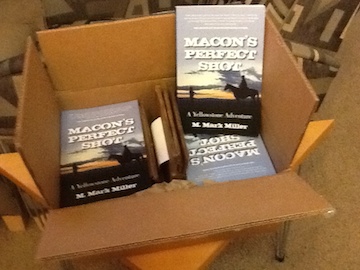
    Macon in a boxIt’s here. And it’s beautiful, thanks to Craig Lancaster”s superlative cover and book design. You can find out about Craig’s marvelous books on his website. I can’t wait for his next novel, The Fallow Season of Hugo Hunter.

    Macon’s Perfect Shot is a ripping adventure story aimed at middle grades, but fun for readers of any age. Inspired by true stories from my collections of more than 400 first-person accounts, the book provides an authentic picture of Yellowstone Park in the 1870s. Great for reluctant readers. Buy it for a kid you love. And tell your teacher friends about it.

    You can order Macon now from Amazon in paperback or Kindle versions.

    I’ll begin working now to get it stocked in bookstores. I’m not usually comfortable working in sales, but it really helps to have a product I believe in. When the box Macon books arrived, I couldn’t resist grabbing a copy and flipping through it. Wherever, my eye landed, I found a section I was proud of. I worked hard to make Macon sing—and I think I succeeded.

    Yesterday I talked with Susan Backer, a life-long elementary school teacher, about the possibility of a teachers guide for Macon’s Perfect Shot. I was delighted when Susan said she saw lots of ways the book could be used in schools and was “excited” about the prospect of writing a teachers guide. More about that later.  Watch this space.

    ∞§∞

    You can read about all my books on my blog.


  • News: My Next Collection of Yellowstone Stories Is Under Contract

    Yesterday I received my copy of a contract with Globe Pequot Press for a new collection of first-person accounts of early travel to Yellowstone Park that I’m calling Shorter Stories of Greater Yellowstone. I have until Dec. 3, 2013, to finish the manuscript, so the book should be on the stands by summer 2014. Below is a excerpt from the prospectus I sent to GPP.

    ∞§∞

    Talking to people in Yellowstone National Park during signings for my first book, Adventures in Yellowstone, convinced me that there is a good market for a book that provides a larger number of shorter stories. People want authentic tales that can be read quickly around the campfire or while traveling between sights. I have compiled such a book.

    The book, tentatively titled Smaller Stories of Greater Yellowstone: Adventure Tales by People Who Lived Them, would contain sixty stories of 400 to 2,000 words. The stories are organized in twelve parts with titles like “Mountain Men,” “Hunting” and “Bear Stories.” The entire book would be about 60,000 words including introductions for each part and story.

    I collected the stories for my Humanities Montana presentation, “Sidesaddles and Geysers,” and for my blog at mmarkmiller.wordpress.com. I have edited the stories to make easy reading for today’s readers. Longer items have been condensed to focus on dramatic stories and events. I have been careful to retain the original authors’ styles because they convey their personalities and emotions.

    The stories in the book span the period from 1807, when John Colter first discovered the wonders of the Yellowstone plateau to the 1920s when tourists sped between luxury hotels in their automobiles. The earliest stories recount mountain men’s awe at geysers hurling boiling water hundreds of feet into the air and their gun battles with hostile Indians. The latest stories are set in a time when matrons felt comfortable taking children to the park without an adult male accompanying them.

  • An Event: Win An Autographed Copy of Adventures in Yellowstone

    I need your help. I’ve been working on my presentation of  “Sidesaddles and Geysers: Women’s Adventures in Early Yellowstone  that will be at Beavertail Hill State Park southeast of Missoula this Friday at 8 p.m.  It’s part of a 12-week series at the park on Women in Montana History.

    Beaver Tail Hill State Park, Montana

    The event, which is sponsored by the Humanities Montana Speakers Bureau, has a standing title, but I always  tailor what I say to the occasion. That gives me a reason to review my files and keeps things fresh in case somebody has a chance to hear me twice.

    Here’s how you can help—and win an autographed copy of my book, Adventures in Yellowstone: Early Travelers Tell Their Tales.

    • Click on the “Categories” button on the right side of this page and choose “Women Stories.”
    • Review stories listed (you’ll have to click the “older posts” button at the bottom of the list to see all 16 of them.)
    • In the comments section below list the four stories that you think will make the best presentation.
    Because time is short, the deadling will be Thursday, June 16, 5 p.m. (MDT)

    I’ll choose a winner from the submissions based on the following criteria:

    • Appropriateness to the audience (families of campers and vactioners) and setting (outdoors in a state park).
    • Appropriateness to the topic, “Montana Women’s History.”
    • Variety (adventure, humor, time period, etc.)
    The winner will receive an autographed copy of my book with any dedication they want.  In case of a tie, the earliest submission will win.  Or if I’m in a good mood, there’ll be more than one winner.

    Enter and many times as you want!

    Tell your friends!  Have fun!

    And if you happen to be in the area on Friday stop by for my free presentation.  I’d love to see you!
    ∞§∞
    — Photo from the Montana Department of Fish, Wildlife and Parks.
  • News: Climate Change—Not Just Wolves—May Cause Fewer Yellowstone Elk

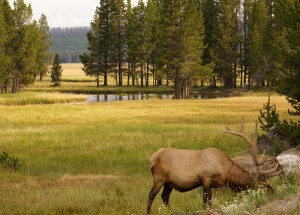
    Hunters have been blaming the introduction of Wolves for the recent decline in the number of elk in Yellowstone National Park, but new research indicates that climate change may be to blame. New West has provided a nice summary of the evidence.

    The news reminded me that several of the accounts of early travel to Yellowstone Park talk about summer snow storms bigger than anything we see now. Of course, the storytellers may have been exaggerating, but perhaps I should see if travel accounts provide evidence of climate change.

    Also, early travelers who went to the Park in August (apparently to avoid bad weather) often couldn’t find game. Before the Army outlawed hunting in 1886, many groups counted on living off the land, so when game was scarce they went hungry. Several stories tell about the great joy of returning to the ranches near the park and getting “civilized grub.”

    The Earl of Dunraven, who visited the Park in 1874, commented explicitly about how weather affects the migration of elk and other game.

    ∞§∞

    The herds of game move according to the seasons. In Estes Park, for instance, near Denver, you might go out in winter or in early spring, when the snow is deep upon the ranges and shoot blacktail deer till you were sick of slaughter. I daresay you might—if you knew where to go—sit down, and, without moving, get ten, fifteen, or even as many as twenty shots in the day.

    At other seasons you might walk the flesh off your bones without seeing a beast of any kind. Yet the deer are somewhere all the time; and, if you can only find out to what deep recesses of the forest, or to what high mountain pastures they have betaken themselves in their search for cool shelter, or in their retreat from mosquitoes and other insect pests, you would be amply rewarded for your trouble.

    It is the same with wapiti. Sometimes the park will be full of them; you may find herds feeding right down on the plains among the cattle; and in a fortnight there will be none left. All will have disappeared; in what is more, it is almost impossible to follow them up and find them, for they are much shyer than the deer.

    Where do they go? Not across the snowy range, certainly. Where then? Up to the bare fells, just under the perpetual snow, where they crop the short sweet grass that springs amid the debris fallen from the highest peaks; to the deep black recesses of primeval forest; to the valleys, basins, little parks and plains, hidden among the folds of the mountains, where even the wandering miner has never disturbed the solitude.

    ∞§∞

    — Excerpt from The Great Divide by the Earl of Dunraven.

    — New West Photo.

    — You can read a condensed version of the Earl’s 1874 trip to Yellowstone Park in my book, Adventures in Yellowstone.

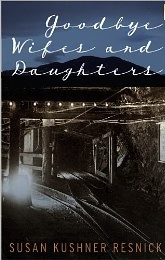
  • Montana Book Award Honors Goodbye Wifes and Daughters by Susan Kushner Resnick

    Goodbye Wifes and Daughters tells an archetypical story, one that Montanans know all too well. Some men cut corners to maximize profit; others willingly work in dangerous places to support their families, and many men die. It might have been hard rock miners in Butte or asbestos processors in Libby, but Susan Kushner Resnick chose to tell the story of coal miners in Bear Creek, Montana.

    On the morning of February 27, 1943, an explosion ripped through Smith Mine #3 killing 75 men  that day and the town of Bear Creek over the next decade. Resnick puts the story in context. She tells how the pressures of World War II make men feel it’s their patriotic duty face danger to keep up production. How owners exploit that patriotism to maximize profit. How methane builds and sparks ignite it.

    All that is important. But the power of the book lies in Resnick’s recreation of the life in a small town. Resnick has researched deeply and she uses the details she dug up to bring the people to life. She tells us not just that the the town took pride in its high school basketball team, she tells us how many points to the top scorer made, and who sat on the bench, and where they went with their girlfriends after the game. Such exquisite detail brings the people—both those who died and those who survived—to life.

    ∞§∞

    — To find out more about my work with the Montana Book Award look under the “Categories Button” on the right.
  • News: Memoir About Growing Up on High Plains Wins 2010 Montana Book Award

    The Montana Book Award winner and honors books are listed the the news release below. I will provide reviews of  them—and maybe some good books that didn’t win awards—over the next few days.

    You can read my post about the selection process here.

    ∞§∞

    BOUND LIKE GRASS WINS 2010 MONTANA BOOK AWARD

    The 2010 Montana Book Award winner is Bound Like Grass by Ruth McLaughlin, published by University of Oklahoma Press. This annual award recognizes literary and/or artistic excellence in a book written or illustrated by someone who lives in Montana, is set in Montana, or deals with Montana themes or issues. Presentations and a reception with the winning authors will take place Thursday, April 7, during the Montana Library Association Conference in Billings.

    Bound Like Grass: A Memoir from the Western High Plains is an honest, beautifully written memoir of McLaughlin’s own and her family’s struggle to survive on their isolated wheat and cattle farm. With acute observation, she explores her roots as a descendant of Swedish American grandparents who settled in Montana at the turn of the twentieth century with high ambitions, and of parents who barely managed to eke out a living on their own neighboring farm.

    Four Honor Books Were Chosen:

    Everything by Kevin Canty, published by Nan A. Talese/Doubleday. Canty’s novel chronicles a year in the lives of five appealingly aimless Montanans. Layla, a bright college student, and her heavy-drinking father, RL, fall into parallel adulterous romances—she with Edgar, a promising young painter, he with Betsy, an exgirlfriend undergoing cancer treatment. Meanwhile, June, a friend of both father and daughter, struggles to put the death of her husband behind her. There is a lot of booze and heartbreak in the book, yet it is full of optimism and humanity.

    Goodbye Wifes and Daughters by Susan Resnick, published by University of Nebraska Press. One morning in 1943, close to eighty men descended into the Smith coal mine in Bearcreek, Montana. Only three came out alive. “Goodbye wifes and daughters . . .” wrote two of the miners as they died. The story of that tragic day and its aftermath unfolds in this book through the eyes of those wives and daughters—women who lost their husbands, fathers, and sons, livelihoods, neighbors, and homes, yet managed to fight back and persevere.

    The Last Stand: Custer, Sitting Bull, and the Battle of the Little Bighorn by Nathaniel Philbrick, published by Viking. In his tightly structured narrative, Nathaniel Philbrick brilliantly sketches the two larger-than-life antagonists: Sitting Bull, whose charisma and political savvy earned him the position of leader of the Plains Indians, and George Armstrong Custer, one of the Union’s greatest cavalry officers and a man with a reputation for fearless and often reckless courage. Philbrick reminds readers that the Battle of the Little Bighorn was also, even in victory, the last stand for the Sioux and Cheyenne Indian nations.

    Visions of the Big Sky: Painting and Photographing the Northern Rocky Mountain West by Dan Flores, published by University of Oklahoma Press. Dan Flores has assembled some of the most important and evocative artwork created in the region, depicting scenes from the Wind River Range of Wyoming to the Canadian border country. The accompanying essays are insightful and solidify Montana’s art history identity.

    The Montana Book Award was founded by the Friends of the Missoula Public Library in 2001 and winners are selected by a committee of individuals representing areas throughout Montana. Members of the 2010 Montana Book Award committee included Honore Bray, Missoula; Adam Kish, Twin Bridges; Mark Miller, Bozeman; Carole Ann Clark, Great Falls; Jill Munson, Fort Benton; Gordon Dean, Forsyth; and Samantha Pierson, Libby.

    ∞§∞

    — To find out more about my work with the Montana Book Award look under the “Categories Button” on the right.

  • News: A Peak Experience — A Whole Day With Book Lovers and Great Books

    I spent the whole day on Saturday closeted with half a dozen book lovers from all over Montana. We got together at Chico Hot Springs to pick the 2010 Montana Book Award Winners. The process works like this:

    Publishers submit books for consideration. About all that’s required is that a book be about a Montana setting or by an author who lives in Montana. Except for technicalities defining the details of publication and residence, that’s it. Past winners have included fiction (The Hotel on the Corner of Bitter and Sweet by Jamie Ford), non-fiction (Full Court Quest by Linda Peavy and Ursula Smith), and young adult (Hattie Big Sky by Kirby Larson.)

    After a book is submitted, it is distributed to readers who vote via email. As soon as two of them endorse the book, it is fully nominated so everyone reads it. If two people reject the book then it’s set aside. This means each judge reads about 25 book a year—about a dozen or so that get fully nominated and another dozen that get rejected.

    Because about half the submissions arrive in the last quarter of the year, readers have to scramble to get everything read. (My eyeballs literally ache sometimes.) But by the time the meeting at Chico rolls around, everybody has read all the nominated books. That makes for a marvelous experience—a full day of discussing a wide range of good books with avid readers who have thought about them carefully.

    The meetings start with one judge introducing a book. After a brief group discussion, another judge introduces a book for discussion, and the process proceeds until all the nominated books have been discussed. Finding one “best book” in a diverse set  may seem like an impossible task, but by the time all the nominees have been discussed, four or five books emerge as leaders.

    Then committee members cast secret ballots indicating their top four choices in rank order. We weight the votes (4 points for a first rank, 3 for second, etc) and tally them. The committee discusses the tally, eliminates the low scorers, and votes again. The process repeats until one book has five first-place rankings—and it’s the winner.

    The committee then uses similar procedures to decide if there should be Honor Books and if so how many. For the last couple of years, entries have been so strong that number of honor books has been set at four—the maximum allowed. The one regret: many good books don’t get awards.

    After the judging, there’s time left in the afternoon for a soak in hot springs waters and drinks in Chico’s cowboy bar.

    And in the evening—dinner in the wine cellar of Chico’s five-star restaurant. Great food and great conversation with avid readers who love books. It just doesn’t get any better!

    The Friends of the Missoula Public Library sponsor The Montana Book Award. Book lovers everywhere owe them a vote of thanks.

    I can’t announce the winners until they’ve been notified officially. When that happens, I’ll provide reviews on this blog. I look forward to telling you about some really great books.

    ∞§∞

    — The Montana Book Award Logo is a woodcut by Claire Emory.

    — To find out more about my work with the Montana Book Award look under the “Categories Button” on the right.

  • An Event: Seeing My Name in Lights

    As I walked up the sidewalk last night carrying my laptop and a box of books, I saw it: My Name In Lights.  There in front of MSU’s Music Building was a sign beckoning to passersby in flashing red electric letters:

    Tonight at Reynolds Recital Hall

    Author Mark Miller

    “Bozeman to Wonderland: Early Trips to Yellowstone”

    I guess that makes it official.  I’m an author.

    I went into the recital hall where a technician helped me set up my computer and rigged me with a microphone.  Then I headed to the lobby for the reception.  I was able greet friends and introduce myself to new people, but mostly I just paced about and fretted about my presentation.

    After people filed into the auditorium, the Dean of the College of Art and Architecture introduced me.  Then magic happened.  I had an opportunity to talk about a topic I love — and an attentive audience.

    They chuckled when I said my family took a cow with them to Yellowstone in 1909 so they could have fresh milk for the children.

    They squirmed in their seats when I read them William Bradbury’s account of Colter’s Run when the blood soaked mountain man dived under a raft of driftwood to hide from dozens of murderous Blackfoot warriors who were chasing him.

    They listened intently when I read a brand new chapter from my next book that describes Emma Cowan’s heroic ride by team and wagon for 175 miles in 31 hours to be at the side of her wounded husband. And they sighed when I read the description of Emma’s reunion with him as “Joy too sacred for public perusal.”

    All too soon my time was up.  I basked in the warmth of polite applause. I answered insightful questions.  Then I signed copies of  Adventures in Yellowstone.

    ∞§∞

    You might also enjoy these posts:


  • An Event: Final Touches for My Fine Arts Presentation

    I’ve been working hard to put the final touches on my presentation Thursday to the President’s Fine Arts Series of the Montana State University.  My title is “Bozeman to Wonderland: Early Trips to Yellowstone Park.”

    I think of myself more as a collector and teller of stories than as a historian. With that in mind, I’ve picked stories with a Bozeman connection that exemplify different Yellowstone experiences.  I’ll put them in context and read excerpts — either from first-person accounts that I’ve collected, or from my own writing.

    My outline looks like this:

    An introduction explaining my interest in early travel to Yellowstone Park with stories my grandmother used to tell about her trip there in 1909 and her grandfather’s trip in 1882.

    The Mountain Man Era with an excerpt from William Bradbury’s account of Colter’s Run in 1807, when Indians stripped a trapper naked and ordered him to run for his life.

    The Prospectors Era when treasure hunters rushed past Yellowstone’s wonders to scour every gully and gulch for gold.

    The Era of Exploration when prominent citizens set out to confirm fantastic reports of the wonders of the upper Yellowstone with excerpts from Truman Everts chilling story of being alone in the Yellowstone wilderness for 37 days.

    First Tourists when Montana pioneers set out to see the wonders for themselves with stories about Emma Stone, a Bozeman matron who was the first woman to take a complete tour of the park in 1872, and Sarah Tracy (Bozeman’s Tracy Avenue is named for her husband), who left a marvelous reminiscence of her trip to the park in 1874.

    War in Wonderland 1877 when the Nez Perce Indians left their homelands in Idaho and Washington and fled through Yellowstone Park.  I’ll read a chapter from my next book telling about Emma Cowan’s 31-hour ride with a team and wagon to join her husband when she learned he had survived after an Indian shot him point blank in the head.

    Conclusion and Time for Questions.

    The presentation will be at the Reynolds Recital Hall on the MSU Campus.  It begin with a pre-event reception at 6:30.

    It is free to the public.

  • Views: Where Do You Find All Those Stories

    Relaxing in a Wylie Way Tent in Yellowstone Park

    People often ask me where I find the stories I post on this blog. That’s a good question and I plan to answer it. But I’ve discovered there’s no short simple answer.

    I’ve been looking for first-person accounts of early travel to Yellowstone Park for almost a decade and have more than 300 of them in my collection. But I know there are thousands more out there. It’s still a thrill to find a good one.

    I compare my efforts to those of nineteenth century prospectors searching for gold. Sometimes they saw huge nuggets lying on the surface, so they could just bend over and pick them up. Sometimes they had to shift through tons of sand and gravel to gather  a few ounces of gold dust. And sometimes they had to blast their way through solid rock just to locate a small vein.

    It will take several posts to explain that metaphor so  for now I’ll list a few of the topics I’m thinking about discussing.  I’d like you to tell me which ones you find interesting and what you’d like to know.

    • It helps to know what you’re looking for: What’s a story?
    • Sometimes the best stories are the worst history: Differences between journals, articles and reminiscences.
    • Just pull them off the shelf: There are great stories at your local library.
    • Let other people do the hard work:  Working at special collections, museums and archives
    • Download it for free: Project Gutenberg, Google Books, and The Making of America Collection.
    • Looking for pictures to bring a story to life.  The Yellowstone Digital Slide File and other repositories of photos and illustrations.

    That’s enough to get us started.  I’ll look forward to hearing from you.

    ∞§∞

    — Image adapted from an F.J. Haynes postcard, Yellowstone Digital Slide File.