Category: Uncategorized

  • Happy Birthday Yellowstone Park

    President Ulysses S. Grant signed the bill that created Yellowstone National Park on March 1, 1872. The act put the federal government in the business of managing public land for recreation and marked the culmination of the national park idea that had been percolating for some time.

    As can be seen from the documents below, there were several rationales for setting aside the area surrounding the headwaters of the Yellowstone and Missouri Rivers “for the benefit and instruction of the people.”
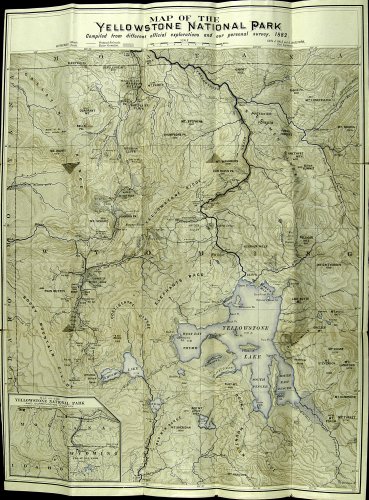
    1872 YNP Map Hayden
    1882 Map of Yellowstone Park by F.V. Hayden.

    First was the determination that the area wasn’t good for anything else. The U.S. Geological Survey lead by Ferdinand V. Hayden in the summer of 1871 had determined that the area was not fit for agriculture and it was not likely that there were any mineral deposits worth mining there. Setting the area aside, proponents of the bill said, “would take nothing from the value of the public domain.”

    Second, it was feared that the beautiful and delicate formations created by hot springs across thousands of years would be destroyed unless they were protected. The reports of the Hayden Expedition of 1871 and the Washburn Expedition of 1870 had thrust wonders of the remote and inaccessible region onto the public consciousness. The bills supporters said collectors had already begun gathering specimens for sale and plans were under way to lay claim to key sights and charge fees for visiting them. Indeed, entrepreneurs had already made homestead claim to key sights near Mammoth Hot Springs.

    Finally, proponents said that, if preserved, the area would become “a resort for all classes of people from all portions of the world. They said establishing Yellowstone National Park would be “regarded by the entire civilized world as a step of progress and an honor to the Congress …. ”  Indeed, that prediction has proved to be true.

    ∞§∞

    On the 18th of December, 1871, a bill was introduced into the Senate of the United States by Hon. S. C. Pomeroy, to set apart a certain tract of land lying near the head-waters of the Yellowstone River as a public park. About the same time a similar bill was offered in the House of Representatives by Hon. William H. Claggett, Delegate from Montana. After due consideration in the Committees on Public Lands in both Houses, the bill was reported favorably. In the Senate it was ably advocated by Messrs. Pomeroy, Edmunds, Trumbull, Anthony, and others. In the House the remarks of Hon. H. L. Dawes were so clear and forcible that the bill passed at once without opposition.

    I have thus presented a brief history of the passage of this bill because I believe it will mark an era in the popular advancement of scientific thought, not only in this country, but throughout the civilized world.

    That our legislators, at a time when public opinion is so strong against appropriating the public domain for any purpose however laudable, should reserve, for the benefit and instruction of the people, a tract of 3,578 square miles, is an act that should cause universal joy throughout the land. This noble deed may be regarded as a tribute from our legislators to science, and the gratitude of the nation and of men of science in all parts of the world is due them for this munificent donation.

    Mr. Dunnell, from the Committee on the Public Lands, made the following report:

    The Committee on the Public Lands, having had under consideration bill H. R. 764, would report as follows:

    The bill now before Congress has for its object the withdrawal from settlement, occupancy, or sale, under the laws of the United States, a tract of land fifty-five by sixty-five miles, about the sources of the Yellowstone and Missouri Rivers, and dedicates and sets it apart as a great national park or pleasure-ground for the benefit and enjoyment of the people. The entire area comprised within the limits of the reservation contemplated in this bill is not susceptible of cultivation with any degree of certainty, and the winters would be too severe for stock-raising.

    Whenever the altitude of the mountain districts exceeds 6,000 feet above tide-water, their settlement becomes problematical unless there are valuable mines to attract people. The entire area within the limits of the proposed reservation is over 6,000 feet in altitude, and the Yellowstone Lake, which occupies an area fifteen by twenty-two miles, or three hundred and thirty square miles, is 7,427 feet. The ranges of mountains that hem the valleys in on every side rise to the height of 10,000 and 12,000 feet, and are covered with snow all the year. These mountains are all of volcanic origin, and it is not probable that any mines or minerals of value will ever be found there. During the months of June, July, and August the climate is pure and most invigorating, with scarcely any rain or storms of any kind, but the thermometer frequently sinks as low as 26°. There is frost every mouth of the year.

    This whole region was, in comparatively modern geological times, the scene of the most wonderful volcanic activity of any portion of our country. The hot springs and the geysers represent the last stages— the vents or escape-pipes—of these remarkable volcanic manifestations of the internal forces. All these springs are adorned with decorations more beautiful than human art ever conceived, and which have required thousands of years for the cunning hand of nature to form.

    Persons are now waiting for the spring to open to enter in and take possession of these remarkable curiosities, to make merchandise of these beantiful specimens, to fence in these rare wonders, so as to charge visitors a fee, as is now done at Niagara Falls, for the sight of that which ought to be as free as the air or water.

    In a few years this region will be a place of resort for all classes of people from all portions of the world. The geysers of Iceland, which have been objects of interest for the scientific men and travelers of the entire world, sink into insignificance in comparison with the hot springs of the Yellowstone and Fire-Hole Basins. As a place of resort for invalids, it will not be excelled by any portion of the world. If this bill fails to become a law this session, the vandals who are now waiting to enter into this wonder-land will, in a single season, despoil, beyond recovery, these remarkable curiosities, which have required all the cunning skill of nature thousands of years to prepare.

    We have already shown that no portion of this tract can ever be made available for agricultural or mining purposes. Even if the altitude and the climate would permit the country to be made available, not over fifty square miles of the entire area could ever be settled. The valleys are all narrow, hemmed in by high volcanic mountains like gigantic walls.

    The withdrawal of this tract, therefore, from sale or settlement takes nothing from the value of the public domain, and is no pecuniary loss to the Government, but will be regarded by the entire civilized world as a step of progress and an honor to Congress and the nation.

    Department Of The Interior,

    Washington, D. C, January 29, 1872.


    Sir: I have the honor to acknowledge the receipt of your communication of the 27th instant, relative to the bill now pending in the House of Representatives dedicating that tract of country known as the Yellowstone Valley as a national park.

    I hand you herewith the report of Dr. F. V. Hayden, United States geologist, relative to said proposed reservation, and have only to add that I fully concur in his recommendations, and trust that the bill referred to may speedily become a law.

    Very respectfully, your obedient servant,

    1. DELANO,

    Secretary. Hon. M. H. Dunnell,

    House of Representatives.

    The committee, therefore, recommend the passage of the bill without amendment.

    [general Nature—No. 16.]

    AN ACT to set apart a certain tract of land lying near the head-waters of the Yellowstone River as a public park.

    Be it enacted by the Senate and House of Representatives of the United States of America in Congress assembled, That the tract of land in the Territories of Montana and Wyoming, lying near the head-waters of the Yellowstone River, and described as follows, to wit, commencing at the junction of Gardiner’s River with the Yellowstone River, and running east to the meridian passing ten miles to the eastward of the most eastern point of Yellowstone Lake; thence south along said meridian to the parallel of latitude passing ten miles south of the most southern point of Yellowstone Lake; thence west along said parallel to the meridian passing fifteen miles west of the most western point of Madison Lake; thence north along said meridian to the latitude of the junction of the Yellowstone and Gardiner’s Rivers; thence east to the place of beginning, is hereby reserved and withdrawn from settlement, occupancy, or sale under the laws of the United States, and dedicated and set apart as a public park or pleasuring-ground for the benefit and enjoyment of the people; and all persons who shall locate or settle upon or occupy the same, or any part thereof, except as hereinafter provided, shall be considered trespassers and removed therefrom.

    Sec. 2. That said public park shall be under the exclusive control of the Secretary of the Interior, whose duty it shall be, as soon as practicable, to make and publish such rules and regulations as he may deem necessary or proper for the care and management of the same. Such regulations shall provide for the preservation, from injury or spoliation, of all timber, mineral deposits, natural curiosities, or wonders within said park, and their retention in their natural condition. The Secretary may, in his discretion, grant leases for building purposes for terms not exceeding ten years, of small parcels of ground, at such places in said park as shall require the erection of buildings for the accommodation of visitors; all of the proceeds of said leases, and all other revenues that may be derived from any source connected with said park, to be expended under his direction in the management of the same, and the construction of roads and bridle-paths therein. He shall provide against the wanton destruction of the fish and game found within said park, and against their capture or destruction for the purposes of merchandise or profit. He shall also cause all persons trespassing upon the same after the passage of this act to be removed therefrom, and generally shall be authorized to take all such measures as shall be necessary or proper to fully carry out the objects and purposes of this act.

    Approved March 1, 1872.

    ∞§∞

    Excerpt from F. V. Hayden, Annual Report:Geological and Geographical Survey of the Territories (U.S.). Washington: Government Printing Office, 1972[pages 162-165]


  • Sales of All My Books Break the Top Three Percent on Amazon

    cropped-new-banner-2I admit it. I routinely check the Amazon sales ranking on all three of my books. I know it doesn’t mean much, but it does provide a feel for how things are going.

    When I checked this afternoon all three of my books were hovering around the one hundred thousand mark. That doesn’t sound great so I prefer to convert it to a percentage. Amazon lists about 33 million titles, so I figure all of my books are in the top 3 percent. That sounds a lot better.

    As near as I can tell, the hundred thousand mark means that a book is selling one or two copies a week, so I’m not making enough to buy the cool Tesla Model S I’ve be coveting. Still I’m glad to know that things could be worse.

    If you’re considering a trip to Yellowstone, or if you know someone who is, or you just want to read some great stories about travel there, I hope you’ll consider buying my books:

    • Adventures in Yellowstone: A dozen classic tales about people and events you’ll hear about when you visit the Park.
    • The Stories of YellowstoneSeventy-two brief stories you can read around the evening camp fire, or while you’re traveling between sights.
    • Macon’s Perfect ShotA realistic novel about a boy’s trip to Yellowstone Park in the 1870s. Written for middle grades, but an enjoyable story for anyone.

    I’ll be glad if you buy them. And I think you’ll be glad too.

    ∞§∞

  • Season’s Greetings

    Winter in Hayden Valley Mark Marschal YDSF10248
    “Winter in Hayden Valley” by Mark Marschal (NPS Photo)
  • Happy Thanksgiving, Everybody

    Thanksgiving Joe Rossiter Raymond

    ∞§∞

    Frontispiece from Camp and Cabin by Rossiter Worthington Raymond, Fords, Howard & Hulbert (New York) 1880.

  • A Tale: One Side of the Great Indian Question — S. Weir Mitchell, 1880

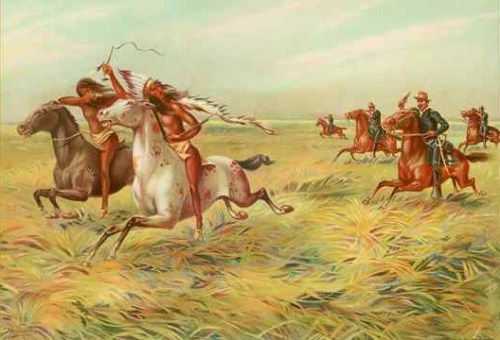
    1899 chromolithograph WikipediaFollowing the U.S. Civil War, “the great Indian question” became central issue of public debate in the United States. Opinions of what to do about America’s indigenous peoples ranged from calling for their extermination to allowing them self-government in secure homelands.

    As the incident below illustrates, relations between Native Americans and whites then often were appalling. The incident was reported in 1880 by the world famous physician and author, S. Weir Mitchel, who was on his way to Yellowstone National Park. Mitchell was camped with a tour group by the bank of the Yellowstone River. Here’s what Mitchell wrote.

    ∞§∞

     Through the inky dark horses were heard, and a broad, guttural German voice called out, “Woa, Daisy! You woa now,” while the owner rode into view on a stout pony, driving a packhorse loaded with camp-traps and guiltless of bridle or halter.

    “Is dis der New York outfit?” said the owner of Daisy.

    The judge was instantly called on to respond and to own that he was the New York outfit.

    “You might know my prudder?” said the German—”geeps a budter wholesale shtore in Read street.”

    Then the major took a hand: “Heard of any Indians?”

    “Yaas: I heerd of one a little vile ago. He was shtealin’ hosses: shtole mine, der whole outfit. I went and found him.”

    “How was that?” said the major.

    “Well, I shneaked up and found him a-sittin’ at his feed: I shot him in der pack. Den I hitched him to close hosses and shnaked him into der prush. Guesh he’s dere yet. I goes for ’em overy dime.”

    This was told tranquilly, without emotion, or with less than that with which a hunter tells you of good luck with the elk. It was a fair illustration of Western life, and one side of the great Indian question.

    The major remarked, “There were two men killed by Indians last week down the river.”

    The owner of Daisy threw a leg over the pommel, struck a match to light a pipe, and said, “Vel, maybe dat’s my prudder-in-law.”

    At last the great whiskey question came up, and after a consoling draught Daisy was summoned to “Get on,” and the German disappeared over a bad trail into utter darkness, leaving the “New York outfit” to settle the difficult question of who stole those horses.

     ∞§∞

    —Excerpt from S. Weir Mitchell, M.D., “Through Yellowstone Park to Fort Custer,” Lippincott’s Magazine of Popular Literature and Science, 25:688-704 (June 1880).

    — 1889 chromolithograph from Wikipedia Commons, artist unknown.

  • Share: Wolves Start an Ecological Cascade That Shapes Yellowstone Rivers (video)

    Screen Shot 2014-10-09 at 10.13.49 AM

    I don’t have any stories that focus on wolves in my collection of more than 300 stories of early travel to Yellowstone Park. In fact, mention of wolves is usually confined to reports of hearing their mournful howls in the distance. But I thought this video was so interesting that I’d share it anyway.

    Before they were re-introduced to Yellowstone in 1995, they had been gone for about 70 years. When the U.S. Army took over administration of the Park in 1886, the ended hunting — except for predators. On the mistaken assumption that it would benefit other mammals like like and deer, government hunters set out to eradicate animals like wolves and mountain lions.

    Removal of the top predators affected the ecology of the park in unexpected ways. Their reintroduction — as this video makes clear — is changing things back.

    ∞§∞

    — Photo taken from the video.


  • An Event: Ready to Launch Macon’s Perfect Shot at Gallatin History Museum

    macons perfect shot cover

    I’ve been getting ready to launch my new middle-grades novel, Macon’s Perfect Shot, with a reading Wednesday, Oct. 8, at 6 p.m. at the Gallatin History Museum, 317 W. Main, in Bozeman. The Museum’s Research Room is the perfect place for the event because it’s where I discovered the stories that inspired the book.

    My first book, Adventures in Yellowstone, is a compilation of a dozen first-person accounts of early travel to Yellowstone Park. I wanted it to be an anthology in the words of the people who live the adventures because that makes their emotions and personalities shine through.

    When I finished Adventures, I discovered I had a lot of stories left that I didn’t think were strong enough to stand on their own, so I invented a 14-year-old boy to live them. Turning to fiction let me attribute several incidents to a single character and to embellish true stories by creating dialog and exploring  motivations that weren’t explicit in the accounts in my collection of more that 300 tales.

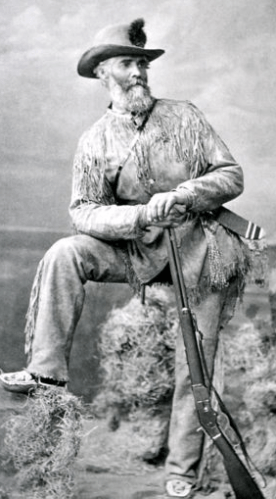
    Philetus W. Norris
    Philetus W. Norris

    The first thing I needed was an overarching story that could be used to tie a lot of little incidents together.  I chose Henry “Bird” Calfee’s account of his trip to the brand new Yellowstone National Park in 1872. Calfee told his story in a reminiscence apparently published in a newspaper many years after his trip. It’s contained in an unidentified and undated newspaper clipping in the Gallatin History Museum Reasearch Room.

    Calfee, who later became one of the first commercial photographers in Yellowstone Park, traveled with his friend, Macon Josey. The pair rode on horseback through the roadless wilderness for several weeks and visited all the major sights in the park: Mammoth Hot Spring, Yellowstone Falls. the Grand Canyon of the Yellowstone, and the geyser basins.

    Their adventure climaxed when Josey fell into a geyser and scalded himself up to his waist. Then Calfee had to figure out how to get his injured friend home and the route he chose led directly toward a murderous band of horse thieves.

    I also found a story in an 1872 issue of the Bozeman Avant Courier newspaper that described pioneer sheriff Henry Guy’s pursuit of the notorious Harlow gang that had been stealing horses in the Gallatin Valley. Based on information provided by Calfee and Josey, Sheriff Guy tracked down the gang and engaged them in a fierce gun fight that left three men dead.

    Jack Bean with trophy.
    Jack Bean with trophy.

    The Calfee-Josey story provided a nice adventure narrative, but I wanted to create a coming-of-age story. Although the real Macon Josey was an adult, I made my character by that name a 14-year-old boy. I altered the facts and had Calfee, not Josey, fall into a geyser. That provided a strong pivot point in the plot where Macon had to grow up fast.

    After I had an overarching plot, I began looking through my story collection for other tales I could use as models for Macon’s adventures. Some of those stories have been posted on this blog.

    All the stories I used came from the 1870s, so Macon’s Perfect Shot provides a realistic picture of what travel to Yellowstone Park would have been like when it was a roadless wilderness. The book is aimed toward fifth- and sixth-graders, but I tried to write a novel that would be fun reading for any age. I think I succeeded.

    If you’d like to learn more about Macon’s Perfect Shot or early travel to Yellowstone Park, I’d love to tell you all about it at the book launch.  I hope to see you there.

    It’s free and open to the public and I’ll be available to sign copies of the new book and my first book, Adventures in Yellowstone. And watch for my next book, The Stories of Yellowstone, which is scheduled to be published in November.

    ∞§∞

  • An Event — Finding a Story to Present at the Huntley Irrigation Museum

    An Event — Finding a Story to Present at the Huntley Irrigation Museum

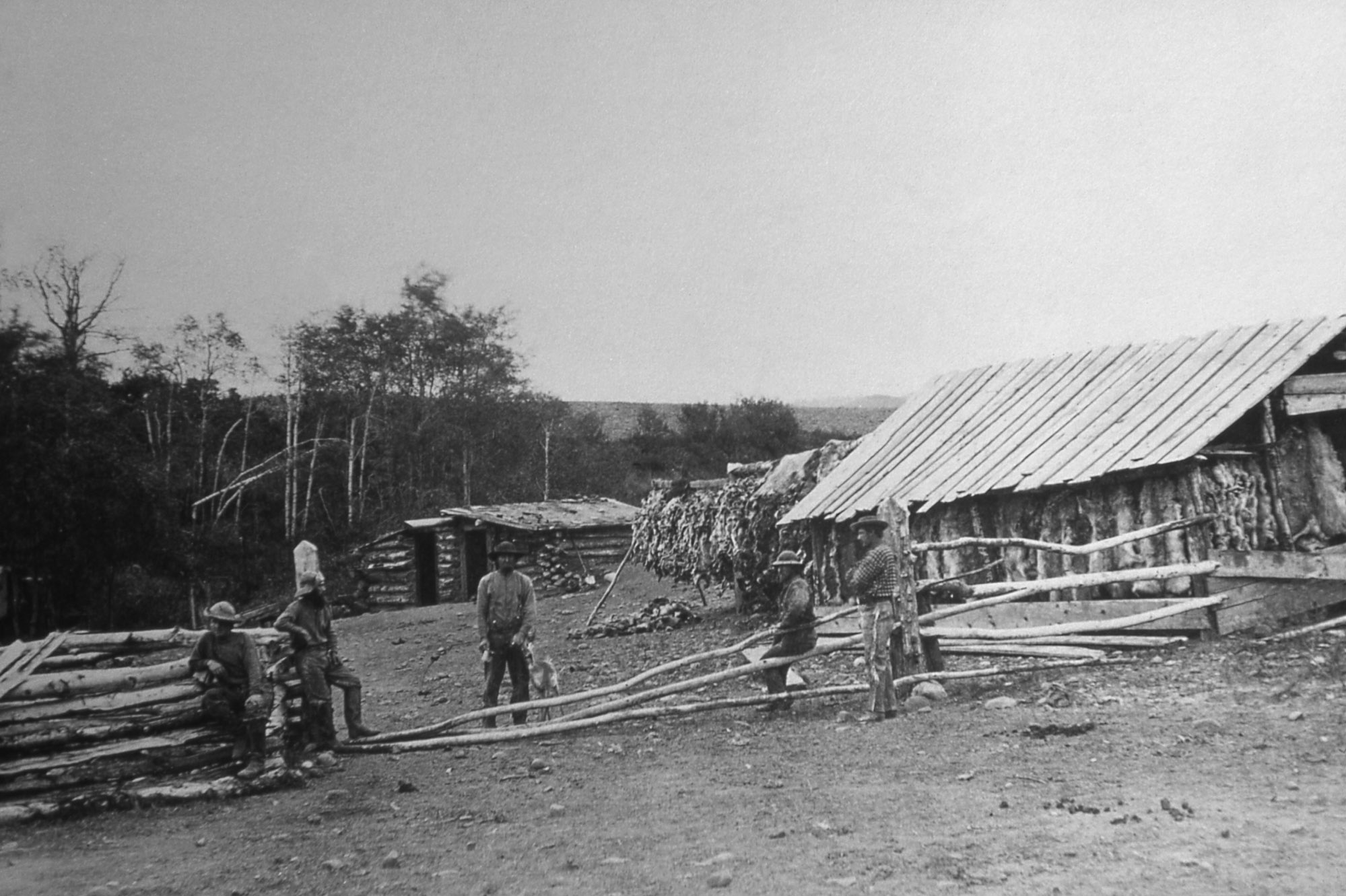
    Bottler's Ranch YDSF
    Bottler’s Ranch

    I’ve been getting ready to present my Humanities Montana program, “Sidesaddles and Geysers” at the Huntley Irrigation Project Museum at 7 p.m. on Friday, September 26. I usually try to localize my presentations, but that’s been difficult this time. After all, irrigation isn’t a big topic in Yellowstone Park history. But I dug though my collection of more that 350 stories of early travel to Yellowstone Park and finally found a candidate—tale of how a Montana rancher armed with only a shovel and a canvass dam stopped a Northern Pacific Railroad construction crew literally in its tracks.

    Fred Bottler came to Montana during the gold rush, but after he failed to strike it rich he decided to take up ranching. In December 1867, Bottler headed east from Bozeman over Trail Creek Pass to the Paradise Valley of the Yellowstone River. He traveled 12 miles down the creek to a spot where he could see the jagged peaks of the Absaroka Mountains carving the skyline. Bottler also could see brown grass that he knew would turn green with the spring rains, and pine forests that grew above the foothills. Land, water and timber. Bottler must have thought, this is the perfect spot for my ranch.

    He started to unload his plow near the mouth of Trail Creek. Then he saw a group of Crow braves maneuvering across the Yellowstone River. He loaded the plow back on his wagon and drove his horses farther south to a spot across the valley from where miners worked their gold claims in Emigrant Gulch. The miners would not only deter Indians, they also would provide a ready market for the things Bottler would raise.

    Bottler staked his claim where springs bubbled out of the mountains and formed streams that provided water for irrigation. Soon he had crops of hay, grain and vegetables. He raised pigs and cured hams and sides of bacon. Bottler milked cows and made butter in a churn turned by a small water wheel. He didn’t confine himself to agriculture. Fred often left management of the ranch to his brother, Phil, and hired out as a guide. He is conspicuously mentioned in several explorers’ journals including those of Philetus Norris, Ferdinand Hayden, and the Earl of Dunraven.

    After the Northern Pacific Railroad finished America’s second transcontinental line in 1883, its next order of business was building a spur to Yellowstone Park. Construction crews began in Livingston and headed up the Paradise Valley. They cut ranchers’ fences and took whatever right-of-way they wanted. After they passed through a rancher’s land, they paid him whatever they pleased.

    On the morning when Fred Bottler figured the railroad crew would reach his land, he told his wife to let him know when they got to his fence and went out to work. Probably, he carried a shovel and a pole with a square of canvas nailed to it. With such equipment, an irrigator can divert a stream and spread water flooding across dry land. A skilled irrigator can work the magic of making water appear to run uphill. Bottler irrigated a hundred acres of land; doubtless, he could direct water wherever he wanted.

    Fred’s wife told him when the crew reached his fence, and he went to negotiate, but the railroad men had already began to cut the wires. Bottler used his canvas dam to divert a nearby stream in front of the railroad route threatening to mire the work in mud. As Yellowstone Park historian, Aubrey Haines put it: “The legal formalities were swiftly attended to.”

    I’ll tell that story to my audience at the Huntley Irrigation Museum, then I’ll turn to my regular presentation.

    I’ll begin with stories my grandmother used to tell about her trip to the park in 1909 and her grandfather’s trip there in 1883. Grandma went to the park with her aunt, two brothers and seven cousin. Family lore has it that they took a cow with them to provide milk for the younger children. Grandma told about baking bread in a hot spring and said her father tossed her uncle’s red flannel underwear into Old Faithful to die it pink.

    Then I’ll tell stories about the first women to visit Yellowstone Park. These brave ladies literally rode sidesaddle through the roadless wilderness in the 1870s. One of the most chilling stories is Emma Cowan’s tale of being captured by Indians in the park. Emma and her family went there in 1877, the year the Nez Perce fled their homeland in hopes of finding freedom in the buffalo country. Emma wrote a gripping account of watching Indians shoot her husband, George, in the head, and leaving him for dead, taking her, her sister and their brother captive.

    After recounting Emma’s story, I’ll slow the pace with a different kind of adventure—Carrie Stahorn’s story of being caught in an October snow storm on the way to the Yellowstone Falls in 1880.

    Then I’ll tell the story of a treacherous climb down Uncle Tom’s Trail that nearly ended with a woman tumbling down the Grand Canyon of the Yellowstone. I’ll end with a bit of humor—the story of budding romance when travelers who met on a six-day coach tour have a tough time saying good-bye.

    That should leave time for questions, and maybe an encore. After the talk, of course, I’ll be available to sign copies of my books,  Adventures in Yellowstone and Macon’s Perfect Shot.

    ∞§∞

    — National Park Service Photo by William Henry Jackson, 1871.

  • An Event: I’m Ready for My Eastern Montana Tour

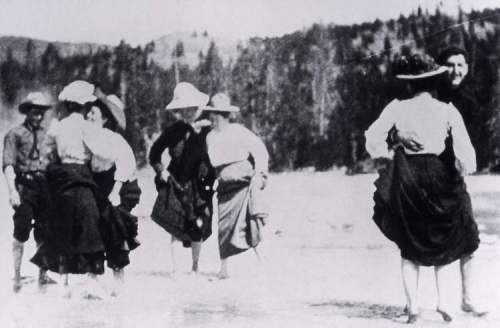
    Wading in Fountain Geyser, c. 1906
    Wading in Fountain Geyser, c. 1906

    I’ve been getting ready — making slide shows and writing scripts — for my Eastern Montana Tour. I’ll be making my Humanities Montana presentation, “Sidesaddles and Geysers: Women’s Adventures in Early Yellowstone,” at three different places in August. I’m really looking forward spending time in a section of Montana that I’ve never seen before and visiting some great museums.

     August 9, 6 p.m., MonDak Heritage Center, Sidney, Montana

    • August 12, 7:30 p.m., Wibaux Museum, Wibaux, Montana

    • August 13, 7 p.m., Wibaux Public Library, Wibaux, Montana

    • August 14, 7 p.m., Range Riders Museum, Miles City, Montana.

    For the tour, I’ve picked some of the very best tales from my collection of more than 300 first-person accounts of early travel to Yellowstone Park. Here’s an outline of what I’ll be presenting at the three museums.

    I’ll begin with stories my grandmother used to tell about her trip to the park in 1909 and her grandfather’s trip there in 1883. Grandma went to the park with her aunt, two brothers and seven cousin. Family lore has it that they took a cow with them to provide milk for the younger children. Grandma told about baking bread in a hot spring and said her father tossed her uncle’s red flannel underwear into Old Faithful to die it pink.

    Then I’ll tell stories about the first women to visit Yellowstone Park. These brave ladies literally rode sidesaddle through the roadless wilderness in the 1870s. One of the most chilling stories is Emma Cowan’s tale of being captured by Indians in the park. Emma and her family went there in 1877, the year the Nez Perce fled their homeland in hopes of finding freedom in the buffalo country. Emma wrote a gripping account of watching Indians shoot her husband, George, in the head, and leaving him for dead, taking her, her sister and their brother captive.

    After recounting Emma’s story, I’ll slow the pace with a different kind of adventure—Carrie Strahorn’s story about when she was caught in an October snowstorm at the Grand Canyon of the Yellowstone.

    Then I’ll tell the store of a treacherous climb down Uncle Tom’s Trail that nearly ended with a woman tumbling down the Grand Canyon of the Yellowstone. I’ll end with a bit of humor—the story of budding romance when travelers who met on a six-day coach tour have a tough time saying good-bye.

    That should leave time for questions, and maybe an encore. After all, I have a collection of more than 300 stories of early travel to Yellowstone Park that I could share. After the talk, of course, I’ll be available to sell and sign copies of my book, Adventures in Yellowstone.

    Because I’ll be making two presentations in Wibaux, I assembled a second slide show and script. Here’s an outline of what I’ll present at the Wibaux Public Library.

    I’ll begin by talking about my books on early travel to Yellowstone Park:

    • Adventures in Yellowstone: Early Travelers Tell Their Talesan anthology of a dozen classic tales including Truman Evert’s tale of being lost alone in the Yellowstone wilderness for 37 days, and Emma Cowan’s story of being captured by Indians.

    • Macon’s Perfect Shota mid-grade novel about a 14-year-old boy who has to use his wits to save the life his traveling companion after the man tumbles into a geyser.

    • The Stories of Yellowstone: Adventure Tales from the World’s First National Park: a collection of 72 short stories covering the period from the early 1800s when mountain men first marvels at Yellowstone’s wonders until the 1920s when genteel matrons sped between luxury hotels in their touring cars.

    Then I’ll read about John Colter, the first white man to visit the area that became Yellowstone Park, and his famous naked run to escape 500 furious Blackfeet Indians.

    After that, I’ll tell about Truman Everts, who was lost alone in the Yellowstone wilderness for 37 days in 1870, and I’ll read his story about being Treed by a Lion.

    If there’s time, I’ll read the Earl of Dunraven’s hilarious description of How to Pack and Mule and Ernest Thompson Seton’s adventure watching bears fight at a hotel dump.

    Of course, I could go on for hours about early travel to Yellowstone, but I’ll want to leave time to answer questions and sign books.

    I’m really looking forward to seeing sights along the way and visiting several of Montana’s great museums.  I hope I’ll see you at one or more of these events.

    ∞§∞


  • Coming Soon: Macon’s Perfect Shot

    Billings author Craig Lancaster is helping me get my mid-grades novel, Macon’s Perfect Shot, ready for publication. Look for it soon at your favorite bookstore or e-bookseller.  Also, look for Craig’s fifth book, The Fallow Season of Hugo Hunter.

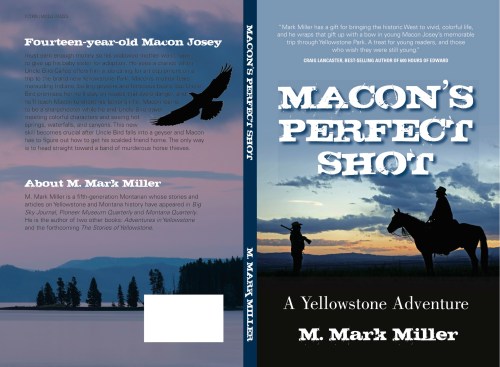
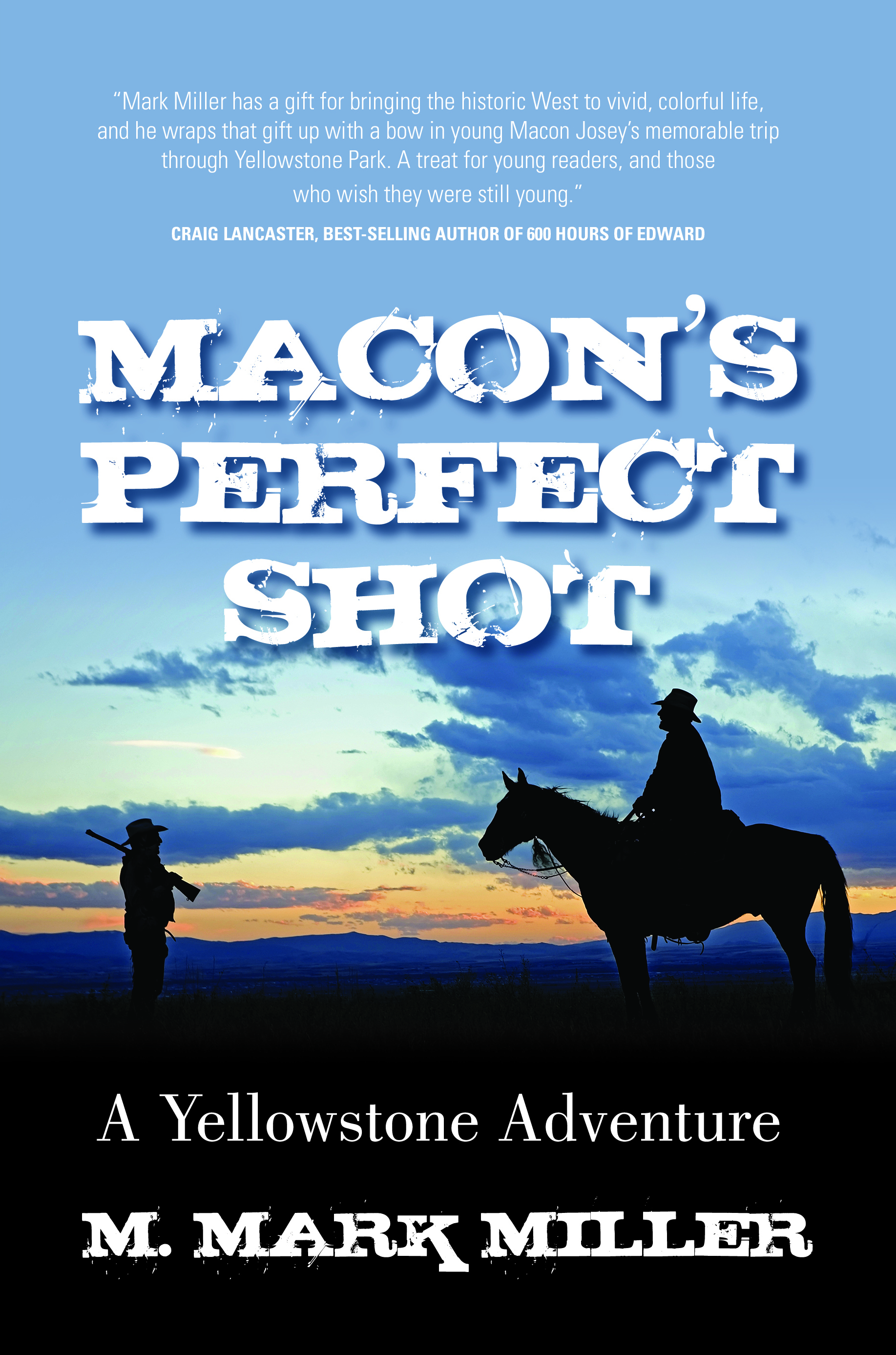
    Here’s the dandy cover Craig designed for Macon. Note the great blurb he included.

    macons perfect shot front cover

    Here’s what’s written on the back cover.

    Fourteen-year-old Macon Josey must earn enough money so his widowed mother won’t have to give up his baby sister for adoption. He sees a chance when Uncle Bird Calfee offers him a job caring for art equipment on a trip to the brand new Yellowstone Park. Macon’s mother fears marauding Indians, boiling geysers and ferocious bears, but Uncle Bird promises her he’ll stay on routes that avoid danger, and he’ll teach Macon to shoot his father’s rifle. Macon learns to be a sharpshooter while he and Uncle Bird travel meeting colorful characters and seeing hot springs, waterfalls, and canyons. This new skill becomes crucial after Uncle Bird falls into a geyser and Macon has to figure out how to get his scalded friend home. The only way is to head straight toward a band of murderous horse thieves.

    You can find out more about Macon’s Perfect Shot here.

    While you’re doing your Christmas Shopping look for my next anthology of early Yellowstone travelers’ tales, The Stories of YellowstoneGlobe Pequot will be publishing it in November.

    And don’t forget my first book, Adventures in Yellowstoneis still available. You should read it before your next trip to Yellowstone Park. It will add a new dimension to your Yellowstone experience. You should read it even if you’re not going to the park if you’ve ever wondered what it was like to visit there when it was a remote roadless wilderness.

    ∞§∞