Tag: Emma Cowan

  • An Event: Ready To Tell “Smart Women” About The Nez Perce In Yellowstone

    The big event on my schedule this week is my presentation, “The Nez Perce in Yellowstone,” to Smart Women on Wednesday at 3 p.m. at Aspen Point, an assisted living facility in Bozeman. I’m still working on my slides and script, but it’s taking shape in my mind.
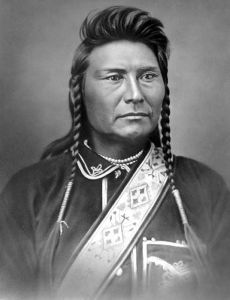
    Chief Joseph

    I’ll begin with an overview of the flight of the Nez Perce who generally lived peacefully with whites for most of the 1800’s. After gold was discovered on Nez Perce land in 1853, settlers began moving in and in 1877 the Indians were ordered onto a tiny reservation. Rather than comply with the order, they decided to flee to the buffalo country on the plains. Most accounts of the flight of the Nez Perce emphasize things that happened outside of Yellowstone Park like broken treaties and battles, but I’ll reverse that pattern and focus in the human drama of the Indians’ encounters with tourists.

    Then I’ll talk about what I call “The Joseph Myth,” the common belief that Chief Joseph was a great general whose genius allowed him to outmaneuver the U.S. Army for months. Joseph was the chief of one of the five bands that led the army on its merry chase, but he was never the principal chief. I’ll speculate on reasons the Joseph Myth was born and why it persistes: (1) Joseph was an important chief who had a conspicuous role in negotiations with whites before the Nez Perce decided to leave and he was the last remaining chief at the Battle of Beartooth so he negotiated the surrender. These things made him the apparent leader. (2) The Army Officers needed a genius opponent, otherwise they would look like fools for letting a band of Indians that included old men, women and children—and 1,600 hundred horses and cow—elude them for months, (3)After the conflict Indian sympathizers needed an Indian hero who sought peace to bolster their case, and (4) Joseph was indeed a noble man who devoted his life to obtaining justice for his people. All true, but he wasn’t a military genius.

    I’ll talk about the Radersburg Party’s trip to the park and read Emma Cowan’s description of her being taken captive by the Nez Perce, which ended with her watching an Indian shoot her husband in the head.

    To slow things down, I’ll talk about “Skedaddlers,” tourists who visited the park in the summer of 1877, but left before the Indians arrived. These include: the famous Civil War General William Tecumseh Sherman; Bozeman Businessman Nelson Story; English Nobleman and park popularizer, The Earl of Dunraven and his companions, Buffalo Bill’s sometime partner, Texas Jack Omohundro, and Dunraven’s friend, George Henry Kingsley, a physician who patched up the Nez Perce’ victims at Mammoth Hot Springs.

    I’ll talk about the Helena Party’s trip and contrast the all-male group that entered the park from the north with the co-ed Radersburg Party that entered from the west. Then I’ll read Andrew Weikert’s description of his gun battle with the Nez Perce.

    Then I’ll describe how survivors of encounters with the Nez Perce were either rescued by soldiers looking for the Indians or made their way to Mammoth Hot Springs. I’ll explain that after Emma Cowan, her sister, and several wounded men left Mammoth for civilization, three men stayed there to see if their missing companions would appear. Then I’ll read Ben Stone’s description of the Indian attack at Mammoth that left another man dead.

    I’ll end with my synthesis of accounts of Emma Cowan’s overnight ride from Helena to Bottler’s Ranch in the Paradise Valley to join her husband who had survived three gunshot wounds and was rescued by the army. That will give me an opportunity to talk about Encounters in Yellowstone, a book I’m writing now.

    ∞§∞

    — The presentation is free and open to the public.  Please tell your friends.

    — You can read about my 2011 presentation to Smart Women.

    — Public Domain Photo.

  • A Tale: Guiding the Nez Perce Through Yellowstone Park — 1877

    After the bloody Big Hole Battle on August 9, 1877, the Nez Perce fled through Yellowstone Park to avoid the settled areas of Montana. Pursued by Army units under General O.O. Howard, they needed a guide because the route was unfamiliar to them. On August 23, they found one.

    John Shively, who had prospected for gold in the area, was camped near the Lower Geyser Basin when the Indians captured him. Shively had planned to leave the park with a party of tourists from Radersburg, Montana, that he had met earlier.

    The next day, the Nez Perce accosted the Radersburg group, shot two men and took two women captive. The women were treated well and later release.

    Shively traveled with the Nez Perce for thirteen days, then made his escape. (The Indians said they let him go after they reached country they knew.) Several territorial newspapers reported Shively’s adventures and Edwin J. Stanley synthesized them into a single narrative several years later. Here’s Stanley’s version.

    ∞§∞

    On the evening of the second day, after leaving the Radersburg party, I was camped in the Lower Geyser Basin. I was eating my supper, and, on hearing a slight noise, looked up, and, to my astonishment, four Indians, in war-paint, were standing within ten feet of me, and twenty or thirty more had surrounded me not more than forty feet off.

    I sprang for my gun, but was rudely pushed back. I then asked them what Indians they were, and they answered “Sioux.” I said, “No.” Then one of them said, “Nez-Perces.” They then commenced to gesticulate wildly, and a loud conversation was kept up between them.

    I thought the exhibition of a little bravery might help me, so I folded my arms and told them to shoot, that I was not afraid to die. A brother of Looking-Glass then came up, placed his hand on my heart, and held it there a minute or two, and exclaimed, “Hyas, skookum-tum-tum!” meaning ‘strong heart’ in Chinook. He then said in English, “Come with me,” walked a few steps, told me to get on a pony that he pointed out, jumped up behind me, and all started for the main camp, a short distance below.

    While this was taking place, the other Indians had taken my gun, blankets, horses—in fact, everything I had. Arriving at the main camp, a council of the chiefs was formed, and I was told to take a seat inside the circle.

    They asked me who I was, and what I was doing there. I told them. They asked me if I would show them the best trail leading out of the park to Wind River, where they were going. I told them I would, as I knew all about the country. This seemed to be satisfactory, and the council broke up, and the camp moved up a mile or two, where an encampment for the night was formed.

    A robe was given me, and an Indian named Joe was detailed to sleep with me. He spoke very good English; said that I must not attempt to escape; that he would be my friend; that they had come that way to get away from Howard; that the trail by that route to Wind River was not known to them, but other Indians had told them about it, and that if I told them the truth they would not harm me.

    As I could not help myself, I promised all they asked, and kept my promise. All the time I was with them, I always showed a willingness to get on or off a horse when they told me; and, if an Indian rode behind me on the horse, I offered no objections, and to this fact I am probably indebted for kind treatment.

    After breaking camp the next morning, I was ordered to mount. An Indian mounted behind, and I was started ahead with mounted and armed Indians on each side and behind me. While camped the next day, about noon, the Radersburg party were brought into camp.

    Shortly afterward, a march was made toward Yellowstone Lake, I still being kept some distance in the advance. After traveling about a mile, I heard seven distinct shots fired, and supposed all the persons had been killed, but that evening Joe told me that only two men had been shot, and the next morning I saw Mrs. Cowan and Miss Carpenter, and was allowed to speak to them, and we traveled near together all that day.

    Through this terrible ordeal, the sisters behaved nobly and with the utmost fortitude, although Mrs. Cowan’s mental agony at thought of her husband wounded, and perhaps dead, and they three in the hands of savages, was enough to have driven her distracted. With all their savagery and ferocity, let it be said and remembered to the credit of the Nez-Perces, that these ladies were treated with all respect, and protected from all harm, while their prisoners. The next day, Frank Carpenter and his sisters were permitted to go, and the Indians moved to the Yellowstone, and from there moved over to the head-waters, or rather a tributary, of Clark’s fork.

    The first night of our arrival being quite dark, I slipped out of camp and started for the Mammoth Hot Springs, which I reached after traveling two whole nights and one day. Here I found no one, but did find some potatoes already cooked, which greatly revived me after my long fast—having had nothing to eat from the time of leaving the Indian camp.

    I then started for Henderson’s ranch, which I found destroyed, but plenty of provisions lying around. I got some eggs, and, while cooking them, Mr. J. W. Schuler of Butte City, who was returning from the Clark’s Fork mines, rode up. He kindly gave me his horse to ride, he going on foot. That night, early, we reached Dailey’s ranch, where we received the kindest treatment, and Mr. Dailey loaned me a horse on which to ride to Bozeman.

    I was with the Indians thirteen days, and was treated very well all the time. They traveled very leisurely, not averaging, for the whole time, more than five miles a day. Joe said they were not afraid of Howard. He also said that they did not intend to return to Idaho, as the agent there, John Hall, was a bad man, and would not give them what was due them; that they would remain somewhere in the Big Horn country, and, if the soldiers came, they would join in with the Sioux and Crows and whip them.

    ∞§∞

    — Excerpt from Edwin J. Stanley, Rambles in Wonderland. Southern Methodist Publishing House: Nashville, 1885.

    — You also might like:

    — You can read Emma Cowan’s complete story in my book, Adventures in Yellowstone.

    — My next book, Encounters in Yellowstone 1877, will tell the story of the Nez Perce and the people who tangled with them in the park.

  • On Writing: Cubism, Narrative History and the Nez Perce

    While organizing research notes for my next book, Encounters in Yellowstone 1877, it occurred to me that my task is akin that of the Cubist painters.  A hundred years ago artists including Pablo Picasso, George Braque and Juan Gris invented Cubism. They looked at objects from multiple viewpoints, analyzed each viewpoint, and then reassembled them into a single composition. That’s like what I’m doing.

    "Three Musicians," Pablo Picasso

    I’ve collected numerous pieces about the events of the summer of 1877 when the Nez Perce Indians encountered several groups of tourists while fleeing from the Army through Yellowstone Park.  Those pieces contain distinct—even disparate—viewpoints. Here are some of them:

    • Yellow Wolf, a young Nez Perce brave who felt justified in seeking revenge on all whites following the Army’s pre-dawn attack on the sleeping Indian camp that left dozens of women and children dead.
    • Emma Cowan, a young wife fulfilling her dream of visiting “geyserland” who spoke sympathetically of the plight of the Nez Perce in her reminiscence even after Indians left her husband for dead after shooting him in the head and then took her captive.
    • Jack Bean, an old Indian fighter who had been with the troops that buried the mutilated bodies of Custer and his men after the Battle of the Little Big Horn and had no qualms about scalping Indians.
    • General Oliver Otis Howard, an evangelical Christian and Civil War hero, who led his exhausted troops across Yellowstone Park after several humiliating skirmishes with the Nez Perce.

    My job is to analyze the accounts of these people—and of dozens of others—and sift out the truth. Then I’ll try to put the whole thing together in a coherent whole. To do that, I’ll need to look for places where the various viewpoints converge and diverge, overlap and separate, compliment and contradict.

    Like a Cubist painting, the final narrative won’t always arrange things in the way that people are used to seeing them, but I hope it will be compelling and enlightening.  I’m enjoying the challenge.

    ∞§∞

     — Image, Metropolitan Museum of Modern Art.

    — To see related posts, click on “Narrative History” under the Categories Button on  this page.

  • Narrative History or Historical Fiction 3: A Moonlit Night In Yellowstone Park, August 23, 1877.

    “Should I approach it as narrative history or as historical fiction?” That question haunted me this week as I continued research for my next book, Encounters in Yellowstone 1877. I’ve written about it before, here and here.

    Great Fountain Geyser

    To write the kind of story readers want, I need to include details that bring the story to life and give it credibility. That’s true no matter how I approach the book, but there’s more flexibility in fiction.

    A crucial scene in the book occurs on August 23, 1877, the night before Nez Perce Indians take Mrs. Emma Cowan captive along with her brother, Frank, and their 13-year-old sister, Ida. Earlier that afternoon, the tourists learned that the Nez Perce had fought a bloody battle with the Army two weeks before and were headed toward the park. In her reminiscence about the trip, Emma admited the news worried her.

    In his book about the trip, Frank said, “Mrs. Cowan was uneasy, and upon being asked what was wrong, replied ‘nothing.’” Frank said that later he saw Emma come to the door of the tent she shared with her husband and Ida and look out several times. Emma’s repeatedly peering out of the tent is a good example of the adage, “actions speak louder than words.”

    I was reminded of Jerrie Hurd’s admonition to write slow scenes fast and fast scenes slow. Jerrie says “when you get to the action, slow down, take your time, fill-in as much detail as possible allowing the reader to savor every moment of what’s happening.”

    There’s no doubt that Emma was worried, but what did she see? If I knew that, I could heighten the drama, but neither Emma nor Frank described the scene and there are no other accounts by members of their party.

    What to do? I saw three options: (1) write historical fiction and invent a plausible scene, (2) write up what I already knew as narrative history and hope that my readers will forgive the lack of detail, or (3) do more research to flesh things out. I chose option 3.

    I knew that the tourists were camped in the trees near the Fountain Geyser, which is at the edge of the Lower Geyser Basin in Yellowstone Park, so the first thing I did was a web search for images of the area. I found several photos like the one above that show several geysers spewing columns of water and steam in the middle of a chalky plain surrounded by pine forest. (I plan to visit the site this summer to get more detail.)

    Then I reviewed Emma and Frank’s accounts of the evening. After deciding to head home the next day, the group put on a sort of minstrel show to celebrate. They built a bonfire and spent the evening singing and dancing. Then the bachelors in the group curled up in their blankets under the trees while Emma, her husband and Ida retired to their tent.

    Next, I looked for journals of travelers who were nearby that night. One of them was Jack Bean of Bozeman, a scout the Army hired to find the Nez Perce. Bean was on a hillside about 30 miles from Emma’s camp watching the Nez Perce arrive at Henry’s Lake. Bean didn’t comment on the weather, but apparently had no difficulty seeing the Indians’ campfires four miles away across the lake.

    Another Scout, S.G. Fisher, who had been hired in Idaho, was 10 miles closer than Bean in Targhee Pass. Fisher had heard about a Nez Perce camp ahead of him and was planning to attack it with his force of 80 Bannack Indians. Fisher said he approached the camp cautiously because “the moon was shining brightly.” Fisher found the Nez Perce had moved on—and I found an important snippet of information—it was a moonlit night.

    With the new information from my research, I feel confident that I can write compelling description of Emma’s behavior—one that sticks close enough to the facts to qualify as narrative history. It probably will go something like this:

    Emma didn’t fall asleep quickly that night. Instead, she repeatedly came to the door of the tent she shared with her husband and sister and peered out. Perhaps she was just checking to make sure the bonfire her friends had built to celebrate their impending departure from Yellowstone hadn’t spread.

    Perhaps she was hoping to see Fountain Geyser play one more time. The bright moonlight reflected off the surrounding chalky ground would have made that a beautiful sight.

    Most likely, she was worried about encountering Nez Perce on the trip home. Emma couldn’t have known that Yellow Wolf and his band of Nez Perce scouts had seen the bonfire and were planning to attack the camp the next morning.

    I’m glad I kept researching. I’m sticking with narrative history.

    ∞§∞

    You also might enjoy:

    — To see related posts, click on “Narrative History” under the Categories Button on the right side of this page.

    — Image detail from Coppermine Gallery Photo.

  • A Tale: A Battle With Fleeing Nez Perce — 1877

    My next book, Encounters in Yellowstone 1877, will tell the stories of the several groups of tourists who tangled with the Nez Perce while they fled through Yellowstone Park after the Big Hole Battle.

    Mammoth Hot Springs

    The Army’s pre-dawn attack on the sleeping Indian camp left dozens of women and children dead, which enraged many young Indians. Despite chiefs’ efforts to avoid whites, several groups were attacked in or near Yellowstone Park.

    The most famous encounter is Emma’s Cowan’s ordeal of being captured, but there are other chilling events. Andrew Weikert was touring with a group of young men when they spotted the Indians a few miles south of Mammoth Hot Springs. The group beat a hasty retreat to thick grove of trees and spent the night hiding. The next morning, Weikert and a companion named Wilkie decided to leave the others in camp and go see if the Nez Perce had moved on. Here’s how Weikert described what happened.

    ∞§∞

    We could see where the Indians and their horses had made a trail, so we thought the coast was clear. We started back for camp, but, we ran against an obstacle that made our hair raise and the blood rush to our faces.

    We had gotten into the timber not more than a quarter of a mile when we ran onto a lot of the redskins lying in wait for us. They were under the hill, behind a log, so we did not see them until we got within about seventy-five feet.

    I was riding ahead when I saw them raise up their heads from behind the log. I told Wilkie there were Indians ahead and wheeled my horse. At the same time I was getting my gun up ready to fire. Looking back I saw half a dozen guns leveled at me so I made myself small as I could, with my gun across my knees.

    Bang! bang! bang! then zip! zip! zip! went the balls, but none struck me that time. I was perfectly cool and self-possessed, but will own up that my hair was standing on end when I first saw them. My horse had made a few more jumps, when bang! they went again.

    This time they were a little more successful, for they cut a crease in my shoulder blade about four inches long; did not break a bone, but splintered my shoulder bone a little. And another ball took a piece out of my gunstock. I then began hugging my horse still closer, if such a thing was possible, when they gave us another volley.

    By this time, we were out of range, but the balls flew past thick and fast and we could hear them strike the trees. Now for a race!

    I supposed that they had their horses close at hand, but they did not mount them just then. Just at this time, my horse tripped his foot and fell and came near turning a somersault. I went sprawling on the ground directly in front of him.

    My shoulder was paining considerably, but I did not have long to remain there, for the ‘reds’ were running up again to get another shot at me. I up and let them have one from my repeater. You ought to have seen them dodge. I did this all in a few seconds, and my horse was on his feet again ready to start. I just put my hand on the horn of the saddle, made a bound into it, and was off.

    Wilkie had gotten considerably ahead of me by this time, but I soon made up for lost time. We got back on the prairie again on Alum Creek in the valley, then back in the timber again. The Indians did not follow us. We rode as far as we could, then took it afoot, for the under-brush was so thick that we could hardly get our horses through.

    After we got into the timber quite a ways, we halted to take breath and to see what damage was done. Wilkie asked me if I was hurt; I told him judging from the hole in my shirt on the right shoulder, and the way the blood was running in my boot, I thought that there must be a scratch at least.

    We examined it and bound it up the best we could. Wilkie, being a safe distance from the Indians, did not get hurt. We looked our horses over, and found them all sound, thank fortune. So we mounted and took our direction for camp, rode as lively as we could in hopes that the reds had not been there so we could warn the boys.

    ∞§∞

    —Adapted from Weikert’s Journal published in Contributions to the Montana Historical Society, 1900.

    — Frank J. Haynes postcard, Coppermine Photo Gallery.

    — You might also enjoy:

  • A Tale: Emma Cowan Visits Mammoth — 1873

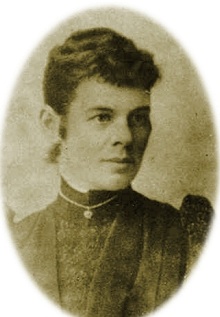
    Emma Cowan

    Most of the women who visited Yellowstone Park in the 1870s were Montana Pioneers. For them, camping out in the wilderness was no big deal. After all, they had already crossed the plains in a covered wagon, or come up the Missouri River on a crowded steamboat.

    Emma Cowan was such a pioneer. She was 10 years old when came to Montana in a covered wagon with her parents during the gold rush of 1864. Shortly after she arrived in Virginia City, Emma began hearing about the wonders of the upper Yellowstone. One day her father brought home a man who told marvelous stories.

    Emma said of the stories, “My fairy books could not equal such wonderful tales. Fountains of boiling water, crystal clear, thrown hundreds of feet into the air, only to fall back into pools of their own forming; pools of water in whose limpid depths tints of various rainbows were reflected; mounds and terraces of gaily colored sand.”

    Emma and her family thought the stories were just fantasies, but she said, “As I grew older and found truth in the statements, the desire to some day visit this land was ever present.”

    Emma’s first trip to Yellowstone Park was a visit to Mammoth Hot Springs in 1873 with her parents. She didn’t say a lot about it, but the normal starting point for such a trip would have been Bozeman, a thriving trade center and agriculture town about 75 miles from the park.

    After they left Bozeman, travelers usually would spend their first night at the Bottler brothers’ ranch—a one-day ride from Bozeman. Bottlers’ ranch was located halfway to Mammoth Hot Springs, which made it an ideal stopping point for early travelers heading to the park.

    After a night at Bottlers, Emma’s family would have gone to Mammoth Hot Springs over a new road through Yankee Jim Canyon. Emma said this road was scarcely more than a trail, but “by careful driving, unhitching the horses, and drawing the wagon by hand over the most dangerous places, we made it safely.”

    The road was so bad, Emma said, that just a few weeks before a man, who was taking his crippled wife to Mammoth to soak in mineral waters that he hoped would cure her, didn’t even try to travel by wagon. Instead, he carried her on an Indian-style travois.

    Although the park was only a year old in 1873 when Emma and her family visited there, Mammoth Hot Springs had already become a tourist destination. When her family arrived, Emma said, “We found an acquaintance or two, a number of strangers, a small hotel and a bath house.”

    At Mammoth, tourists could hire guides to take them into the roadless wilderness to see the Grand Canyon of the Yellowstone, the Falls, and, most important, the Grand Geysers. Here they could also buy supplies that included such luxuries as canned fruit, baked bread, fresh milk, and butter.

    Visitors could either camp nearby, or pay $20 a week to the hotel for room and board. In addition, they could pay five dollars for twice-daily baths in tin tubs that had been coated with a porcelain like finish by the mineral waters. Visitors often made their own souvenirs by leaving items in pools where mineral waters encrusted them.

    Emma and her family stayed at Mammoth for two weeks seeing nearby sights, soaking in hot baths, and making souvenirs. But they decided not to visit the geysers. That would have required an arduous seventy-five mile trip on horseback because there were no roads across the park.

    Several parties returned from the geysers during Emma’s stay, and their accounts intrigued her. People often told her that words couldn’t convey the wonders they had seen. “You must see them for yourself,” they told her.

    Emma’s interest was piqued. When she got home she learned everything she could about the geysers from magazines, newspapers, and friends’ accounts.

    In 1877 Emma’s wish to see the geysers came true. But the adventure was even more that she expected when Indians shot her husband and took her captive.

    Coming Soon: “Doughnuts Fried in Bear Grease, Sarah Tracy — 1874”

    — Related stories you might enjoy:

  • A Tale: Angering Old Faithful — 1877

    Today most Yellowstone tourists believe that nature is fragile. They wouldn’t collect a leaf or pick a flower for fear of causing irreparable damage. But early tourists shattered geological features to gather specimens, slaughtered animals for fun, and experimented with geysers.

    Explorers Near Old Faithful, August 1871

    They reported these things without the slightest embarrassment.

    On a Sunday in the summer of 1877, Frank Carpenter was lolling around Old Faithful with his companions: Dingee, Arnold and Mr. Huston—and Frank’s sisters, Ida and Emma. They soon tired of quietly observing the Sabbath and decided to experiment with Old Faithful. Here’s Frank’s story.

    ∞§∞

    We conclude that we will do our washing, since such an opportunity for “boiling clothes” will not be presented again soon.

    Emma and Ida put their clothes in a pillowcase. Dingee took off his blouse and tied a large stone in it and I finished tying it with my handkerchief. Arnold also removed his jacket—and we repaired to the laundry—Old Faithful.

    We hear the preparatory rumbling and the waters rise a few feet above the surface. Mr. Houston now gives the command to throw our garments into the water. The water goes down and remains low so long that we begin to feel uneasy. Dingee begins to lament his loss and to curse the man who “put us up to the job up.”

    Mr. Huston remarks that it will be all right, and the next instant, with a rush and a roar she “goes off.” The clothes, mixed in every conceivable shape, shoot up to a distance of a hundred feet and fall with a splash in the basins below.

    The water subsides, and we fish out the clothing, which, we find as nice and clean as a Chinaman could wash it with a week’s scrubbing. Dingee rejoices.

    Wishing to experiment further, we collect an immense quantity of rubbish and drop it into the crater. We fill it to the top with at least a thousand pounds of stones, trees, and stumps. Now we sit down to await further developments.

    At the exact time advertised, sixty-five minutes from the time of the last eruption, the earth begins to tremble. We hear the rush again. “Off she goes,” and away go rocks, trees and rubbish—to a height of seventy-five or eighty feet.

    Old Faithful seems to have been angered by the unwarrantable procedure on our parts—or he wishes to show us that our attempts to check his power are futile. And he furnishes entertainment of unusual magnitude and duration.

    ∞§∞

    — From The Wonders in Geyserland by Frank D. Carpenter.

    — Photo byWilliam Henry Jackson 1872. Yellowstone Digital Slide.

    — You may also enjoy Colonel John W. Barlow’s tale of bathing in Mammoth Hot Spring.

  • Researching Attitudes Toward Indians

    What would it feel like to wake up in a wilderness with a lead slug embedded in your skull and remember watching your wife being dragged away by hostile Indians? That happened to George Cowan when the Nez Perce fled through Yellowstone Park  a hundred and thirty-three years ago.

    I’m writing about George’s ordeal for my next book, Encounters in Yellowstone 1877, so I need to know how he felt. Actually, it’s not hard to empathize with George. We all know that his head hurt from the bullet lodged there. And of course, George felt anger  — maybe even rage — at his attackers, and fear — maybe even terror — at what they might do to his wife.

    George’s story is compelling because it’s easy to identify with him, but can we assume he reacted in the same way we would? Wouldn’t events like the Battle of the Little Big Horn that happen just a year before George’s ordeal have colored his reactions?

    Last week, I did some research to answer questions like those. I started by searching the index of Montana the Magazine of Western History. I scanned subject headings until I saw “Indians, attitudes toward.” Under that heading I found an article published in 1957 by Robert W. Mardock entitled “Strange Concepts of the American Indian Since the Civil War.” Mardock says in the 1870s Americans called Indians everything from “noble savages” to “red devils.”

    New England writers like Cooper and Longfellow promoted the “noble savage” view, but Mardock says things were different on the frontier. He quoted a Virginia City, Montana, newspaper: “It is high time that sickly sentimentalism about humane treatment and conciliatory measures should be consigned to novel writers, and if the Indians continue their barbarity, wipe them out.’”

    According to Mardock, “The apprehensions and viewpoints of our frontier areas were strongly reflected in the Eastern newspapers. Exaggerated dispatches from the West, incredibly wild and inaccurate when reporting Indian ‘massacres’ and depredations, were commonly printed without ever questioning their accuracy. The frontier ‘red devil’ concept dominated the national press with few exceptions.”

    George Cowan was an attorney so he probably read both territorial and national newspapers. Visions of “red devils” must have danced through his mind when he came to that morning.

    And what was George’s wife, Emma, thinking when the Indians hauled her away? I found a 1984 article by Glenda Riley entitled “Frontierswomen’s Changing View of Indians in the Trans-Mississippi West,” that provides some insight.

    Riley says, “Journalists and novelists fed the anti-Indian prejudices of their reading publics with fictionalized accounts of brutal and primitive savages who preyed especially on women. When women’s accounts were published they were usually ‘penny dreadfuls’ or narratives of captivity that further inflamed hatred of Indians.”

    In their accounts, George and Emma Cowan don’t dwell on their feelings toward Indians, but they were creatures of their times so the insights Mardock and Riley provide must apply to them. I’ll use those insights as I scrutinize the Cowans’ accounts and write about their adventures. Encounters in Yellowstone will be a better book because I took the time to dig into these things.  Of course, I will do more research.

  • A Tale: Captured by Indians by Emma Cowan—1877

    Cowan Party
    The Cowans visiting the site of their capture in 1901.

    Emma Cowan and her family visited Yellowstone National Park in 1877—the year the U.S. Army pursued the Nez Perce Indians there. The Nez Perce generally had amicable relations with whites, but in what has become a familiar story, the peace was shattered when gold was discovered on their land. Some Nez Perce acquiesced to government demands that they move to a tiny reservation, but others decided to flee their homeland instead.

    The Army sent soldiers to subdue the defiant Nez Perce, but the Indians defeated them several times. In the most dramatic battle, the Army made a pre-dawn attack on a sleeping Nez Perce camp on the banks the Big Hole River in southwest Montana. The Indians rallied, drove back their attackers, then retreated leaving their equipment, teepees, and at least 89 dead—most of them women and children.

    After the battle, they fled though Yellowstone Park where they captured Emma’s party.  Here’s her account of what happened later.

    ∞§∞

    Every Indian carried a splendid gun, with belts full of cartridges. As the morning sunshine glinted on the polished surface of the gun barrels, a regiment of soldiers could have not looked more formidable. The Indians pretended all the while to be our very good friends, saying that if they should let us go, bad Indians, as they termed them, would kill us.

    Suddenly, without warning, shots rang out. Two Indians came dashing down the trail in front of us. My husband was getting off his horse. I wondered what the reason. I soon knew, for he fell as soon as he reached the ground—fell heading downhill. Shots followed and Indian yells, and all was confusion. In less time than it takes to tell it, I was off my horse and by my husband’s side….

    I heard my sister’s screams and called to her. She came and crouched by me, as I knelt by his side. I saw he was wounded in the leg above the knee, and by the way the blood spurted out I feared an artery had been severed. He asked for water. I dared not leave him to get it.

    I think we both glanced up the hill at the same moment, for he said, “Keep quiet. It won’t last long.” That thought had flashed through my mind also. Every gun in the whole party of Indians was leveled at us three. I shall never forget the picture, which left an impression that years cannot efface. The holes in those gun barrels looked as big as saucers.

    I gave it only a glance, for my attention was drawn to something near at hand. A pressure on my shoulder was drawing me away from my husband. Looking back over my shoulder, I saw an Indian with an immense navy pistol trying to get a shot at my husband’s head. Wrenching my arm from his grasp, I leaned over my husband, only to be roughly drawn aside. Another Indian stepped up, a pistol shot rang out, my husband’s head fell back, and a red stream trickled down his face from beneath his hat. The warm sunshine, the smell of blood, the horror of it all, a faint remembrance of seeing rocks thrown at his head, my sister’s screams, a faint sick feeling, and all was blank.

    ∞§∞

    Two days later the Indians released Emma, her sister, Ida, and her brother, Frank. They made their way to Mammoth Hot Springs where they found help. Emma’s husband, George, survived the shooting. He carried the slug that an Army surgeon dug out of his head as a watch fob for the rest of his life.

    While making their way through the Yellowstone wilderness, the Nez Perce discovered they were not welcome with their old friends, the Crow, who had made accommodations with the whites. The Nez Perce decided to head north to join Sitting Bull and his Sioux in Canada. In October the starving and exhausted remnants of the band surrendered to the Army just 40 miles from the Canadian border.

    ∞§∞

    You can read Emma’s complete story in my book, Adventures In Yellowstone.

    — You might also be interested in:

    — Photo, Pioneer Museum of Bozeman.