Tag: Osborne Russell

  • An Event: Ready to Present at Cooke City Museum on Saturday

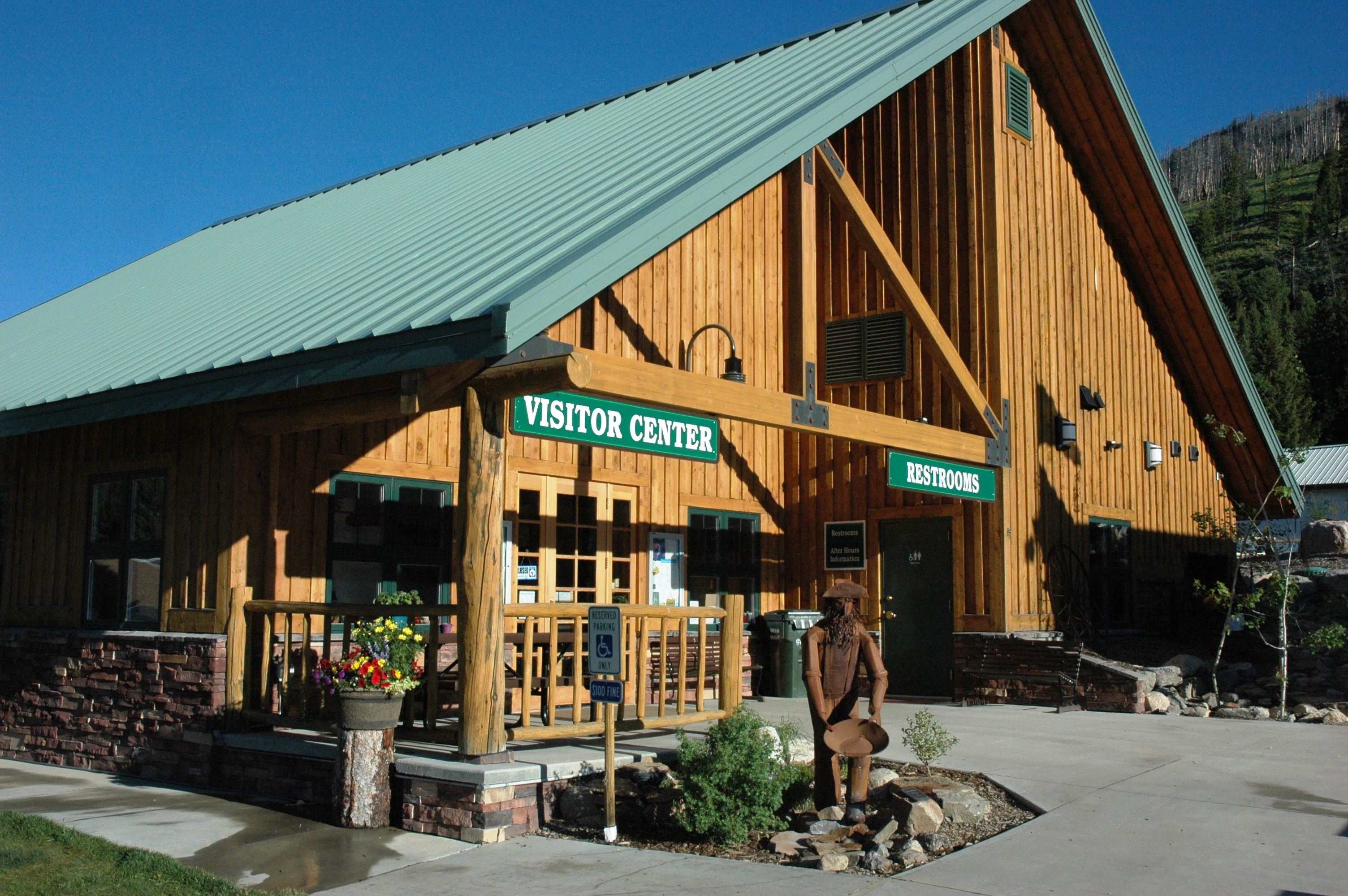
    Cooke City Visitors Center and Museum
    Cooke City Visitors Center and Museum

    I’ve been preparing a talk titled “Mountain Men Discover Yellowstone” to present at the Cooke City Museum on Saturday, August 8 at 8 p.m. It’s part of the Musuem’s “Joe’s Campfire Talks,” an outdoor summer series. I’ve presented there before and really enjoy the venue.
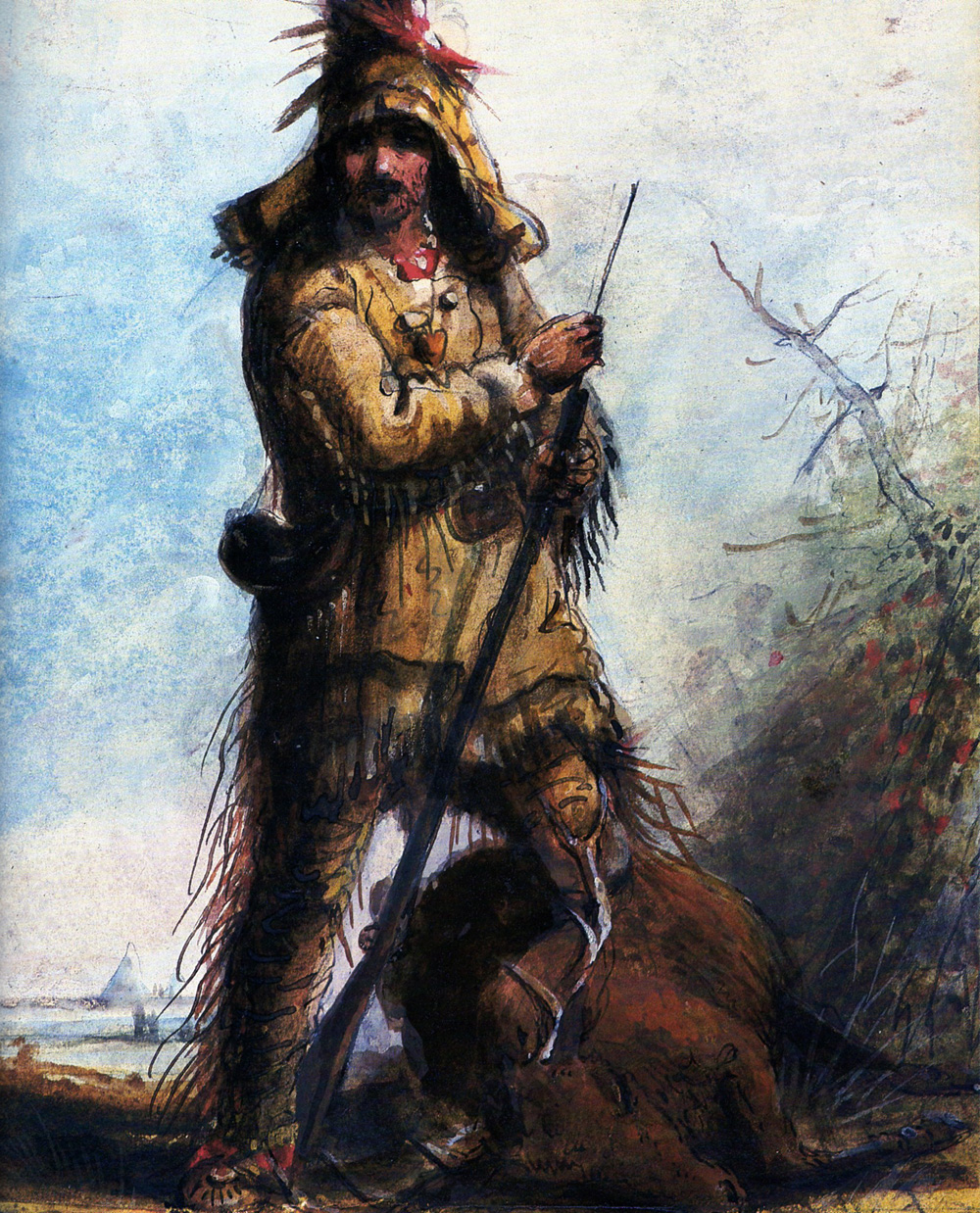
    Old_Bill_Williams wikipedia commons
    Old Bill Williams, Wikipedia Commons.

    The topic a new one for me so I had to dig through my files to find stuff, but I’m glad for a reason to explore my collection of 300 or so tales of early travel to Yellowstone Park. I always discover new things when I take a fresh look.

    I’ll begin my presentation with to following story about a first sighting of geysers:

    It was a scene of absolutely uncanny desolation, and as we looked at it we ceased to wonder at the names bestowed upon it by its first discoverers, such as “Devil’s Paint Pots,” “Hell’s Half-acre,” [and so forth].  One of our guides told us in graphic language of his first sight of this region.

    “You see,” he said, ” a party of us were out prospecting for mines, and we had traveled all day through pretty thick forests, and were pushing towards an opening we could dimly see through the trees, where, we hoped to make a comfortable camp for the night. We were very tired, and were “hurrying to get into camp, when suddenly, just as we reached the edge of the forest without a moment’s warning, we heard a most awful rumbling, the ground shook under our feet, and there burst into the air a column of water and steam that looked as if it reached the skies.

    We just fairly lost our senses, and never stopped to take a second look, but wheeled about in an instant, put spurs to our horses, and crushed away through the underbrush and tree-trunks as if the Evil One himself were after us. And the fact is,” he added, “we did not know but that he was. For what else, we asked ourselves, could such goings-on mean, but that we were on the very edge of the lower regions? We never rested till we had put miles between us and that awful place, and for years we never spoke of it for fear the fellows should think we had really been to hell, and were sold to the old fellow who lives there.”

    When I first began collecting Yellowstone travel stories, I thought such tales of freight and flight at first sight of boiling fountains of water 200 feet high would be common. But they’re not. In fact, that’s the only story like I have like that. And it’s from a reminiscence published in 1883. Since the narrator says he was “prospecting for mines” we can tell it probably was from the 1860s, decades after mountain men discovered the wonders of what became Yellowstone Park.

    The first white man to see Yellowstone was John Colter, who passed through the area in 1807 while looking for Indians to trade with. Colter, who had been a member of the famous Lewis and Clark Expedition, later told his old boss William Clark what he had seen and Clark included the information in a map he published later. While Clark’s map proves that Colter saw geothermal features, the information provided in them is vague.

    The first person to write about geysers he had actually seen was a trapper named Daniel Potts who described them in his famous “Letter From Sweet Lake,” date July 8, 1827. A newspaper published the letter anonymously and it’s author was unknown until the 1940s when two elderly ladies offered to see the original to the Park Service.

    The first mountain men who saw the geothermal features of the upper Yellowstone didn’t even know the word geyser, but their descriptions makes it clear they saw geysers. I’ll demonstrate this by reading a couple of 1834 descriptions — one by Osborne Russell and another by Warren Angus Ferris.

    I’ll end my talk with Osborne Russell’s delightful description of trappers telling tall tales  around a campfire.

    It should be a fun presentation and I’m really looking  forward to it. So if your looking for something to do on Saturday, come to Cooke City and hear about the early history of Yellowstone Park.

    ∞§∞

    • Excerpt from H.W.S., “A Lady’s Visit To The Geysers Of The Yellowstone Park,” Friends Intelligencer May 19, 1883. Pages 218-221; May 27, Pages 234-237.
  • A Tale: Trappers Encounter Peaceful Indians on the Yellowstone Plateau — Osborne Russell, 1834

    When I was a boy my father told me that Indians never went into the Yellowstone Park area because they were afraid of the geothermal features. But that’s not true. Archeological evidence shows that Indians traveled through the area and hunted there for at least 11,000 years. The erroneous assertion appears to have been started by officials to assure early tourists they could travel safely to the park.

    Alfred_Jacob_Miller_-_Ma-wo-ma_-_Walters_37194035
    Ma-wo-ma, a 19th-century Snake leader

    At least one band of Shoshone Indians, the Sheep Eaters, were permanent residents of the area. The mountain man Osborne Russell told about meeting a group of them in 1834 in his famous Journal of a Trapper. (He referred to them by the more generic term “Snake Indians,” which was what early travellers called several tribes that lived around the Snake River.)

    Russell found the Sheep Eaters (so-called because bighorn sheep made up a large portion of their diet) when he traveled up the Snake River to the Yellowstone Plateau in 1834. Here’s his description.

    ∞§∞

    We crossed the mountain in a westerly direction through the thick pines and fallen timber, about twelve miles, and , encamped in a small prairie about a mile in circumference. Through this valley ran a small stream in a northerly direction, which all agreed in believing to be a branch of the Yellowstone.

    We descended the stream about fifteen miles through the dense forest and at length came to a beautiful valley about eight miles long and three or four wide, surrounded by dark and lofty mountains. The stream, after running through the center in a northwesterly direction, rushed down a tremendous canyon of basaltic rock apparently just wide enough to admit its waters. The banks of the stream in the valley were low and skirted in many places with beautiful cottonwood groves.

    Here we found a few Snake Indians comprising six men, seven women and eight or ten children, who were the only inhabitants of the lonely and secluded spot. They were all neatly clothed in dressed deer and sheep skins of the best quality and seemed to be perfectly contented and happy.

    They were rather surprised at our approach and retreated to the heights, where they might have a view of us without apprehending any danger, but having persuaded them of our pacific intentions we succeeded in getting them to encamp with us. Their personal property consisted of one old butcher knife nearly worn to the back, two old, shattered fusees which had long since become useless for want of ammunition, a small stone pot and about thirty dogs on which they carried their skins, clothing, provisions, etc., on their hunting excursions.

    They were well armed with bows and arrows pointed with obsidian. The bows were beautifully wrought from sheep, buffalo and elk horns, secured with deer and elk sinews, and ornamented with porcupine quills, and generally about three feet long. We obtained a large number of deer, elk and sheep skins from them of the finest quality, and three large, neatly dressed panther skins, in return for awls and axes, kettles, tobacco, ammunition, etc.

    They would throw the skins at our feet and say, “Give us whatever you please for them and we are satisfied; we can get plenty of skins but we do not often see the Tibuboes” (or “People of the Sun”). They said there had been a great many beavers on the branches of this stream, but they had killed nearly all of them, and, being ignorant of the value of fur had singed it off with fire in order to drip the meat more conveniently. They had seen some whites some years previous who had passed through the valley and left a horse behind, but he had died during the first winter.

    They are never at a loss for fire, which they produce by the friction of two pieces of wood which are rubbed together with a quick and steady motion.

    One of them drew a map of the country around us on a white elk skin with a piece of charcoal, after which he explained the direction of the different passes, streams, etc. From these we discovered that it was about one day’s travel in a southwesterly direction to the outlet or northern extremity of the Yellowstone Lake, but the route, from his description being difficult, and beaver comparatively scarce, our leader gave up the idea of going to it this season, as our horses were much jaded and their feet badly worn.

    Our geographer also told us that this stream united with the Yellowstone after leaving this valley half a day’s travel in a westerly direction. The river then ran a long distance through a tremendous cut in the mountain in the same direction and emerged into a large plain, the extent of which was beyond his geographical knowledge or conception.

    ∞§∞

    —   Excerpt from “In the Yellowstone Country—A Garden of Eden Inhabited by a Small Party of Snake Indians.” Pages 31-34 in Osborne Russell and Lem A York, Journal of a Trapper 1834-1843. Boise, Idaho: Syms-York Co. 1921.

    — Painting by Alfred Jacob Miller, Wikipedia Commons.

    — You might enjoy other tales by Osborne Russell.  To find them just insert his name in the Search box above.

  • When All the Fish Were Natives

    Yellowstone Lake, Thomas Moran.

    Just in case you missed it, I decided to post a link to my article, When All the Fish Were Natives, that was published in the 2012 Fly Fishing issue of The Big Sky Journal.

    Early travelers to the area that became Yellowstone National Park depended on the abundant fish in the Yellowstone River watershed to supplement their larders, but they often they went hungry after discovering other streams and lakes were barren. At first, people thought the strange distribution of fish was caused by chemical laden hot springs, but that proved to be wrong. The article describes how scientists unraveled the mystery.
    The article also tells about Cornelius Hedges discovery that anglers could catch fish in cold waters and cook them in hot springs without touching them, Lord Blackmore’s fabulous afternoon catching 254 fish, and General W.E. Strong’s thrill at landing his first fish in the park light tackle—a four-pound trout.

    The article is accompanied by a slide show of historic images.

    ∞§∞

    — You might also enjoy “The Two-Ocean Pass and the Mystery of the Fishless Waters.”

    — To find more of my stories in The Big Sky Journal, click on My Media.

  • A Tale: A Bedtime Story — Osborne Russell, 1835

    The trappers who visited the Yellowstone Plateau in the early 1800’s told about the wonders they had seen, but their reports often were  dismissed as tall tales. Perhaps that’s because they had a well developed tradition of entertaining themselves by spinning yarns around their campfires. Osborne Russell, who visited the upper Yellowstone with the Jim Bridger brigade in the 1830’s, described a story telling session in his famous Journal of a Trapper.

    ∞§∞

    We killed a fat elk and camped at sunset in a smooth, grassy spot between two high, shaggy ridges, watered by a small stream which came tumbling down the gorge behind us. As we had passed the infernal regions we thought, as a matter of course, this must be a commencement of the Elysian Fields, and accordingly commenced preparing a feast. A large fire was soon blazing, encircled with sides of elk ribs and meat cut in slices, supported on sticks, down which the grease ran in torrents.

    The repast being over, the jovial tale goes round the circle, the peals of loud laughter break upon the stillness of the night which, after being mimicked in the echo from rock to rock dies away in the solitary gloom. Every tale reminds an auditor of something similar to it but under different circumstances, which, being told, the “laughing part” gives rise to increasing merriment and furnishes more subjects for good jokes and witty sayings such as a Swift never dreamed of.

    Thus the evening passed, with eating, drinking and stories, enlivened with witty humor until near midnight, all being wrapped in their blankets lying round the fire, gradually falling to sleep one by one, until the last tale is encored by the snoring of the drowsy audience. The speaker takes the hint, breaks off the subject and wrapping his blanket more closely about him, soon joins the snoring party.

    The light of the fire being superseded by that of the moon just rising from behind the eastern mountain, a sullen gloom is cast over the remaining fragments of the feast and all is silent except the occasional howling of the solitary wolf on the neighboring mountain, whose senses are attracted by the flavor of roasted meat, but fearing to approach nearer, he sits upon a rock and bewails his calamities in piteous moans which are reechoed among the mountains.

    ∞§∞

    — From Osborn Russell, Journal of a Trapper. Syms-York: Boise, Idaho, 1921.  Pages 49-50.

    — You might enjoy these stories by Osborne Russell:

    — You can read more excerpts from Osborne Russell’s Journal of a Trapper in my book, Adventures in Yellowstone.

    — Wikipedia photo.